

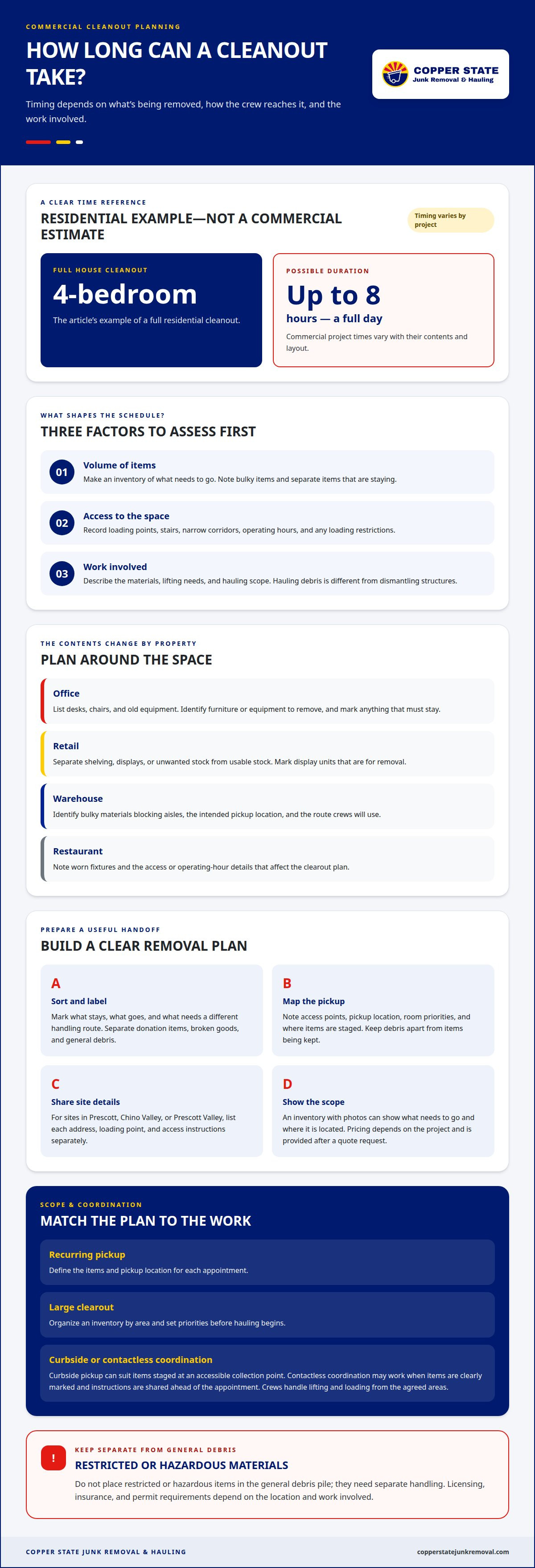
Commercial junk removal doesn’t follow a fixed timetable. The amount of material, access to the space, and work involved all affect the duration. A full four-bedroom house cleanout can take up to an eight-hour day, while business projects vary according to their contents and layout. Start by identifying what needs to go.
If you’re planning around staff, customers, or a move, uncertainty about timing can add pressure. Understanding what affects the work makes it easier to plan commercial junk removal around your business needs.
This article explains what affects cleanout duration, what removal can include, and how services can suit different spaces. You’ll learn what to consider before clearing an office, retail space, warehouse, or restaurant.
Key Takeaways
- Estimate the cleanout timeline by considering the volume of items, access to the space, and the work involved.
- Plan office, retail, warehouse, and restaurant clearouts around each space’s contents and day-to-day needs.
- Know what hauling can cover, and distinguish general cleanout items from materials that need a different handling route.
- Explore residential cleanout options too, including specialized help for hoarding situations, assisted living transitions, mattresses, and hot tubs.
Commercial cleanouts for offices, retail spaces, warehouses, and restaurants
Commercial junk removal starts with the property’s contents, access, and priorities. Make an inventory, then mark what stays and what the crew should remove.
Business Space Cleanouts
Offices may have desks, chairs, and old equipment; Prescott retail spaces may contain shelving, displays, or unwanted stock. Warehouses can have bulky materials blocking aisles, while restaurants may need worn fixtures cleared. Note loading access, operating hours, and items that must stay. For example, a Prescott retailer can mark display units for removal and set usable stock aside before the appointment.
Construction and Office Cleanouts
Construction debris and office contents need separate inventories. List leftover building materials, packaging, and broken fixtures, then identify furniture or equipment for removal. For renovation cleanup, keep debris in a defined area, apart from items being kept. Record access points and the intended pickup location to give commercial junk removal a clear plan.
Estate, eviction, and rental cleanouts need clear sorting. Mark belongings to keep, unwanted items, and materials tied to the property. Property managers in Prescott Valley can record each unit’s condition, note priority rooms, and provide access instructions. If a work order requires insured crews, include that requirement in the paperwork.
For a rental property, list furniture, appliances, and damaged fixtures separately. This helps distinguish tenant belongings from items the owner wants removed. Before arranging commercial junk removal, note which rooms are ready and where the crew can collect items without blocking shared entrances.
Assisted living cleanouts may involve furniture and personal belongings that residents or families need to sort. Storage unit cleanouts benefit from a keep-or-remove inventory. Label boxes and bulky items before the appointment to make decisions easier and the space simpler to clear.
Customized services for different industries
Each business cleanout needs a plan shaped by its items, access, and working hours. Commercial junk removal can cover a focused pickup or a larger property clearout, depending on the project’s scope.
Pricing depends on the project and is provided after a quote request. Item volume and type, access, lifting needs, and hauling scope all influence the estimate. An inventory with photos can show what needs to go and where it is located.
Recurring pickups and large cleanouts need different plans. For recurring work, define the items and pickup location for each appointment. For a large project, organize an inventory by area and set priorities before hauling begins. This helps commercial junk removal fit the property’s needs without confusing routine pickups with a one-time clearout.
For properties in Prescott, Chino Valley, or Prescott Valley, list each site’s address, loading point, and access instructions. A property manager handling several locations can keep a separate inventory for each address. Clear site details help the crew identify which materials belong to each pickup.
Curbside pickup can suit furniture or unwanted items staged at an accessible collection point. Contactless coordination may work when items are clearly marked and instructions are shared ahead of the appointment. Crews handle all lifting and loading from the agreed areas, so staff can focus on their regular work.
Before requesting an estimate, note whether items are indoors or curbside, and identify stairs, narrow corridors, or loading restrictions. Separate donation items from broken goods and general debris. These details clarify the scope and help commercial junk removal proceed with fewer surprises.
For businesses planning a clearout, commercial cleanout options can help organize the next steps for unwanted items and hauling.
What does commercial junk removal include?
Removal services can cover construction debris, yard waste, and unwanted items. The right scope depends on the materials, access, and work required.
Debris and Yard Waste Hauling
For commercial property debris, separate loose materials from branches, leaves, and bulky items. A business clearing an outdoor area can gather yard waste in one pickup zone and list larger debris separately. This makes the load easier to assess and keeps walkways clear. Removal may involve different materials from an indoor office cleanout, so describe each area and item type.
Licensing, insurance, and permit requirements depend on the location and work involved. Hauling debris differs from demolition, so identify the planned tasks and determine which local requirements apply.
Before pickup, mark items for removal, clear the route, and identify anything staying onsite. Separate reusable materials from clutter, and note large items such as a refrigerator.
Light Demolition and Renovation Debris
Light demolition and renovation debris may include removed fixtures, broken shelving, and leftover building materials. List the items and identify which have already been taken apart. A renovation cleanup plan should distinguish hauling from demolition, since removing debris isn’t the same as dismantling structures. Keep the work area accessible and describe where debris is staged.
An unlicensed provider can create practical problems if the work requires credentials or permits. Unclear responsibility for damage, incomplete removal, or improper disposal can also complicate a property project. A locally owned label alone doesn’t establish that a provider is licensed and insured; focus on the work’s actual requirements and responsibilities.
For a smoother handoff, give the crew a written inventory, access instructions, and a clear plan for ordinary materials. Keep restricted or hazardous items out of the general debris pile; they need separate handling.
Commercial and residential junk removal
Commercial and residential cleanouts share a goal, clearing usable space, but their planning differs. A home cleanout may focus on personal belongings, while a workplace may need furniture and construction debris removed without disrupting daily operations. For either property, group items by location and mark what should stay, go, or be considered for recycling. This gives the crew a clearer scope.
Residential examples show how much a job can vary. A full four-bedroom house cleanout can take up to an eight-hour day. A backyard cleanup took two hours and two truckloads. Those examples aren’t a promise for every project, but they show why item volume, access, and sorting affect timing. A commercial space may involve different materials and access needs, so its estimate depends on the actual work.
Before requesting junk removal, make an item list and identify the areas that need clearing. Include bulky furniture, outdoor debris, and any rooms that must remain undisturbed. For a business, note operating areas and loading access. For a home, identify belongings that need careful sorting. These details define a reasonable scope and make the estimate more useful.
Commercial junk removal and residential hauling can both involve multiple loads, but the setting changes the plan. A business might group items by department or work area. A household might sort by room or family member. In either case, clear labels help prevent wanted belongings from being mixed with unwanted items.
Planning a property cleanout? Arrange a cleanout plan that fits the space and the items you need removed.
Copper State Junk Removal & Hauling: Hoarder Cleanup
Copper State Junk Removal & Hauling provides Hoarder Cleanup for homes or spaces overwhelmed by accumulated belongings. This service can help when sorting and clearing a property feels difficult to manage alone. Assisted Living Cleanouts can support a transition to a new living arrangement, while Mattress Removal and Hot Tub Removal address specific bulky items.
Before a cleanout, identify belongings to keep and point out areas that need attention. A clear list helps define the work and keeps important items from being mistaken for unwanted clutter. For projects involving yard waste or renovation debris, explain what needs clearing so the cleanout suits the property.
If a property cleanout is your next step, contact Copper State Junk Removal & Hauling or visit copperstatejunkremoval.com.
Make the Cleanout Your Next Clear Step
A well-planned cleanout can give a business room to make its next move, whether that means reopening an area, preparing for a renovation, or changing how a space is used. Before setting a date, decide who will approve removal decisions and who will coordinate access on the day. One clear point of contact can keep those choices moving.
Use that plan to make commercial junk removal a defined task, not another open-ended item on the operations list. Set the priority outcome first, then align the cleanout with the business’s schedule and the space’s next purpose. A clear plan helps staff know what changes and what stays.
If you’re ready to plan the work, contact Copper State Junk Removal & Hauling to discuss the cleanout. A clearer space can be the start of what comes next.
Frequently Asked Questions
How long does it take?
Timing depends on the amount, access, and sorting involved. A full four-bedroom house cleanout can take up to an eight-hour day, while one backyard cleanup took two hours and two truckloads. For a business cleanout, group items by area and identify loading access before scheduling. This gives the crew a clearer picture of the work and helps you plan around operations.
What type of trucks are used?
Copper State Junk Removal & Hauling uses a hauling trailer measuring 14 ft L × 7 ft W × 4 ft H (≈ 15 cubic yd). It holds the equivalent of 5-7 pickup-truck loads. That capacity can help with larger clearouts, while the load’s shape and access affect how items fit. Businesses in Prescott or Chino Valley can describe bulky items when arranging a pickup.
What commercial junk removal services are available for businesses?
Copper State Junk Removal & Hauling provides junk removal and hauling for commercial properties, including office cleanouts and removal of unwanted items. Services also include storage and back-room clear-outs, common-area cleanouts, and dumpster-overflow service. For example, an office preparing for a layout change can identify which furniture needs removal and which items must stay. Commercial customers throughout the local service area can arrange these services.
How much does commercial junk removal cost per load or cubic yard?
There isn’t one per-load or cubic-yard price that applies to every cleanout. The quote depends on the volume and type of items, access, and work required. To make the estimate useful, describe the materials, where they’re located, and whether the crew must carry them through the building. Photos can also show the load and access conditions before scheduling.
How do I compare commercial junk removal companies and get quotes?
Compare quotes by checking that each covers the same items, access points, loading work, and cleanup scope. A photo inventory can show whether the job includes a storage room, office furniture, or bulky equipment. Copper State Junk Removal & Hauling offers photo-based or in-person estimates. For a Prescott Valley business, include the property location and loading instructions with the estimate request.
What items can commercial junk removal companies remove, and what items are prohibited?
Removal can cover unwanted furniture, appliances, yard debris, and materials from renovation cleanup. Hazardous materials, including wet paint, chemicals, fuels, asbestos, and pressurized containers, cannot be removed. Items requiring hazardous-material handling are also excluded. Separate those items from ordinary debris before planning a cleanout, and identify bulky pieces such as a refrigerator so the hauling scope reflects what’s actually onsite.


