

Hoarding is more than a cluttered home. The American Psychiatric Association describes it as a persistent difficulty getting rid of or parting with possessions because of a perceived need to save them. Hoarding remediation services can help clear affected spaces where blocked exits, fall hazards, fire risks, or hidden damage may make daily life less safe.
It can be hard to know where to begin, especially when belongings carry deep personal meaning. A respectful cleanup starts with understanding the situation, not judging the person. This article explains what hoarding is, how it can affect health and property, and what to expect from discreet cleanup scheduling.
You’ll also learn how an assessment can shape the cleanup plan, which conditions may affect the work, and how to prepare for a manageable next step. The goal is to clarify what support can involve so you can move forward thoughtfully.
Key Takeaways
- Recognize that difficulty letting go of possessions can be part of hoarding disorder, not simply a matter of being untidy.
- Prioritize clear paths and safe access, and avoid entering areas where waste or other contamination may be present.
- Look beyond visible clutter: odors and deferred maintenance can point to hidden property concerns that affect the cleanup plan.
- Prepare for a discreet cleanup by considering the household’s needs and the condition of the space before scheduling.
Hoarding disorder and emotional barriers to cleanup
The American Psychiatric Association describes hoarding as persistent difficulty discarding possessions because of a perceived need to save them. A five-level guideline describes different degrees of severity, but belongings alone don’t explain a person’s experience. For example, a box of old letters may feel deeply meaningful, not disposable.
Pressure can make cleanup harder. Speak respectfully, avoid blame, and agree on a manageable first step, such as sorting a small group of items together. Family members can help by listening, respecting decisions, and focusing on safety and daily needs.
A professional assessment helps shape the plan. The assessor can review access, the condition of rooms, and the person’s priorities, then outline the work and estimated timeline. Agreeing on what to keep, donate, or remove helps make each stage clearer.
Contamination requires special attention. Waste, bodily fluids, or other contaminated materials may need protective handling and specialized cleaning. Stay out of affected areas and do not handle potentially contaminated materials yourself.
To choose a reputable cleanup company, look for clear communication, respectful treatment, and a written scope describing the work. Ask how the team plans to protect the household and identify contaminated materials.
Hoarding cleanup and hazardous-waste rules depend on the material and location. Potentially contaminated waste should not be treated as ordinary household contents.
How much does cleanup cost? The price depends on the case and is given after a quote request; labor, access, volume, and contamination affect the estimate.
Cost factors include how much material needs removal, access to rooms, sorting needs, and whether contamination requires additional specialized cleaning.
Training in respectful hoarding response, protective equipment, and contamination awareness can help professionals work safely. Ask what training supports the planned tasks.
Cleanup typically starts with an assessment, followed by setting priorities, removing items, and addressing any agreed cleanup tasks. The household’s goals help guide the sequence.
There’s no fixed cleanup timeline. The amount to remove, room access, sorting decisions, and contamination all affect the schedule.
Homeowners insurance coverage depends on policy terms and the cause of damage. Review the policy’s covered-loss and exclusion language.
Families can help by listening, avoiding shame, and agreeing on a small first task, such as clearing a safe path.
For local hoarding remediation services, share the property location, access concerns, and visible contamination when arranging a cleanup assessment.
Health, trip, and fire hazards associated with hoarding
Clutter can block safe movement through a home. Before planning cleanup, note exits, walking paths, and access to essential rooms.
Health and Safety Risks
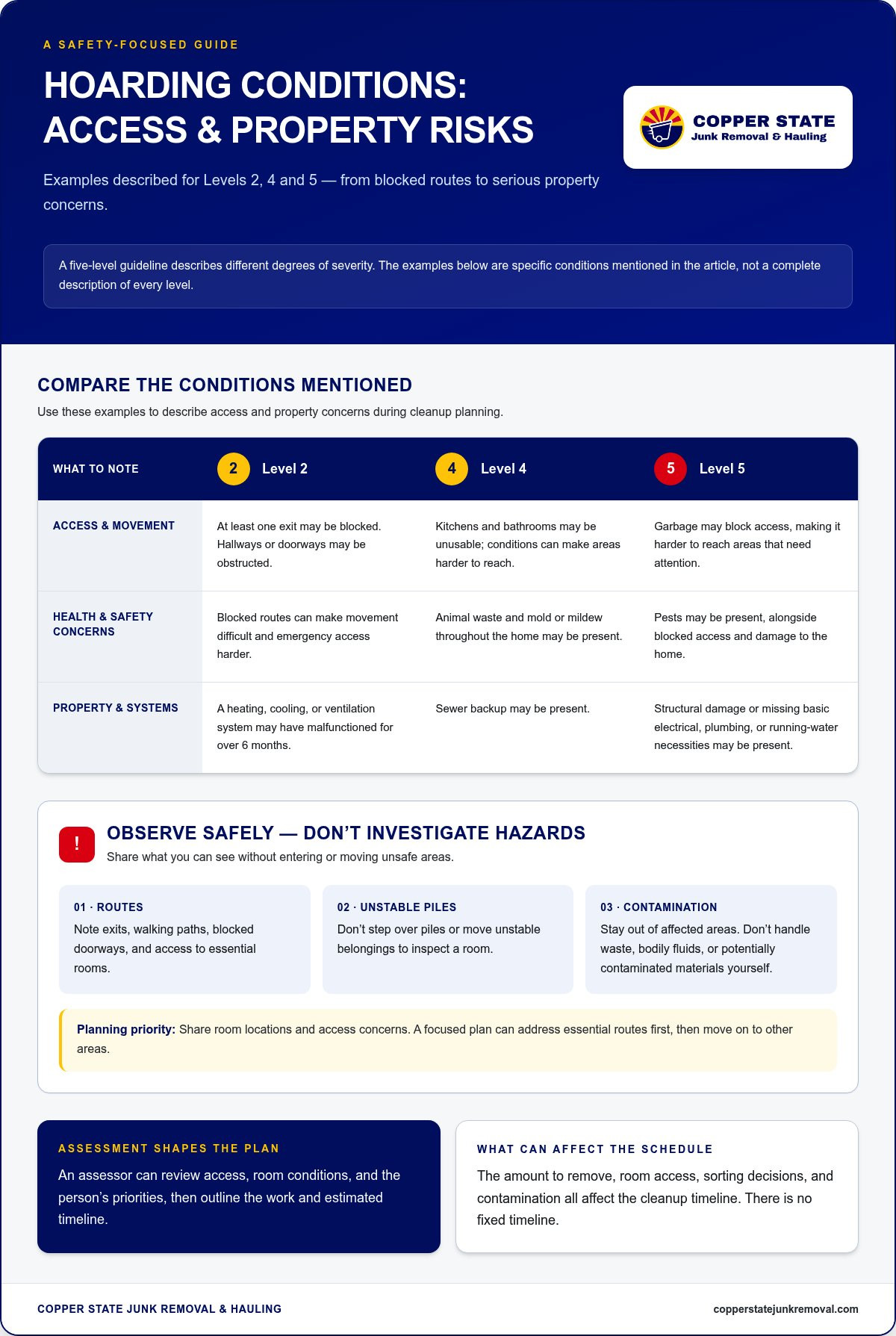
Hoarding Level 4 can involve sewer backup, unusable kitchens and bathrooms, animal waste, and mold or mildew throughout the home. Level 5 can include structural damage, pests, garbage blocking access, and missing basic electrical, plumbing, or running-water necessities. These conditions can interfere with everyday tasks and make it harder to reach areas that need attention.
Look for blocked paths, unstable piles, and rooms that cannot be reached safely. Hoarding can create fall hazards and make emergency access harder. Don’t step over piles or move unstable belongings to inspect a room. Note which areas are difficult to enter and share those observations during cleanup planning.
Trip and Fire Hazards
Hoarding Level 2 can include at least one blocked exit. Belongings across a hallway or doorway can obstruct a route out of the home and make movement difficult. Notice whether doors open fully and whether a clear path connects occupied rooms to an exit.
Piles can make rooms harder to move through and obstruct access during an emergency. Look for blocked doorways, narrow paths, and belongings that prevent safe passage. Avoid shifting unstable stacks yourself. These observations help prioritize clearing routes before less urgent spaces.
Start by listing the access concerns that matter most, such as a blocked doorway or an unusable bathroom. Share the room locations and any visible obstacles when arranging cleanup. A focused plan can address essential routes first, then move on to other areas. If you need help clearing blocked spaces, discuss hoarder cleanup for the property.
Odors, deferred maintenance, and concealed damage
Strong odors can signal a cleanup issue beyond visible clutter. Severe hoarding can be associated with strong odors, structural concerns, and rooms that are difficult to use. Don’t treat an odor as proof of one specific cause. Note where it is strongest and whether it changes near a particular room or surface. Those observations can help describe the work needed during an assessment.
Deferred maintenance can add another layer. Hoarding Level 2 can involve a heating, cooling, or ventilation system that has malfunctioned for over 6 months. Record which system is affected and which rooms feel difficult to use. Include that information in the cleanup plan, since restoring a home can involve more than removing belongings.
Damage may be hidden beneath stored items. As access improves, visible concerns on walls, floors, or other surfaces may become easier to assess. Porous materials and hard surfaces require different cleaning approaches, and some surfaces may need repair. An assessment helps distinguish belongings to remove from issues involving the home itself.
Hoarding cleanup services can include sewage or toilet overflow cleanup and odor removal. Depending on the property’s condition, professionals may also provide water or fire damage restoration, mold remediation, air duct and HVAC cleaning, or surface cleaning and repair. These are distinct tasks, so describe visible odors, past overflows, and known system problems when discussing the project.
Keep planning practical. First, note the affected rooms and visible maintenance concerns. Next, identify areas that need access before cleaning can begin. Then discuss which issues involve belongings, surfaces, or home systems. This clear picture makes a challenging cleanup easier to plan and helps prioritize restoring usable space.
Discreet service and scheduling
Privacy concerns can make arranging cleanup feel difficult. Decide who should know about the project, which areas need attention, and how the household prefers to discuss the work. For example, a family member might coordinate access while the resident chooses which belongings need review.
Before arranging an assessment, prepare a short description of the property. Note the rooms involved, blocked access, visible odors, and any known contamination. These details help the team understand the project and plan the assessment. You can also mention practical concerns, such as a narrow entrance or belongings that must remain untouched.
Use the assessment to set clear priorities. Identify essential spaces first, such as a hallway, bedroom, kitchen, or bathroom. Then discuss how sorting decisions will be handled and what should happen when an item’s status is uncertain. A written scope can help everyone understand the planned work and reduce confusion on cleanup day.
Discretion also means agreeing on communication and access arrangements. Before the appointment, clarify who will be present, how the team should enter, and whom to contact with questions. If neighbors or building staff may notice activity, plan a simple, truthful response that protects the resident’s privacy without adding pressure.
Scheduling depends on the project’s needs, including the property’s condition, access, and amount of material to remove. An assessment helps establish an appropriate sequence and estimated timeline. Mention contaminated areas early so the plan can account for safe handling. Avoid entering those areas or moving potentially contaminated materials yourself.
Keep a small preparation list: confirm access, set aside essential belongings, identify priority rooms, and share any safety concerns. These steps help make the appointment more organized while leaving decisions about personal possessions with the household. If clearing a home feels challenging, schedule a hoarder cleanup to begin discussing the property and its priorities.
Copper State Junk Removal & Hauling: Hoarder Cleanup
Copper State Junk Removal & Hauling provides Hoarder Cleanup for households facing a challenging property-clearing project. Turn to this service when accumulated belongings have made rooms difficult to use and you need help moving the cleanup forward.
Before arranging the work, identify which rooms need attention and which belongings should remain. Sharing those priorities helps shape a clear plan around the household’s needs. For a related transition, Assisted Living Cleanouts can help clear a residence as someone moves into assisted living. Mattress Removal is also available when an unwanted mattress is part of the cleanup.
Every home has its own concerns, from crowded rooms to limited access. Start with the details that matter most to your family, such as priority spaces and items to keep. Contact Copper State Junk Removal & Hauling to discuss Hoarder Cleanup for your home.
Make room for a manageable next step
Progress can begin with a decision that feels possible today, rather than a plan to solve everything at once. A family might agree on one priority, such as making a shared room easier to use or preparing a home for a transition. Keeping the resident involved in decisions can make the next step feel more personal and considered.
Choosing hoarding remediation services is a practical decision, not a judgment about someone’s character. Share the main goal, explain what matters to the household, and start a conversation about the work ahead. Copper State Junk Removal & Hauling can help you discuss a hoarder cleanup suited to your situation.
Contact Copper State Junk Removal & Hauling to talk about a possible next step. A thoughtful start can make a difficult process feel more manageable.
Frequently Asked Questions
What is Hoarding?
The American Psychiatric Association describes hoarding as a persistent difficulty getting rid of or parting with possessions because of a perceived need to save them. It isn’t simply a matter of having a messy room. Belongings may build up until a table or doorway can’t be used, while the person still feels those items are important to keep. Understanding this can help families approach conversations with care.
What do hoarding remediation services include?
Hoarding remediation services typically involve assessing the space, setting cleanup priorities, and removing belongings identified for removal. The plan can prioritize rooms that need to become usable, such as a bedroom or kitchen. If the assessment reveals sewage, bodily fluids, or other contamination, specialized cleaning may be needed. The work depends on the property’s condition and the household’s goals.
What health and safety risks are involved in hoarding cleanup?
Blocked paths and crowded rooms can increase the risk of trips and falls, obstruct exits, and make emergency access harder. Waste, moisture, or neglected areas may also contribute to mold or pest concerns. A narrow path through a room, for example, can make routine movement difficult. Keep away from contaminated areas and share visible concerns during cleanup planning so safety priorities are clear.
How much does hoarding cleanup cost in the United States?
There is no fixed price for a hoarder cleanout; Copper State provides a quote based on the project. The estimate depends on labor, access, volume, sorting needs, and whether contaminated areas require specialized cleaning.
What certifications or training should hoarding remediation professionals have?
Look for training in respectful hoarding response, protective equipment, and contamination awareness. Ask what training supports the planned tasks.


