

A cluttered home doesn’t mean everything inside should be thrown away. In Chino Valley, Prescott, and nearby Arizona communities, compassionate hoarder cleanup can start by sorting belongings into clear keep and removal groups. The resident’s choices should guide what stays and what goes.
It’s understandable to worry about safety, the time involved, or losing belongings with personal meaning. A cleanup may take a few days or several weeks, depending on the clutter and the resident’s comfort level. This guide explains the process, how to approach safety and timing, and how to identify useful or sentimental belongings for recovery. It also covers when professional help can make a difficult cleanout more manageable, without rushing decisions about personal possessions.
Key Takeaways
- Learn how cleaning, disinfection, and contamination removal address different needs during a hoarding cleanout.
- Understand how clutter severity, safety concerns, and the resident’s comfort shape the cleanup plan.
- Use a clear sorting approach to help protect useful possessions and items with personal meaning.
- See how Hoarder Cleanup can help when clearing a home feels too difficult to manage alone.
What is hoarding cleanup in Kansas And Missouri?
In Chino Valley, Prescott, and nearby Arizona communities, hoarding cleanup can include sorting, clutter removal, and cleaning. Compassionate hoarder cleanup gives residents a chance to identify belongings they want to keep before items are removed.
Cleaning and Contamination Removal
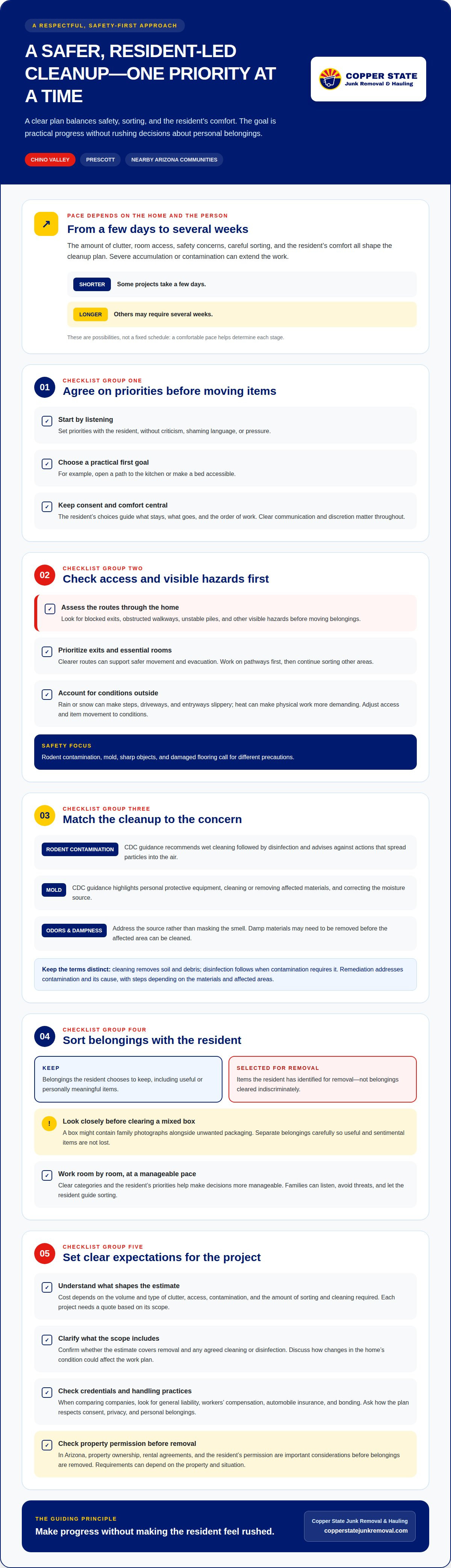
Crews assess visible concerns such as rodent contamination, mold, standing water, and strong odors. Cleaning removes soil and debris; disinfection follows when contamination requires it. The Centers for Disease Control and Prevention recommends wet cleaning followed by disinfection for rodent contamination and advises against actions that spread particles into the air. For mold, CDC guidance highlights personal protective equipment, cleaning or removing affected materials, and correcting the moisture source.
Odor removal starts by addressing the source rather than masking the smell. Damp materials, for example, may need to be removed before the affected area can be cleaned. Remediation addresses contamination and its cause, with the appropriate steps depending on the materials and affected areas.
Sorting and Clutter Removal
Sorting separates belongings to keep from items selected for removal. A box might contain family photographs alongside unwanted packaging, so belongings need to be distinguished rather than cleared indiscriminately. Clear categories can protect useful items and make decisions more manageable. Compassionate hoarder cleanup should proceed with the resident’s consent and priorities at the center.
Hoarding behaviors can be a symptom of deeper psychological concerns, and the American Psychiatric Association classifies hoarding as a mental health disorder. A respectful process avoids shaming language and gives the resident a role in decisions. In Prescott Valley, Cottonwood, or Sedona, Copper State Junk Removal & Hauling can provide Hoarder Cleanup, sorting room by room and clearing clutter from living areas and pathways.
Are there local laws, permits, or landlord rules for hoarding cleanup? Requirements can depend on the property and situation. In Arizona, property ownership, rental agreements, and the resident’s permission are important considerations before belongings are removed.
What factors affect the cost of a hoarder cleanup? Cost depends on the volume and type of clutter, access, contamination, and the amount of sorting and cleaning required. The estimate should reflect the project’s specific scope.
Cleanup timelines and professional safety
A cleanup plan balances the amount of clutter, room access, safety concerns, and the resident’s comfort. Some projects take a few days; others may require several weeks. Severe accumulation, contamination, and careful sorting can extend the work, while a comfortable pace helps shape each stage.
Before moving items, crews assess walkways, unstable piles, blocked exits, and visible hazards. Rodent contamination, mold, sharp objects, and damaged flooring call for different precautions. For rodent contamination, the Centers for Disease Control and Prevention recommends wet cleaning followed by disinfection and advises against actions that disperse particles into the air. For mold, CDC guidance highlights personal protective equipment, cleaning or removing affected materials, and correcting the moisture source.
Fire safety starts with clearer routes through the home. Cluttered hallways and blocked doors can make evacuation unsafe during a fire. Crews can prioritize pathways to exits and essential rooms, then continue sorting other areas. This practical sequence can improve safer mobility without forcing the resident to make every decision at once.
Weather can affect safe access to a property and the movement of items. Rain or snow may make steps, driveways, and entryways slippery, while heat can make physical work more demanding. A careful plan accounts for outdoor conditions and adjusts how crews enter, move belongings, and keep routes clear.
Families may find the situation overwhelming, especially when health or mental wellbeing is part of the concern. Discreet hoarding cleanup services use a steady pace, clear communication, and consent-based decisions rather than treating the home as a race to empty. The resident’s comfort can influence the order of work and the time needed. If clutter blocks daily movement or creates immediate access concerns, hoarder cleanup support can help organize the next steps.
Compassionate, discreet hoarding cleanup
Respectful cleanup protects the resident’s choices while making practical progress. A clear plan can support restoration without judgment or pressure.
Respectful, Discreet Cleanup Support
Professional help should begin with listening, not criticism. Specialists can agree on priorities with the resident, such as opening a path to the kitchen or making a bed accessible. Discretion also means keeping conversations focused and treating personal belongings carefully. Families can support the resident by listening, avoiding threats, and letting them guide sorting decisions.
When comparing companies, look for general liability, workers’ compensation, and automobile insurance, plus bonding. Also consider whether the cleanup plan respects consent and explains how belongings will be handled.
Compassionate Cleanup Costs
There’s no single cost for compassionate hoarding cleanup in the United States. The price depends on the amount and type of clutter, access, contamination, and the time needed for sorting and cleaning. Hoarder cleanouts require a quote because each project has a different scope.
A clear project scope helps explain what the estimate covers, such as removal and any agreed cleaning or disinfection. Discuss how changes in the home’s condition could affect the work plan, so expectations stay clear as the cleanup progresses.
Finding a Reputable Local Service
To find a nearby service, compare its stated cleanup process, insurance, bonding, and approach to privacy. A reputable team should explain how it protects the resident’s choices and handles personal items. Look for respectful communication, not promises that every situation follows the same schedule.
Families can help by sharing practical priorities, such as keeping medication and daily-use items accessible. The resident’s comfort should guide the pace, especially when the home feels overwhelming.
Trauma-Informed Cleanup Steps
A considerate process starts with a conversation about goals, boundaries, and urgent needs. Next, agree on a manageable area, such as one doorway, and sort belongings with the resident’s input. Items selected for removal are handled according to those decisions.
After sorting, crews handle the agreed removal and cleaning tasks, then review progress with the resident. This step-by-step approach keeps judgment out of the process and gives the resident room to pause, ask questions, or adjust priorities.
Recovering useful, valuable, and sentimental belongings
Careful sorting can reclaim usable space while protecting belongings with practical or emotional value. A clear assessment helps guide decisions without sacrificing dignity.
Keeping, Donating, and Discarding Belongings
Sort items into clear groups: keep, donate, and discard. A working lamp might stay, while a clean coat could be set aside for donation. Broken or unusable items may belong in the discard group. Family members can help identify priorities, but the resident’s choices should guide what happens to personal possessions.
Keep groups manageable by working through one shelf, drawer, or room at a time. Label boxes with simple descriptions, such as “kitchen keep” or “donation,” so items don’t get mixed together during removal.
Recovering Valued Items and Documents
Important papers can hide inside boxes, bags, or stacks of mail. During sorting, separate documents such as identification, insurance papers, property records, and account statements for the resident to review. Keep sensitive paperwork together in a confidential container, rather than leaving it in a general discard pile.
Family members can point out categories that matter, such as photographs, letters, or keepsakes. The resident can make the final decision about specific items. This focused step helps protect valuable belongings without treating every object as equally important.
Preserving Personal Belongings
Handle fragile possessions separately from general clutter. Wrap a framed photograph or place small jewelry in a labeled container to reduce the chance of loss or damage during sorting. Keep items selected for preservation in a clean, designated area, away from materials awaiting removal.
Some decisions carry emotional weight. Pause when an item’s story is unclear and give the resident time to consider it. A deliberate process supports comfort and respect while helping restore usable areas of the home.
Ready to clear space while keeping valued belongings in view? Arrange hoarder cleanup support for a careful, organized cleanout.
Copper State Junk Removal & Hauling: Hoarder Cleanup
Copper State Junk Removal & Hauling provides Hoarder Cleanup for people facing a difficult home cleanout. When clutter makes rooms hard to use or belongings difficult to sort, the service can help move the cleanup forward. Share which areas need attention and which belongings should remain, so the work reflects the resident’s priorities.
For related transitions, Assisted Living Cleanouts can help clear a home as someone moves into assisted living. Mattress Removal can address an unwanted mattress during a cleanout. Each service focuses on its specific removal or clearing needs.
If you’re ready to discuss a hoarding cleanout, contact Copper State Junk Removal & Hauling.
Take the Next Step at Your Own Pace
Choosing compassionate hoarder cleanup can be a meaningful step toward making a home feel more manageable. You don’t need to have every decision settled before beginning a conversation. Start by identifying what feels most urgent, whether that’s opening a room, making daily routines easier, or creating space for a family transition.
When you’re ready, share your priorities and the areas causing the greatest concern. A clear starting point can help turn an overwhelming situation into a practical plan, with the resident’s needs at the center. Progress can begin with one conversation and one manageable goal.
Discuss your hoarder cleanup needs with Copper State Junk Removal & Hauling and take the next step toward a more usable home. Each thoughtful decision can help create room for what matters.
Frequently Asked Questions
Do you throw everything away?
No. A hoarding cleanout doesn’t mean automatically discarding everything inside the home. Items the resident wants to keep should be separated from belongings selected for removal. Set uncertain items aside for a later decision rather than treating uncertainty as permission to discard. This is especially useful for mixed boxes containing both unwanted household goods and personal papers.
Do you work with social services or mental health professionals?
Cleanup work and mental health or social services play different roles. The American Psychiatric Association classifies hoarding as a mental health disorder, so emotional support may be relevant alongside clearing the home. Families can involve professionals already supporting the resident and keep cleanup decisions focused on the home. A cleanup crew should not be treated as a substitute for mental health care.
How long will it take to restore my home?
Some hoarding cleanups take a few days, while others require several weeks. The amount of clutter, contamination, room access, and pace of sorting all affect the schedule. Track progress with agreed milestones, such as making a kitchen usable or clearing a route to an exit. Then move forward area by area.
Is hoarding cleanup covered by insurance?
Insurance providers consider hoarding to be self-vandalism, and damage caused by neglect, including mold, water, or biohazards, will not be covered. Cleanup work and damage to the home are separate concerns, so keep records of affected areas and related communication. Review the policy language for the specific property and distinguish cleanup expenses from repair claims.
Is it safe for family members to clean a hoarder’s home themselves?
It can be unsafe if clutter conceals sharp objects, unstable piles, mold, or rodent contamination. Family members should avoid entering blocked or visibly hazardous areas and should not disturb rodent-contaminated material in ways that spread particles into the air. Wet cleaning followed by disinfection is recommended for rodent contamination. If access or contamination creates a serious concern, pause before handling items.
Is this junk removal?
Yes, unwanted-item removal and hauling are part of a hoarding cleanout, but the work may involve more decisions than a routine pickup. A room, for example, can contain items to retain alongside belongings selected for removal. Copper State Junk Removal & Hauling provides Hoarder Cleanup, along with Assisted Living Cleanouts and Mattress Removal for related clearing needs.


