

A cleared home can ease daily strain, but cleanup alone cannot address the emotional side of hoarding. Hoarding clean up services can help make living spaces more usable, while mental-health professionals can support the challenges behind the clutter. Cleanup is a practical step, not a substitute for that support.
It’s understandable to feel unsure where to begin, especially when several rooms need attention. A respectful approach prioritizes safety, dignity, and progress without judgment.
This article explains how cleanup may support well-being, what can affect a project’s cost and timing, and what to expect from an onsite estimate. It also covers how residential and commercial remediation can differ, so you can better understand the process and plan a manageable next step.
Key Takeaways
- Use an onsite assessment to clarify the areas involved, cleanup priorities, and the work needed for a tailored estimate.
- A cleared, more usable space may ease day-to-day strain, while emotional support can address challenges that cleanup alone can’t resolve.
- Project duration can range from a few hours to several days, depending on the space and the cleanup needs.
- Choose a respectful process that protects dignity and gives people a voice in decisions about belongings.
- Residential and commercial cleanups have different site needs; consider access, safety concerns, and how the space is used when planning.
Onsite consultations and estimates
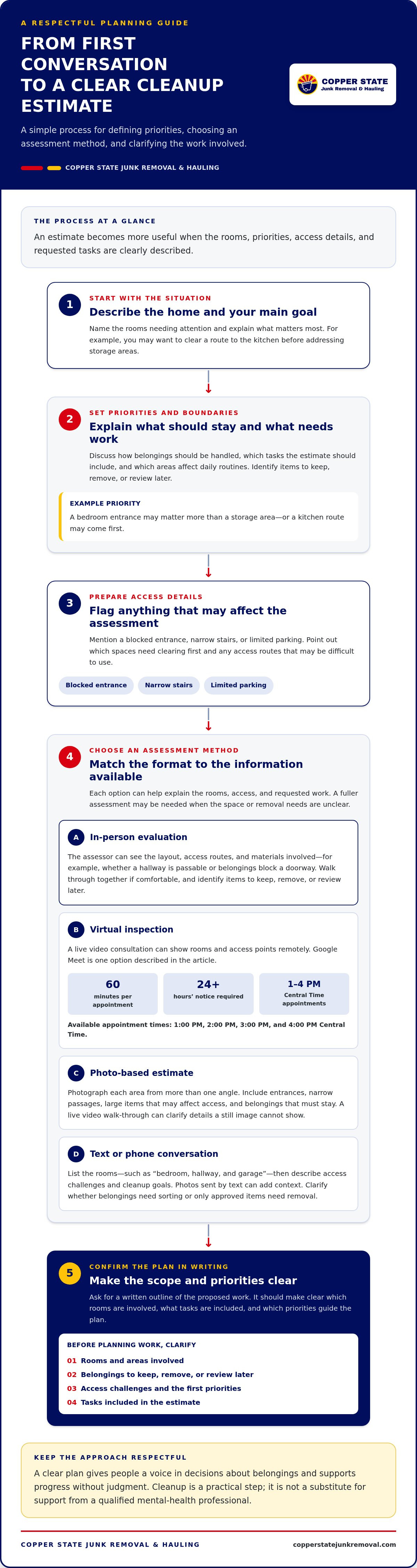
A useful estimate defines the rooms involved, what should remain, and the work requested. Choose an assessment method that gives the assessor a clear understanding of the property and your priorities.
Consultation and Estimate Process
Start by describing the home, the rooms needing attention, and your main goal. For example, you may want to clear a route to the kitchen before addressing storage areas. Discuss how belongings should be handled and which tasks the estimate includes. These details give the assessor a practical starting point and help align the proposed work with your needs.
Next, note access details that could affect the assessment, such as a blocked entrance, narrow stairs, or limited parking. In Chino Valley or Prescott, explain which areas are residential and which spaces need clearing first. Ask for the proposed scope in writing. A clear outline helps you understand what work is included and which priorities guide the plan.
On-Site Evaluations
An in-person estimate lets the assessor see the property’s layout, access routes, and the materials involved. They can assess whether a hallway is passable or stacked belongings block a doorway. These observations help shape an estimate around the home itself, rather than a brief phone description.
Walk through the areas together if that feels comfortable, and identify belongings to keep, remove, or review later. Point out rooms that affect daily routines. For example, explain whether clearing a bedroom entrance matters more than addressing a storage area. Recording priorities during the visit helps keep decisions clear as the work is planned.
Virtual and Photo-Based Estimates
A virtual consultation can show the assessor rooms and access points remotely. Google Meet is one option described for virtual inspections. Appointments last 60 minutes and require at least 24 hours’ notice. Available appointment times are 1:00 PM, 2:00 PM, 3:00 PM, and 4:00 PM Central Time.
For a photo-based estimate, take clear pictures of each area from more than one angle. Include entrances, narrow passages, and large items that may affect access. Note which belongings must stay. Photos provide useful context, while a live video walk-through can clarify details a still image cannot show.
Text or Phone Estimates
A text or phone conversation can outline the property, rooms involved, and cleanup goals. Give a short list, such as “bedroom, hallway, and garage,” then describe access challenges. Photos sent by text can add useful context. A preliminary estimate may need a fuller assessment if the space or removal needs are unclear.
Use the conversation to clarify the proposed scope and next steps. For example, if you describe a garage, specify whether stored belongings need sorting or only approved items need removal. A written summary keeps those instructions accessible and helps the assessor understand your priorities before planning work in Prescott Valley or nearby.
Can Hoarding Cleanup Aid in Improving Mental Health?
Cleanup can make rooms more usable, but it isn’t mental-health treatment. Hoarding clean up services may reduce practical barriers at home; support from a qualified mental-health professional can address emotional challenges separately.
Sorting and Debris Removal
Agree on sorting categories before lifting begins: keep, remove, and review later. A labeled box can protect sentimental belongings while approved debris is hauled away. Clearing a route to a bedroom, for example, can improve access without requiring a decision about every item at once.
Hoarding clean up services should follow the resident’s instructions about what stays. Sorting is especially important when papers, photographs, or everyday items are mixed with debris. A written list of priorities gives everyone a shared reference and helps prevent belongings set aside for review from being removed by mistake.
Odor Removal and Disinfection
Once clutter is removed, newly exposed surfaces can be assessed for residue and odor sources. Disinfection and odor treatment are separate from hauling, so clarify whether they are included in the requested work. For example, clearing items around a sink may reveal whether a smell comes from visible residue or another source needing attention.
After removal, note which areas still need cleaning. A separate cleaning service may be needed for surfaces or odors beyond the hauling work. This distinction keeps expectations clear: removing belongings does not also disinfect every surface.
Waste and Hazardous-Item Removal
Do not handle blood, tissue, animal carcasses, or bodily fluids as ordinary household debris. These materials can pose health risks. Point them out during planning and keep others away from the affected area. Sharps and damaged containers also need attention before anyone attempts to lift or move surrounding clutter.
Cleanup and Junk Removal Services
Junk removal usually focuses on hauling selected items. Hoarding cleanup may involve more sorting decisions and staged removal in crowded spaces. Removing a mattress is a simpler scope than clearing mixed belongings throughout a room. Compare the planned tasks, not just the service label, to understand what the home needs.
Large furniture and appliances may block access or conceal debris. Identify what should stay, then plan a clear route for removing approved items. If emotional distress is part of the situation, a mental-health professional can provide support alongside practical cleanup. For help planning item removal, explore hoarder cleanup options.
Cleanup costs and project duration
The cost depends on the amount and type of material, access, sorting needs, and requested scope. A hoarder cleanout may take from a few hours to several days, depending on the space and cleanup needs. Copper State Junk Removal & Hauling provides a quote based on the work involved.
Hoarding Cleanup Pricing
A useful estimate connects the planned work to specific rooms and tasks, rather than relying on a broad label like “whole-home cleanup.” It should explain which areas are included, what will be removed, and whether sorting or post-removal cleaning is part of the scope. Ask for a written breakdown to see which tasks are included.
For example, clearing one room differs from addressing several living areas with mixed belongings and debris. An estate cleanout may involve reviewing items before removal begins. Explain which belongings need family review and which areas matter most. A clearly defined scope helps you understand how those decisions shape the work.
Factors Affecting Cleanup Costs
The main cost factors include the volume and type of material, the rooms involved, and the effort required to access items. A blocked stairway, heavy furniture, or tightly packed room can affect removal. Sorting belongings for review also requires a different plan from removing approved items from a cleared area.
Cleanup needs matter too. Ordinary debris and materials that may pose health risks require different planning. Blood, tissue, animal carcasses, and bodily fluids can pose health risks. Point out visible concerns during the assessment and identify items that must remain. This helps align the estimate with the property and agreed tasks.
Project Duration
A cleanout can take from a few hours to several days. The space’s size and cleanup needs shape the schedule. Clearing one accessible room may take less time than addressing several crowded areas with difficult access and belongings that need review. The work plan should reflect the actual scope.
To organize the work, identify the first area you need to use again, such as a bedroom or kitchen. Then list belongings that need review before removal. This gives the team a practical sequence without rushing decisions. If you add rooms or tasks after work begins, the schedule may change because the project now includes more work.
Compassionate, non-judgmental hoarding cleanup
When choosing a nearby service, look for a company that explains its process, respects privacy, and provides a clear scope. Ask how the team will handle belongings, access, and sensitive information before work starts.
Compassionate and Discreet Cleanup
Respect shows in practical choices. Before the crew enters, agree on which rooms they can access, who can make decisions, and how items will be sorted. For example, set aside a separate area for belongings needing review so they do not mix with debris. Clear instructions keep decisions visible and reduce confusion during removal.
Discreet work also means setting expectations for conversations and photographs. Decide who should receive updates and whether images may be taken for planning. The cleanup company should explain how it handles these details rather than making assumptions. If a neighbor or family member is involved, clarify their role before the first visit so the resident retains a say.
Compassion does not mean avoiding direct discussion. It means describing hazards and next steps without judgment or labels. If a blocked doorway limits access, explain the issue and agree on a practical priority. A calm, specific plan can make a difficult cleanup easier to follow, while emotional and mental-health needs remain distinct from the physical work.
Finding a Reputable Cleanup Service
Start with the written scope. It should name the areas involved, the belongings to retain, and the materials scheduled for removal. Review the estimate and ask for unclear tasks to be explained in plain language. These steps make it easier to understand the work and keep it aligned with the household’s priorities.
Insurance and bonding are important selection criteria. Hoarding cleanup companies should carry general liability, workers compensation, and automobile insurance, and should be bonded. Ask to see documentation before work begins. These protections address different aspects of a cleanup operation, including property, workers, and vehicles used during the job.
For a local search, compare how each company describes its process and communication, not just its service name. Look for a clear plan for sorting, removal, and handling sensitive belongings. Ask how the team approaches hazards and privacy. Blood, tissue, animal carcasses, and bodily fluids can pose health risks, so identify these materials during planning.
Before scheduling, write down your priorities, such as keeping family photographs or clearing a path to a room. Share that list with the cleanup team and agree on who can approve changes. A named point of contact, a written scope, and documented insurance details give the household concrete information to use throughout the project.
Residential and commercial hoarding remediation
Residential and commercial properties need plans built around how people use each space. In both settings, remediation starts by identifying access, safety concerns, and the areas that must become usable.
Residential Properties
At home, families may need cleanup to restore access to everyday spaces such as a bedroom, kitchen, or bathroom. Identify which areas affect daily life most, then agree on belongings to keep, review, or remove. A clear priority list helps the crew work room by room without treating every item as unwanted.
Severe hoarding situations can involve fire hazards, vermin or insect infestations, and injuries from tripping over debris or sharps. These risks can affect residents, relatives, and anyone entering the property. In unsafe or hazardous cleanups, adequately trained and certified professionals should remove and dispose of debris. First responders, law enforcement, and fire departments may advise people to seek a certified biohazard or hoarding-remediation cleanup company.
For example, a family might first need a safe route to a bathroom, then address a bedroom. Items set aside for family review or donation should be separated from debris. Donation depends on the items being suitable and accepted by the intended organization, so plan for it separately from removal.
Commercial Properties
Commercial spaces need a plan that considers how rooms support work, storage, or service. A blocked hallway in an office, for example, affects access differently from a crowded stockroom. Map the affected areas, note entrances and shared routes, and identify which spaces need attention first.
Before removal, determine who can approve decisions about stored materials and equipment. Separate items to retain from debris, and keep the work area distinct from spaces still in use. If the property includes customer-facing rooms, plan the sequence around access and privacy. The goal is a defined, usable space, not simply a cleared floor.
Plan the Remediation
Use a property-specific plan rather than assuming residential and commercial projects follow the same sequence. Record priority areas, access restrictions, items to retain, and visible hazards. For a workplace, include the person responsible for the site; for a home, include the resident or chosen family decision-maker.
Junk removal focuses on hauling selected items, while remediation may also require careful debris assessment and attention to unsafe conditions. Keep those scopes distinct in the plan. If you need professional hoarding clean up services in Arizona, contact Copper State Junk Removal & Hauling to discuss the space, schedule a consultation in Mountain Standard Time, and review your priorities.
Copper State Junk Removal & Hauling: Hoarder Cleanup
Copper State Junk Removal & Hauling provides Hoarder Cleanup for people ready to clear a home or specific rooms. If a family member is moving into assisted living, Assisted Living Cleanouts can help with belongings during that transition. The right starting point depends on the space, items involved, and areas you want cleared first.
Before reaching out, note which rooms need attention and identify belongings that should stay. Mention access challenges, such as a blocked hallway or bulky furniture. These details make the first conversation practical and focused on your priorities.
For a cleanup plan tailored to your situation, contact Copper State Junk Removal & Hauling.
Take the Next Step Toward a Clearer Space
Progress doesn’t have to begin with clearing an entire property. Choose one practical priority, such as opening a walkway, preparing a room for a transition, or removing a bulky item. That first decision can make the next conversation more focused and manageable.
Choosing hoarding clean up services is a personal decision. Copper State Junk Removal & Hauling offers Hoarder Cleanup, Assisted Living Cleanouts, and Mattress Removal. Share what you hope to accomplish and which belongings need careful consideration, then discuss a workable next step. If the cleanup is part of a move or change in living arrangements, explain that context so the plan reflects what matters to you.
Start with a simple description of the space and your main priority. Contact Copper State Junk Removal & Hauling to talk through your cleanup needs. A respectful conversation can help you move forward at a pace that feels right.
Frequently Asked Questions
Can you hire someone to clean a hoarder’s house?
Yes. You can hire a professional company for a hoarding-related home cleanout, including removal of agreed belongings and debris. Start by identifying a priority, such as clearing a bedroom entrance, and setting aside sentimental items for review. Copper State Junk Removal & Hauling provides Hoarder Cleanup for residential and commercial properties. Cleanup can help restore usable space, but it isn’t a replacement for mental-health support.
Do you help after a tenant moves out or during estate cleanouts involving hoarding?
Yes. Hoarding-related cleanup can be part of a tenant turnover or estate project. Copper State Junk Removal & Hauling provides Hoarder Cleanup and Estate Cleanout, while Assisted Living Cleanouts can support a move into care. For a rental, separate items the owner needs to retain from belongings approved for removal. For an estate, identify the decision-maker and family review priorities. Copper State Junk Removal & Hauling serves communities including Prescott and Chino Valley.
Do you work directly with family members, caregivers, or social workers?
Families and caregivers can help set priorities, identify belongings to keep, and share access details with the person coordinating the cleanup. A social worker can also help communicate relevant household needs. Name one person to approve removal decisions and choose how updates should be shared. For example, relatives can agree beforehand who decides whether furniture stays, reducing conflicting instructions during the project.
How Does Hoarding Affect Health & Safety?
Severe hoarding situations can create fire hazards, vermin or insect infestations, and trip injuries from debris or sharps. Blood, tissue, animal carcasses, and bodily fluids can also pose health risks. If you see blocked exits, sharp objects, or biological materials, keep others away from those areas and point them out during cleanup planning. Prioritize clearing safe access routes.
How it Works?
Begin by describing the property, the areas involved, and what must remain. Next, agree on the cleanup scope and identify who can make decisions about belongings. During removal, keep items marked to stay separate from approved debris. For example, label a room or container for family review before the crew begins hauling. After removal, inspect the cleared areas and identify any remaining cleaning needs.
How will your team be discreet during the cleanup?
Share your privacy preferences before work begins. Name the person who should receive updates, clarify who may enter the property, and explain how you want conversations handled around neighbors or visitors. For example, ask that project details be discussed only with the designated contact. Copper State Junk Removal & Hauling provides Hoarder Cleanup; include your privacy preferences when discussing the project scope.
What services do hoarding cleanup companies provide?
Services can include sorting belongings, lifting and hauling approved items, removing debris, and clearing access to rooms. Some projects also involve bulky furniture or appliances. The exact scope depends on the property and work requested. Copper State Junk Removal & Hauling provides Hoarder Cleanup, as well as services such as Mattress Removal and Assisted Living Cleanouts. Cleanup and hauling are distinct from specialized hazardous-material handling.
How much does professional hoarding cleanup cost in the United States?
There’s no single flat cost for every hoarding cleanup in the U.S. The price depends on the amount and type of material, areas involved, access, sorting needs, and requested scope. Copper State Junk Removal & Hauling provides a quote based on the specific work planned. A clear estimate connects those factors to the property and agreed tasks.


