
Large household items like sofas, mattresses, and appliances can be difficult to move and dispose of on your own. A bulky item pickup service can handle the lifting and hauling, but the right option depends on your address, the item, and whether you choose municipal collection or private removal.
Getting rid of an oversized item can feel like a chore before you’ve even moved it outside. You need to know what can be collected, how the pickup works, and whether the item may be donated or recycled rather than discarded.
This guide explains how to identify bulky items, prepare for pickup, and choose between municipal collection and private hauling. You’ll also learn what affects pricing and how to plan for responsible disposal, so you can clear space with fewer surprises.
Key Takeaways
- Sort large items by material and condition before setting them out; collection rules can vary by address.
- Check your local pickup program’s item limits and set-out instructions before placing bulky items curbside.
- Find out how your area handles furniture, appliances, and mattresses, since collection steps can differ by item and location.
- Before booking online, gather item details and review how the pickup process and quote account for the job.
- Consider whether items may be suitable for donation or recycling, and explore a cleanout service when clearing a whole home feels overwhelming.
How do I prepare items for bulky pickup?
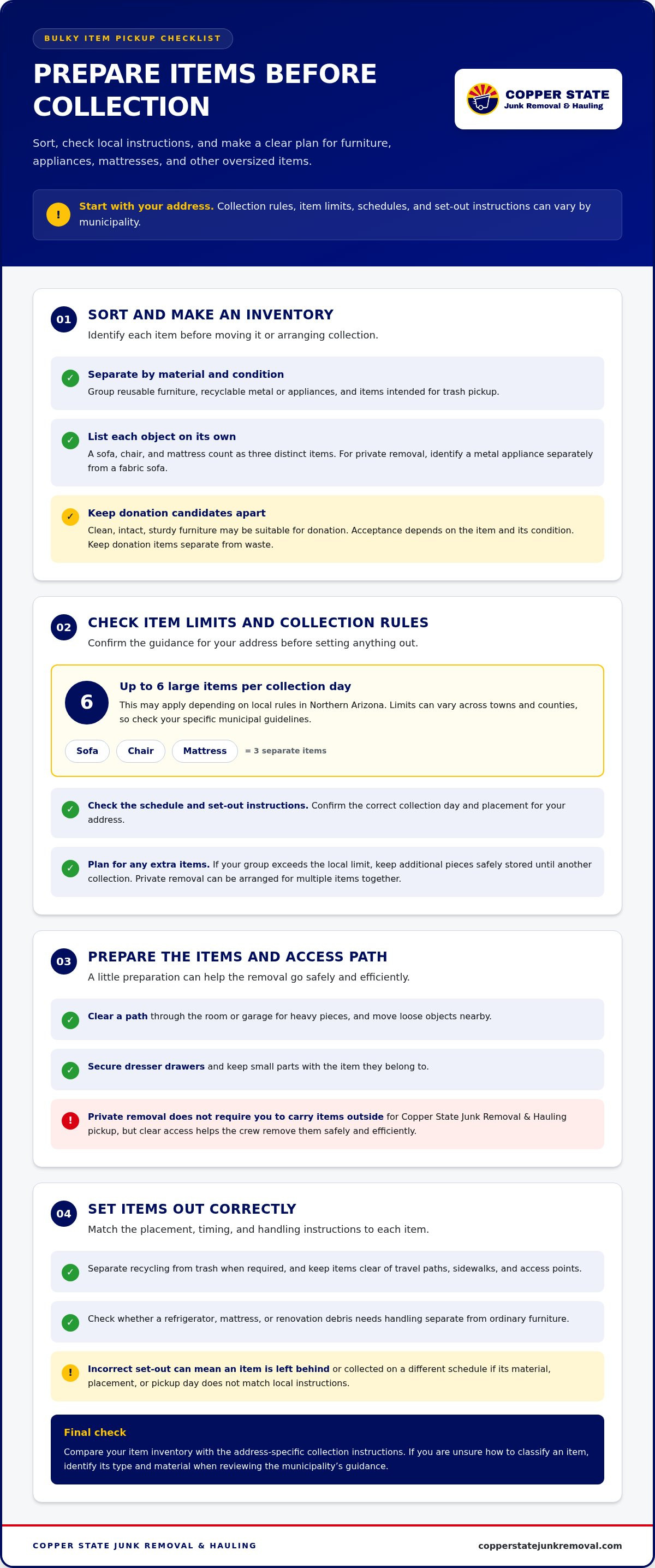
Sort each item by material, condition, and collection method before setting it out. In Northern Arizona, follow the sanitation instructions for your address, since local pickup rules can differ.
Preparing Items for Collection
Make a short inventory before moving anything. Separate reusable furniture, recyclable metal or appliances, and items intended for trash pickup. Check the local collection schedule for the correct set-out day and placement. Keep donation items clean and apart from waste so they don’t get mixed into the trash pile.
For heavy pieces, clear a path through the room or garage and remove loose objects nearby. Secure dresser drawers and keep small parts with the item they belong to. You don’t need to carry items outside for Copper State Junk Removal & Hauling's pickup, but clear access helps the crew remove them safely and efficiently.
Accepted Bulky and Heavy Items
Common bulky household items include sofas, tables, chairs, mattresses, and large appliances. Size, material, and condition can affect whether a municipal program treats an item as trash, recycling, or special disposal. When arranging private removal, list a metal appliance separately from a fabric sofa so the items and handling needs are clear.
Usable furniture may be suitable for donation, especially when it’s clean and intact. Donation acceptance depends on the item and its condition. Set aside sturdy furniture for consideration, and keep damaged or incomplete pieces separate as you plan their removal.
Per-Pickup Item Limits
Item limits depend on the collection program and location in Northern Arizona. You can set out up to 6 large items per collection day depending on local rules; check your specific municipal guidelines, as that limit can vary across different towns and counties in the region.
For municipal pickup, count each object separately and compare the total with the rules for your address. A sofa, chair, and mattress are three distinct items. If the group exceeds the local limit, keep the extra pieces safely stored until another collection. Private removal can be arranged for multiple items together.
Correct Item Set-Out
Items set out incorrectly may be left behind or collected on a different schedule if their material, placement, or pickup day doesn’t match local instructions. Separate recycling from trash when required, and keep items clear of travel paths, sidewalks, and access points.
Before collection day, review the address-specific instructions and compare them with your item inventory. A refrigerator, mattress, or renovation debris may need separate handling from ordinary furniture. If you’re unsure how to classify an item, identify its material and type when reviewing your municipality’s collection guidance.
How do I request a bulk/junk item pickup?
Start with the item, its condition, and the removal method you plan to use. Furniture, appliances, and mattresses may follow different municipal collection rules, so identify each item before arranging pickup.
How does bulky item pickup compare with junk removal services? Municipal pickup follows local schedules and set-out rules. Private junk removal is arranged separately and can include lifting and hauling items from inside the property, which is useful when curbside collection isn’t available or convenient.
How can I dispose of bulky items if curbside pickup is unavailable? Arrange private removal, or ask an appliance retailer about taking away an old unit during a new appliance delivery. Donate usable furniture through an organization that offers donation pickup.
Requesting Furniture, Appliance, and Mattress Collection
For city collection, follow the local request process and confirm the pickup date before placing items at the curb. Chicago residents can call 3-1-1 to request bulky item pickup from the City. In New York City, residents cannot schedule large-item pickup appointments, so follow the city’s collection instructions instead.
List each item clearly when arranging private collection. Note whether a sofa is in one piece, whether a mattress is bagged, and whether an appliance is a refrigerator or freezer. These details distinguish ordinary furniture from items with special handling requirements.
NYC requires special disposal for air conditioners, dehumidifiers, freezers, and refrigerators. Don't treat these appliances as ordinary curbside trash. Empty water heaters of 50 gallons or smaller are accepted for bulk collection there. For Chicago city pickup, refrigerator and freezer doors must be removed before set-out.
Retailer Take-Back and Refrigerant Appliances
Some appliance retailers offer programs to collect an old appliance when delivering a replacement. If you’re replacing a refrigerator or freezer, include removal in your delivery plans. This may be an alternative to municipal collection, depending on the retailer’s terms.
Refrigerators and air conditioners contain refrigerant components, so follow the disposal requirements for those appliances. Don’t dismantle the unit or try to remove refrigerant as part of curbside preparation. In New York City, separate disposal rules cover refrigerators, freezers, air conditioners, and dehumidifiers.
Cancellation and Collection Changes
If you booked a private pickup, use the same booking channel to cancel or change the appointment. Review the booking terms for cancellation deadlines and charges before confirming. For municipal collection, follow local instructions if your pickup date or set-out plan changes.
Keep the collection date and item list together, especially when a booking includes a mattress and large furniture. If you need a dedicated mattress removal service, arrange that collection instead of relying on a curbside route that doesn't fit your item.
Is bulky pickup available in my area?
Availability depends on your address and the collection route serving it. Start by identifying whether you need municipal curbside pickup or private hauling.
Availability Depends on Your Address
Enter your full street address in your city’s sanitation service tool to find the applicable rules and collection schedule. A nearby neighborhood may follow a different route or set-out day. For example, Chicago residents can call 3-1-1 to request bulky item pickup from the City.
New York City handles large items differently: residents cannot schedule appointments for large-item pickup. Follow the city’s collection instructions rather than planning around a booked appointment. Identify the item, too, since refrigerators, air conditioners, and other appliances may have separate disposal requirements.
For private removal, service depends on the company’s coverage and your pickup address. Share the address and a clear item list when requesting service. A sofa in a ground-floor living room presents different access needs from a large item in a basement or upper-floor apartment.
Free Pickup and Pricing
Municipal collection and private hauling are separate options. A city program may provide curbside collection under local rules, while private removal is arranged directly. Whether municipal pickup is free depends on the program’s terms and the item’s eligibility.
For private removal, the price depends on the case and is given after a quote request. Factors include the item type, quantity, removal access, and disposal requirements. A single chair at the curb differs from several heavy furnishings inside a home.
A dumpster is another arrangement, usually suited to a larger cleanout rather than one bulky item. Placement, permitted materials, and rental terms shape that option. Compare the amount and type of waste with the pickup method before making plans.
Same-Day and Next-Day Service
Same-day or next-day collection depends on route capacity, location, and the job details. A bulky item pickup service must account for travel, loading, and the destination for each item. Share photos and note stairs, gates, or narrow hallways when requesting private hauling.
City routes work on their own schedules. New York City does not offer appointments for large-item pickup, so residents cannot select a same-day or next-day appointment there. Chicago’s city request process uses 3-1-1, with collection following the city’s service arrangements.
Service Areas and Local Partners
Use your exact address to distinguish a city collection zone from a private company’s service area. If a municipal program directs residents to local partners, follow its instructions for eligible materials and set-out. List furniture, appliances, and other items separately when describing a private removal job.
Before settling on a pickup plan, match three details: your address, the item type, and the collection method. This helps you avoid scheduling curbside pickup for an item requiring special disposal or arranging a dumpster when individual-item removal is a better fit.
Online booking and upfront pricing
Online forms can help organize a pickup request before unwanted items leave your home. Include clear item details, access information, and the collection address.
Online Pickup Booking
Begin with the pickup address, then describe each item you want removed. “One sofa and one refrigerator” is clearer than “household junk.” Add each item’s location, such as a garage or upstairs room, and note stairs, gates, or narrow hallways. These details help describe the work involved.
Use photos when the booking form allows them. A picture can show the sofa’s size, the appliance type, or whether items are grouped together. Review the date, service description, and contact details before submitting. Provide personal information only with your consent, and keep the booking confirmation for reference.
Separate items that need different handling. For example, list a refrigerator apart from a dining table, since appliances may have special disposal requirements. If a retailer will collect an old appliance during delivery, include that plan before arranging another pickup.
Upfront Pricing and Estimates
Free municipal pickup depends on local program rules and item eligibility. Private removal is a separate arrangement. The price depends on the case and is given after a quote request; factors include item type, quantity, access, and disposal requirements.
An estimate is useful when it reflects the actual job details. Describe whether a mattress is at the curb or inside a home, and whether a heavy item needs to be carried down stairs. If the item list changes, update the request so the estimate reflects the revised work.
Review what the estimate covers before accepting it. Compare the listed items, pickup location, and removal method with your request. A quote for one curbside chair may not describe a job involving several unwanted furnishings inside a property.
Pickup Quotes
A quote request should include enough information to assess the pickup. Provide the address, item descriptions, access details, and photos when available. Identify a refrigerator by type rather than grouping it vaguely with “old appliances.” This helps clarify handling needs before collection.
Read the estimate alongside any booking terms. Check which items are included, how changes are handled, and whether removal from inside the home is covered. Copper State’s quoted prices include labor, loading, transportation, responsible disposal, and cleanup. Share access details, especially when a bulky item is in a tight hallway.
Keep your item list and estimate together. If you add a dresser or remove a mattress, update the request before the crew arrives. Clear details help coordinate pickup and responsible disposal, rather than leaving the plan unclear.
How many bulky items can I put out per pickup
The limit depends on the city’s collection rules and the type of material. In New York City, you can set out up to 6 large items at the curb per collection day, according to New York City Department of Sanitation (DSNY).
That limit gives New York City residents a clear curbside maximum, but it doesn’t automatically apply across the United States. Check the collection instructions for your address and pickup day. A city may set rules by item type, collection method, or material, so count only items eligible for that specific pickup.
Count individual objects, not the number of trips needed to move them. A sofa, table, and chair are separate large items. Keep the curbside group orderly, and separate recycling from trash when local rules require different collection days. Don’t assume a broken item or several pieces count as one.
Home repair debris has its own limit in New York City. Residents doing repair work in their own homes without hiring help may put out up to six items of home repair debris curbside. Eligible debris must also meet the city’s bundling rules, including the stated size limit of 2 feet high and 4 feet long.
Plan for extra items before collection day. If you have more furniture than the local limit allows, set aside items for a later pickup rather than crowding the curb. For a mattress or box spring, follow local preparation requirements, including New York City’s plastic-bag rule. Another item may need a separate disposal method.
Before setting items out, make a short count and sort them by type:
- List each furniture piece separately, such as a sofa, chair, or dresser.
- Separate appliances and recyclable materials from regular trash.
- Count bundled repair debris according to the local instructions.
When an item exceeds the curbside limit, schedule it for another eligible collection day or use an appropriate removal option. If one of the items is a mattress, arrange mattress removal as a separate way to clear it.
Copper State Junk Removal & Hauling: Hoarder Cleanup
Copper State Junk Removal & Hauling offers Hoarder Cleanup for homes where accumulated belongings make clearing space difficult. A whole-home cleanout can involve more than a few curbside items, especially when rooms, hallways, or storage areas are crowded. Assisted Living Cleanouts can help during a transition, while Mattress Removal and Hot Tub Removal address specific large items.
Consider Hoarder Cleanup when sorting and removing belongings across the home feels difficult to manage alone. For a single mattress or hot tub, the matching removal service may be a more direct fit. Choose the help that reflects what needs clearing, then share the project details with Copper State Junk Removal & Hauling.
To discuss a cleanup or removal, contact Copper State Junk Removal & Hauling.
Make room for what comes next
Make the cleanup a fresh start, not just a way to move unwanted items. Before arranging pickup, decide what to keep, what may be reusable, and what needs to go. A simple item list can help you plan the next step and keep the space from filling up again.
Choosing a bulky item pickup service is easier when you know whether you’re dealing with one large object or a wider household transition. For a whole-home cleanout, Copper State Junk Removal & Hauling offers Hoarder Cleanup and Assisted Living Cleanouts. For a single mattress, Mattress Removal may be the right fit.
If you’re ready to talk through the cleanup, contact Copper State Junk Removal & Hauling. Take the next step at your own pace, and start making room for a more usable home.
Frequently Asked Questions
What's considered bulky trash?
In New York City, bulky trash generally means an item too large to fit inside a bin or bag. Common household examples include a couch, dining table, or mattress. Other communities may use different criteria, so consider both the item and your collection location. A broken recliner and a boxed microwave, for example, may fall under different local rules for size, materials, or disposal.
What should I expect when scheduling a bulk pickup?
Expect to provide your address, a clear item list, and access details. Mention whether a heavy dresser is upstairs or a refrigerator is in a garage. For private hauling, this helps describe the job and removal location. For municipal collection, the local program determines eligible items and collection steps. Keep your item list handy if plans change before pickup day.
I sent an email or filled out a form for a bulky pickup. Why have I not heard back?
A missing reply may result from a mistyped email address, an incomplete form, or a message filtered into spam. Check the address you submitted and look for a confirmation or follow-up in your spam folder. Keep the original request and note its date. If you resubmit, include your pickup address and item details so the message provides the full context.
What items are acceptable or unacceptable?
Furniture, mattresses, and household appliances are common bulky-item examples, but local programs may separate items by material or disposal needs. Refrigerators and air conditioners, for instance, may have special handling rules. Copper State Junk Removal & Hauling cannot remove hazardous materials such as wet paint, chemicals, fuel, asbestos, or pressurized containers. Keep those materials separate from ordinary household items.
What items qualify for bulky item pickup?
Items that are awkward to handle or too large for ordinary household bins often qualify under a local bulky collection program. A sofa, mattress, or large table are familiar examples. For private removal in Northern Arizona, Copper State Junk Removal & Hauling offers Mattress Removal and Hot Tub Removal. Describe the item’s condition and location so the pickup request reflects the actual job.
How do I schedule a bulky item pickup?
First decide whether you’re using your city’s collection program or arranging private hauling. For a private bulky item pickup service, prepare your address, item descriptions, and access notes before submitting a request. Copper State Junk Removal & Hauling serves Chino Valley, Prescott, Prescott Valley, Paulden, Dewey, Mayer, Jerome, Clarkdale, Cottonwood, Camp Verde, Verde Valley, and Sedona.
Where and when should I place bulky items for collection?
For city collection, use the set-out location and date assigned by your local program. Don’t leave an item at the curb before confirming it belongs in that pickup. For private removal by Copper State Junk Removal & Hauling, you don’t need to move items outside first. The crew handles lifting and loading from inside a home, garage, yard, or commercial space.
What items are prohibited from bulky item pickup?
Hazardous materials cannot be removed by Copper State Junk Removal & Hauling. Examples include wet paint, chemicals, fuels, asbestos, and pressurized containers, along with other items requiring hazardous-material handling. Don’t mix these with furniture or regular household discards. Biohazard-containing items are handled differently and may incur a surcharge. Keep any questionable material identified separately when preparing an item list.


