
After a storm, fire, or water damage, debris can make a home or business feel unsafe and overwhelming. A disaster cleanup company can help remove unwanted items and bulky debris, but hauling is only one part of recovery. In Prescott, clearing a safe path or a specific area can be a practical first step toward getting a damaged property under control.
It’s understandable to be unsure where cleanup ends and restoration begins. Clearing damaged items can make a space more manageable, while repairs, drying, and other restoration work address the damage itself. Knowing the difference helps you plan the next steps and set realistic expectations for each kind of work.
This guide explains what disaster cleanup and debris removal can involve, what details to gather before requesting help, and how Copper State Junk Removal & Hauling supports property clearing across Prescott and Central Arizona. Copper State is a family-run local business providing cleanup, removal, and hauling for residential and commercial properties. You’ll learn how to describe the debris, affected areas, and site access so the conversation starts with a clear picture of what needs attention.
Key Takeaways
- Disaster cleanup focuses on clearing debris and unwanted items, while restoration addresses damage such as water, fire, or structural issues.
- A disaster cleanup company can make a damaged property more manageable by removing debris and hauling it away.
- Before requesting cleanup, note the affected areas, visible debris, access limits, and what you want cleared first.
- Follow directions from local emergency officials and prioritize personal safety before entering or clearing a damaged space.
- Copper State supports residential and commercial property clearing across Prescott and Central Arizona through junk removal and hauling.
When to Call a Disaster Cleanup Company in Prescott After Property Damage
Disaster cleanup is the removal of debris and unwanted items after an unexpected event damages a property. It can make affected areas easier to access and manage, but it isn’t the same as complete property restoration. Restoration may involve drying, cleaning, repairs, or other work to address the damage itself. A general overview of disaster restoration can help explain how cleanup fits into the broader recovery process.
After a storm, flood, or fire, even familiar spaces can feel overwhelming. Scattered belongings, fallen branches, damaged household items, or blocked entrances can make it hard to know where to begin. In Prescott and nearby Central Arizona communities, monsoon storms can leave outdoor debris, strong winds can scatter materials across a yard, and flooding or wildfire-related damage can create different cleanup needs. Since each property and incident is different, start by identifying which loose items need to be cleared to make the space more manageable.
What counts as disaster cleanup after a storm, flood, or fire?
Cleanup generally focuses on items that can be removed and hauled away. That might mean fallen branches and damaged outdoor items at a home, or loose debris and unwanted contents blocking access in a commercial space. It doesn’t automatically include repairing a roof, restoring a water-damaged room, or assessing structural damage. Those tasks address the property itself, rather than simply removing materials from it.
Consider what’s in the way and what needs to remain. A clear path to an entrance, work area, or storage space may make the next recovery steps easier to organize. A disaster cleanup company can help with debris removal and hauling when clearing items is the main need. To define the scope, note the materials, the areas involved, and any access challenges.
When does cleanup become a safety concern?
Don’t enter or approach an area that appears unsafe just to move debris. Keep away from unstable structures, downed power lines, and visibly damaged areas. Follow instructions from local emergency officials before approaching the property, and wait if officials have restricted access.
Some materials need specialized handling. If you suspect chemicals, fuel, or other hazardous materials are present, leave them undisturbed. Don’t place them with ordinary debris or attempt to haul them yourself. Keep people clear of the area and follow directions from appropriate authorities to protect occupants and cleanup workers.
Once officials allow access, focus on restoring order without rushing into repair work. Clearing loose debris can open walkways, reduce clutter, and make the affected space easier to assess. For property owners in Prescott, separating clearing from restoration creates a practical first step: identify what can be removed, note what needs specialized attention, and plan the remaining recovery tasks accordingly.
What a Disaster Cleanup Company Does During Property Clearing
Property clearing turns a broad, stressful problem into a defined set of removal tasks. A disaster cleanup company can help identify loose debris and unwanted items to clear, then haul them away. That can open a route through a room, yard, or work area so you can organize what comes next. It doesn’t repair the source of damage or replace specialized restoration work.
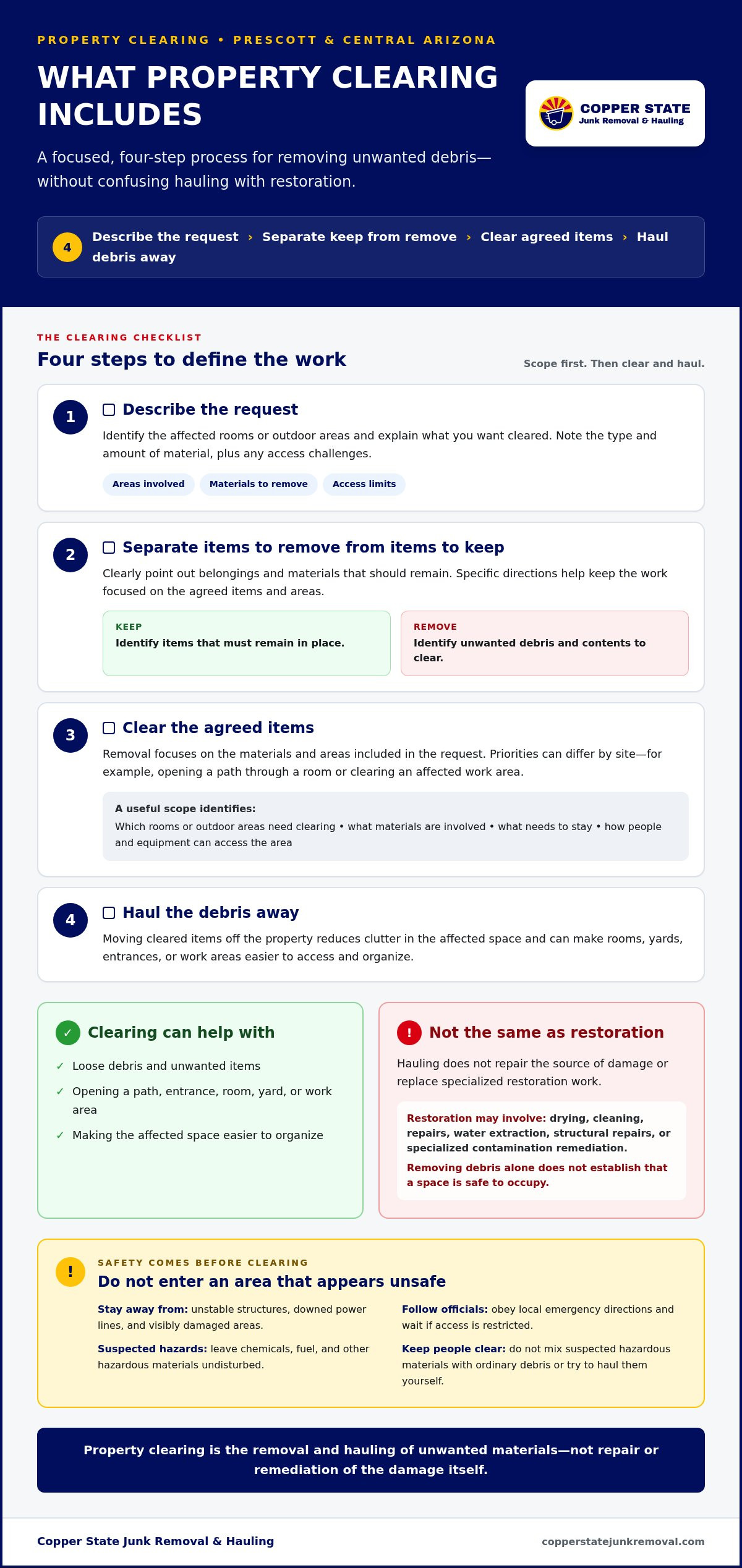
Property clearing generally follows four steps:
- Describe the request. Identify the affected areas and explain what you want cleared.
- Separate items to remove from items to keep. Point out belongings or materials that should remain.
- Clear the agreed items. Removal focuses on the materials and areas included in the request.
- Haul the debris away. Moving cleared items off the property reduces clutter in the affected space.
This is a general sequence, not a one-size-fits-all checklist. The plan depends on the property, the type and amount of material, available access, and your priorities. For example, a home may need a path cleared through a room, while a business may need an affected work area opened without disturbing items elsewhere. Clear directions about what stays and what goes help keep the work focused.
How does debris removal fit into the recovery process?
Clearing loose, unwanted material can make rooms, yards, entrances, or work areas easier to reach and organize. It may help property owners see the remaining cleanup needs more clearly, but hauling is only one part of recovery. Water extraction, structural repairs, and specialized contamination remediation address different problems. Removing debris alone doesn’t fix underlying damage or establish that a space is safe to occupy.
Disaster debris removal is the clearing and hauling of unwanted materials from a damaged property, not the repair or remediation of the damage itself.
What should property owners expect from a cleanup plan?
A useful plan starts with the scope: which rooms or outdoor areas need clearing, what materials are involved, and which items must remain. Access matters, too. A narrow route, blocked entrance, or busy business setting can affect how the clearing is organized. Residential and commercial properties may call for different coordination, especially when occupants, staff, or customers use other parts of the site.
Before discussing the work, make a short list of affected areas, visible debris, access limits, and your first priorities. Point out belongings that should not be moved. If you notice additional debris or the requested clearing changes, share that information so the scope stays clear. Copper State’s junk removal and hauling help property owners move from a cluttered affected area toward a more manageable space. Explore disaster cleanup and property clearing as you plan the next step.
Disaster Cleanup Company or Restoration Service: Which Help Fits the Damage?
After property damage, “cleanup” can mean different things. One task may be removing unwanted items from a room, while another may involve drying, repairing, or treating affected materials. Matching the task to the type of help keeps expectations clear and helps you plan recovery in manageable steps.
Cleanup and restoration are connected, but distinct: cleanup clears unwanted material, while restoration addresses damage to the property. Use this comparison to identify the main need:
| Task | What it generally involves |
|---|---|
| Debris hauling and property clearing | Removing requested unwanted items and loose debris from areas such as rooms, yards, or work spaces, then hauling them away. |
| Water or fire restoration | Work such as water extraction, drying, cleaning, or treating fire-related damage. This addresses conditions affecting the property, not just loose items. |
| Structural repair | Repairing damaged parts of a building, such as a compromised roof, wall, or other structural element. |
| Hazardous-material handling | Specialized assessment and handling of suspected hazardous or contaminated materials. These shouldn’t be mixed with ordinary debris or disturbed casually. |
Which tasks involve debris hauling and property clearing?
Hauling may fit when the main request is to remove unwanted belongings or loose debris and clear a defined area. For instance, a property owner may want a damaged room cleared of removable items or an outdoor area opened up by clearing unwanted material. Copper State provides disaster cleanup and property clearing through junk removal and hauling, with the work shaped around the customer’s project and property.
Be specific about what should go and what must stay. Describe the affected area, the materials you can identify, and any access limits. A clear scope helps distinguish ordinary property clearing from work that requires a different response. Suspected hazardous materials should remain undisturbed and need appropriate specialized handling.
When is damage beyond ordinary debris cleanup?
Visible debris doesn’t tell the whole story. Water extraction and drying address moisture; structural repairs address damage to the building; specialized remediation deals with contamination. Clearing items from a room may improve access, but it doesn’t show whether hidden water damage, structural concerns, or other underlying conditions have been resolved.
If you see damaged systems, signs of structural instability, or suspected contamination, treat those as separate concerns rather than assuming hauling will address them. For immediate danger, keep clear and follow instructions from local emergency officials. Once it’s safe to proceed, define which materials need clearing and which concerns need specialized attention. That distinction helps a disaster cleanup company focus on property clearing without confusing removal with repair or remediation.
How to Prepare for Disaster Cleanup in Prescott and the Verde Valley
Once local emergency officials say it’s safe to approach, a few simple notes can make a cleanup request clearer. You don’t need to move debris or enter damaged areas to prepare. Start from a safe location, record what you can see, and identify what matters most so the clearing work can be planned around your property and priorities.
- Put safety first. Follow instructions from local emergency officials. Stay away from unstable structures, downed lines, and areas they’ve restricted.
- List affected areas. Note which rooms, entrances, yard sections, or work areas need clearing.
- Describe visible debris. Record what you can identify from a safe position, such as damaged belongings, branches, or other loose material.
- Note access limits. Mention stairs, narrow paths, blocked entrances, parking constraints, or other site details that could affect access.
- Set clearing priorities. Identify the area you’d like addressed first and any belongings that should remain.
- Separate keep items only if safe. Set aside clearly identifiable belongings only when you can do so without entering a damaged or unsafe area.
These details give a disaster cleanup company a clearer picture of the property and the work you’re requesting. Talk with Copper State about disaster cleanup when you’re ready to discuss property clearing and hauling.
What information helps organize a cleanup request?
Describe what happened in plain terms and explain which areas need clearing. You might note that outdoor debris is blocking a path or that unwanted items are gathered in a specific room. Include practical access information, such as stairs, a narrow driveway, limited parking, or a route that can’t be used. Clear details help keep the requested scope focused on the right areas.
Photographs can help show visible debris and access conditions, but take them only from a safe place. Don’t enter a restricted area or move closer to a hazard for a better view. If it isn’t safe to take photos, a written description is enough to begin explaining the situation.
What should you avoid doing before debris is cleared?
Don’t enter unstable areas or handle materials that may be hazardous. Avoid moving debris if doing so could expose you to risk or make the area harder to access. Keep driveways, entrances, and other routes open for emergency access, and follow directions from local authorities even if that means delaying cleanup.
Different debris types may need different handling. Don’t combine materials if sorting them could create a safety risk, and leave suspected hazardous items undisturbed. When it’s safe to prepare, focus on describing what needs attention rather than trying to clear everything yourself. Those details help Copper State plan the requested property clearing while keeping safety at the center of your next steps.
How Copper State Helps with Disaster Cleanup Across Central Arizona
Property damage can leave a home or business crowded with debris and difficult to manage. Copper State Junk Removal & Hauling is a family-run local company serving residential and commercial customers across Central Arizona. Its disaster recovery cleanup focuses on junk removal, hauling, and property clearing, helping make affected areas more orderly so owners can focus on the next steps in recovery.
Copper State serves Prescott, Prescott Valley, Chino Valley, Paulden, Dewey, Mayer, Jerome, Clarkdale, Cottonwood, Camp Verde, the Verde Valley, and Sedona. Each project starts with the property and the clearing priorities, rather than a fixed, one-size-fits-all scope. A homeowner may want selected belongings or debris removed from part of the property, while a business may need a particular area cleared with attention to how people access the site. The work is shaped around the request.
What local property owners can expect from Copper State
Expect a straightforward conversation about what happened, which areas need clearing, and what should remain. Sharing the type of debris and any access conditions helps define the request clearly. Stairs, narrow paths, blocked entrances, or limited parking can all affect how property clearing is organized. Clear priorities help keep the work focused on the areas that matter most to you.
Copper State helps with removal and hauling, while repairs and restoration remain separate parts of recovery. If your home or commercial site needs unwanted items or debris cleared, a disaster cleanup company focused on hauling can reduce clutter and make the space easier to manage. The specific plan depends on the project, materials, access, and requested work.
How to take the next step after property damage
Before arranging non-emergency clearing, follow local emergency officials’ instructions and make sure it’s safe to approach the property. Then describe the situation in practical terms. Share the location, affected areas, visible debris, access conditions, and which clearing priorities come first. If you have photographs, use only images taken from a safe location. Don’t enter a restricted or visibly unsafe area to document the scene.
A clear description makes the initial conversation more useful and keeps expectations grounded in the work requested. Explain which items should stay, where access is difficult, and what area you hope to make manageable first. Copper State brings a local, approachable perspective to residential and commercial property clearing across Central Arizona. Contact Copper State about your cleanup project to discuss the next step.
Take the First Step Toward a More Manageable Property
Recovery doesn’t have to happen all at once. Choose one safe, practical priority, such as opening a path or clearing a defined area, and use it to guide your next conversation. A focused first task can turn an overwhelming property-wide problem into a clearer plan.
Before arranging removal, make sure the site is safe to approach and follow any directions from local officials. Then describe what you want cleared, what needs to stay, and any access challenges. A disaster cleanup company focused on hauling can help with clearing, while damage that needs repair or specialized attention remains a separate part of recovery.
You don’t need every detail figured out before taking the next step. Start with what you can safely observe and the outcome that would make the property easier to manage. Contact Copper State about disaster cleanup to discuss your property-clearing project.
Frequently Asked Questions
What does a disaster cleanup company do?
A disaster cleanup company helps clear unwanted items and debris from a property after damage. The work may involve hauling damaged belongings from a garage, clearing loose material from an outdoor area, or removing items that interfere with access to a room. Identify what should go, what should stay, and which part of the property needs attention so the clearing work has a clear focus.
How soon should disaster cleanup begin after a storm or flood?
Begin only when local emergency officials indicate it’s safe to approach the property. Don’t rush into a flooded or storm-damaged area to start moving items, especially if there may be electrical, structural, or other hazards. From a safe location, note visible damage and consider which areas need attention first. If conditions change or officials restrict access, follow their instructions before arranging non-emergency clearing.
Does disaster cleanup include repairs and water damage restoration?
Debris clearing and restoration are separate tasks. Hauling unwanted items can open up an area, but it doesn’t extract water, dry building materials, repair structural damage, or address hidden damage. For example, clearing soaked furniture from a room won’t tell you whether moisture remains behind a wall. Treat removal as one part of recovery, and don’t assume a cleared space is repaired or ready to use.
What should I do before a disaster cleanup crew arrives?
First, make sure the property can be approached safely and follow any official restrictions. Prepare a simple list of items you want removed and anything that must remain, such as important documents or personal belongings. If you can do so safely, make those keep items easy to identify without moving them into a damaged area. Also consider who can provide access and whether pets or occupants need to stay clear.
Can a disaster cleanup company remove hazardous materials?
Suspected hazardous materials need specialized handling, not routine junk removal. Don’t touch, open, mix, or move items that may contain chemicals, fuel, or other dangerous substances. Keep people away and follow directions from local emergency officials or appropriate authorities. If debris includes materials you can’t identify, describe what you see without handling it so it isn’t mistaken for ordinary property-clearing work.
Does Copper State provide disaster cleanup in Prescott and nearby communities?
Yes. Copper State Junk Removal & Hauling provides disaster recovery cleanup and property clearing through junk removal and hauling for residential and commercial properties. Its service communities include Prescott, Prescott Valley, Chino Valley, Paulden, Dewey, Mayer, Jerome, Clarkdale, Cottonwood, Camp Verde, the Verde Valley, and Sedona. Share the property location and clearing priorities to explain what you need help organizing.
How much does disaster cleanup cost?
The cost depends on the requested clearing work and the property conditions. The amount and type of debris, the areas involved, and access challenges can all affect the project. A small, clearly defined area is different from a property with multiple spaces or difficult access. To discuss your project, describe what needs removal, what should stay, and any site constraints so the request is specific.


