

The large items belong in the cleanout, too. A whole house cleanout can include sorting household belongings, removing bulky furniture and appliances, and clearing rooms, garages, or other areas of the property. Here in Yavapai County, Arizona—including Chino Valley, Prescott, Sedona, and surrounding areas—the work and cost depend on the home’s contents, how much needs to be removed, access, and the labor involved.
It’s understandable to wonder whether a cleanout covers more than boxes and loose clutter. Copper State Junk Removal & Hauling ensures a clear plan accounts for heavy items as well as smaller belongings, separating what to keep from what may be donated, recycled, or disposed of responsibly.
This guide explains what a whole house cleanout may include, how pricing is determined, and how items can be handled responsibly. You’ll also find practical steps for cleanouts involving an estate, rental property, or home being prepared for its next use.
Key Takeaways
- Map out which rooms, belongings, and bulky items need clearing so the work has a clear scope.
- Understand how the amount to remove, property access, and labor shape a cleanout estimate.
- Sort belongings for keeping, donation, recycling, or disposal to guide responsible handling.
- Plan for estate, rental, and foreclosure clearouts with the property’s next use in mind.
- Use a final walkthrough to spot anything left behind and confirm the cleared areas meet your needs.
Donation, recycling, and responsible disposal
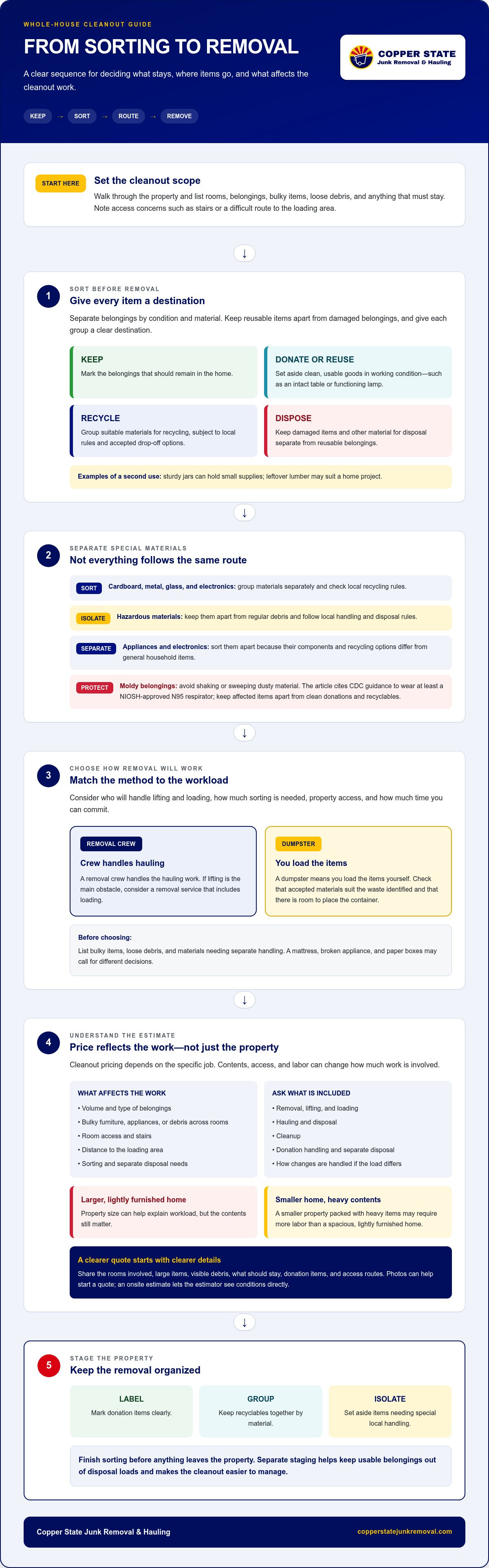
Plan where belongings will go before removal begins. For a whole house cleanout, sort items into groups to keep, donate, recycle, or dispose of, and give each group a clear destination.
Donation and Reuse Options
Usable furniture, clothing, kitchenware, and household goods may be donated or reused. Set aside clean items in working condition, such as an intact table or functioning lamp, and keep them separate from damaged belongings. Repurposing can also give items a second use: sturdy jars can hold small supplies, while leftover lumber may suit a home project.
Can usable items be donated or recycled during a whole house cleanout? Yes. Sort belongings by condition and material, then direct usable goods toward donation or reuse and suitable recyclable materials toward recycling.
Recycling and Disposal Practices
Recycling starts with separating materials instead of treating every item as trash. Group cardboard, metal, glass, and electronics, then check local rules for recycling and donation. Accepted materials and drop-off options can vary by community. An old computer and a metal bed frame, for example, may need different handling from ordinary household waste.
How are hazardous waste, appliances, and electronics handled during a cleanout? Keep hazardous materials apart from regular debris and follow local rules for handling and disposal. Sort appliances and electronics separately, since their components and recycling options differ from general household items.
For moldy belongings, avoid shaking or sweeping dusty material. If a whole house cleanout involves removing moldy belongings, wear at least a NIOSH-approved N95 respirator, according to the Centers for Disease Control and Prevention (CDC). Keep affected items apart from clean donations and recyclables during removal.
Choosing a Removal Method
How do you choose between a junk removal company and renting a dumpster? Consider who will handle lifting and loading, how much sorting the property needs, and whether the debris fits a container. A removal crew handles the hauling work, while a dumpster means you load items yourself. The better fit depends on the workload, access, and time you can commit.
Before choosing, walk through each room and list bulky items, loose debris, and materials needing separate handling. A mattress, broken appliance, and paper boxes may require different decisions. If you’re considering a dumpster, check that its accepted materials suit the waste you’ve identified and that there’s room to place it. If lifting is the main obstacle, choose a removal service that includes loading.
Finish sorting before anything leaves the property. Label donation items, group recyclables by material, and isolate anything requiring special local handling. This staging step helps prevent usable belongings from entering disposal loads and keeps the cleanout organized.
How much does a full house cleanout cost in NH or MA?
Cleanout pricing depends on the work involved, not just the property’s location. In New Hampshire and Massachusetts, compare estimates by scope and included tasks.
Cleanout Pricing
Ask what the estimate covers: removal, lifting, loading, hauling, disposal, and cleanup. The volume and type of belongings, room access, stairs, and distance to the loading area can affect the work. A large pile of lightweight boxes takes different effort than bulky furniture, appliances, or debris spread across several rooms.
Property size can help explain the workload, but contents matter too. A 300-square-meter house will nearly always cost more to clean out than a 100-square-meter apartment. However, a smaller property packed with heavy items may require more labor than a spacious, lightly furnished home. Ask how sorting, donation handling, and items requiring separate disposal affect the proposed scope.
For a professional cleanout, pricing depends on the specific job and is provided after a quote request. Share which rooms need clearing, what should stay, and whether the property has stairs or difficult access. Those details help make the estimate reflect the actual work rather than a broad description.
Quotes and Onsite Estimates
A photo-based quote can be a useful starting point if you provide clear details. List the rooms, large items, and visible debris, then include photos showing access routes and the amount to remove. Mention donation items separately so the scope distinguishes reusable belongings from material headed for disposal.
An in-person estimate lets the estimator see conditions directly. Walk through the home together, point out items that must remain, and identify bulky pieces such as a mattress or heavy cabinet. Ask what work is included, what the removal scope covers, and how changes are handled if the load differs from what was assessed.
Before booking, compare estimates using the same job details. Check whether lifting, hauling, disposal, and cleanup are included, and review the written scope. Copper State Junk Removal & Hauling provides upfront, volume-based pricing with no hidden fees. A clear scope helps you understand what the quoted work covers, rather than judging by headline price alone.
Online booking can make scheduling simpler, but accurate job information still matters. Provide the property address, the rooms involved, and a practical description of the contents. If an online form cannot show the full workload, request an onsite estimate before committing. For a tailored cleanout discussion, share your cleanout details.
Estate, realtor, landlord, and foreclosure cleanouts
Start by deciding what the property needs next: an estate review, listing, rental turnover, or cleared interior. To prepare, identify belongings to keep, mark them clearly, and leave access paths open for removal.
Estate Cleanout Planning
Estate cleanouts call for a deliberate sorting plan before furniture or boxes move. Choose a family point person, list the rooms, and set aside documents, photographs, keepsakes, and items relatives want to review. Mark those belongings in a separate area. Then group remaining contents by donation, reuse, recycling, and disposal so decisions stay visible as clearing begins.
The final workload depends on the contents, hauling needs, and how much sorting family members handle themselves. A written room-by-room inventory can clarify what remains and help prevent important belongings from being removed by mistake.
For a realtor, the priority may be making rooms easier to show or preparing the home for its next stage. Identify furniture and other items that block key rooms, entryways, or photos. Keep staging decisions separate from removal instructions. A simple room list helps everyone understand which areas need clearing and which belongings should stay.
Preparing for a Cleanout
Before a whole house cleanout, gather the people who can make decisions and walk through the property together. Mark items to keep, identify anything that needs family review, and make a written list of rooms, bulky furniture, and other contents to remove. Share the list with everyone involved to reduce confusion during hauling.
For landlords, focus preparation on the spaces that must be cleared for their next use. Note items left in bedrooms, kitchens, storage areas, and shared spaces. Separate property belongings from personal items, and keep the removal area accessible. For a foreclosure property, document the contents and condition room by room before clearing begins.
A practical preparation checklist includes:
- Set aside keys, records, photographs, and personal keepsakes.
- Label items to keep, donate, or remove.
- Clear a route from each room to the exit.
- Tell family members, property representatives, or building contacts what areas are included.
Use the same list during the final review. Check closets, cabinets, basements, and garages, not only the main rooms. If the goal is reclaiming space for a sale or rental, confirm that each planned area has been cleared and that items marked to remain are still in place.
Cleanout process and final walkthrough
A clear sequence keeps removal organized, protects belongings marked to stay, and gives the final review a purpose. Start with the agreed scope, then track each room from cluttered to cleared. During a whole house cleanout, a written room list helps everyone follow the same plan from arrival through the last walkthrough.
Before the crew arrives, confirm the property address, entry instructions, and areas included. Point out items that must remain, such as a dining table, labeled storage bin, or paperwork on a desk. Keep those belongings visibly separate from items for removal. Identify narrow hallways, stairs, or locked rooms before lifting begins so the crew can plan a clear route.
During the walkthrough, review the work area and identify bulky items, loose debris, and materials that need special handling. A basement stacked with boxes may need a different removal sequence than an open living room. Discuss access through tight stairwells and doorways. Clearly identify construction debris so the agreed scope reflects the material.
How long does a whole house cleanout take? The time depends on the amount and type of contents, property access, sorting needs, and the distance items must be carried. A home with open paths and belongings ready for removal takes different effort than rooms requiring careful sorting or bulky-item lifting.
As work progresses, keep the agreed scope close at hand. If a room contains items that weren’t included, pause and decide whether they should stay or be added. This helps prevent removing something important or leaving an expected area untouched. Keep exits clear of loose clutter, and tell the crew promptly if priorities change.
Finish with a room-by-room review. Check closets, cabinets, storage spaces, and corners behind doors, not just open floors. Compare each area with the original instructions. Confirm that items marked to stay remain in place, and identify anything still awaiting removal. For a property handover, pay close attention to entryways and spaces included in the agreed scope.
Use this final checklist:
- Compare cleared rooms against the written scope.
- Look inside closets, cabinets, and storage areas.
- Confirm kept belongings are still on site.
- Identify remaining items and decide their next step.
Before hiring, review the provider’s credentials and insurance. For a whole house cleanout, a written scope, practical access plan, and final walkthrough create clear checkpoints from arrival through completion.
What a whole house cleanout includes
A whole house cleanout removes agreed belongings from rooms and other parts of a property. The scope can include furniture, boxes, appliances, and stored items. Start by listing what must go, what stays, and which spaces need clearing. That list defines the work more clearly than a general request to empty the home.
How do I find reputable whole house cleanout services near me? Look for a clear written scope, and verify the provider’s licenses and insurance before hiring. Compare estimates by the rooms and items included, plus lifting, hauling, and disposal tasks. A provider should be able to explain what the quoted work covers in plain language.
A walkthrough helps identify what each area contains. A bedroom might have a bed, dresser, clothing, and boxes; a kitchen may include cookware, small appliances, and a refrigerator. Basements, attics, garages, and sheds can hold separate groups of belongings. Name these spaces individually so the cleanout plan accounts for them rather than focusing only on main living areas.
Sorting also shapes the scope. Separate belongings to keep from items for donation, recycling, or disposal. For example, mark a working lamp to stay and identify a broken chair for removal. Keep documents, photographs, and valuables away from the work area. Clear labels make your instructions easier to follow as rooms are emptied.
Bulky-item removal may involve lifting furniture, mattresses, or appliances through doorways and hallways. Point out stairs, tight turns, and long paths to exits during the walkthrough. These details affect how items can be moved and help protect walls, floors, and belongings that remain. Note heavy or awkward items individually instead of grouping them under “miscellaneous.”
- Living areas: sofas, tables, lamps, rugs, and boxed belongings.
- Bedrooms: beds, dressers, mattresses, clothing, and personal items.
- Kitchens: tables, cookware, small appliances, and larger appliances.
- Storage spaces: tools, seasonal items, shelving, and stored boxes.
Cleanout services remove the contents described in the agreed scope. Deep cleaning, repairs, and construction work are separate tasks unless specifically included. Clearing a kitchen, for instance, doesn’t automatically include repairing cabinets or restoring floors. State whether your goal is empty rooms, selected areas cleared, or specific items removed.
Before booking, compare the written scope with your room list. Check included spaces, belongings staying behind, and how the remaining contents will be handled. For a whole house cleanout, that comparison helps you see whether the proposed work matches your priorities.
Plan your cleanout project by listing the areas and items you want addressed.
Copper State Junk Removal & Hauling: Hoarder Cleanup
Copper State Junk Removal & Hauling provides Hoarder Cleanup for homes where accumulated belongings make clearing rooms difficult. It can help when sorting and removing clutter feels too large to manage alone. For a move to assisted living, Assisted Living Cleanouts can help clear belongings during the transition. Mattress Removal addresses a bulky item that can be awkward to lift and haul.
Before getting started, make a short list of the spaces and items you want addressed. Set aside belongings that must remain, then describe the areas needing attention. That gives the conversation a clear starting point and helps match the service to your situation.
Contact Copper State Junk Removal & Hauling to discuss your cleanout needs.
Make the Next Step Feel Manageable
A whole house cleanout can mark a fresh start, not just an empty property. Decide what you want the cleared space to make possible: preparing for a move, creating room for family, or making the home ready for its next chapter. That purpose can guide your choices, from what to keep to what needs to go.
If the workload feels difficult to tackle alone, choose support that fits the situation. Copper State Junk Removal & Hauling provides Hoarder Cleanup for homes overwhelmed by accumulated belongings, Assisted Living Cleanouts for transitions, and Mattress Removal for bulky items. Start with a conversation about the spaces you want cleared and the outcome you’re working toward.
Take the next step at your pace. Contact Copper State Junk Removal & Hauling to discuss your cleanout needs, and move toward a space that works better for you.
Frequently Asked Questions
Can you handle the large items too?
Yes, bulky items such as mattresses and hot tubs are among the removal needs Copper State Junk Removal & Hauling handles through its relevant services. Before work begins, identify which large pieces need to go and which must remain. A clear list distinguishes a mattress in a bedroom from furniture staying in the home. Keep access paths open so large items can be moved out safely.
Do I have to move anything to the curb first?
No. The crew handles lifting and loading, whether items are inside the home, garage, yard, or commercial space. You can leave a mattress in the bedroom or boxes in the garage rather than dragging them outside first. Set aside belongings that should stay and make sure they’re easy to distinguish from items for removal. That helps prevent mix-ups during loading.
How do you quote a job?
Quotes can be based on photos or an in-person assessment, with pricing based on the load’s volume. Share the property’s contents and access details, including stairs, bulky furniture, or appliances. Pricing includes labor, loading, transportation, responsible disposal, and cleanup, with no hidden fees. Estate and hoarder cleanouts require a quote. For the clearest estimate, show the full job rather than only a few items.
What do you do with items after a property clean out in San Francisco, CA?
Copper State Junk Removal & Hauling serves communities throughout Yavapai County, Arizona, including Chino Valley, Prescott, Prescott Valley, Paulden, Dewey, Mayer, Jerome, Clarkdale, Cottonwood, Camp Verde, Verde Valley, Sedona, Williamson Valley, Dewey-Humboldt, and Oak Creek. For items handled in its service area, reusable belongings may be donated and suitable materials may be recycled. Donation or recycling isn’t guaranteed for every item.
What happens to the contents of the house?
Items are handled according to their condition and material. Reusable belongings may be considered for donation, while materials such as metal, cardboard, appliances, and yard debris may be routed for recycling. Other accepted items are responsibly disposed of. If you want to keep a particular item, such as a lamp or family keepsake, separate it clearly before removal so it isn’t mistaken for unwanted contents.
What won't you take?
Hazardous materials aren’t accepted, including wet paint, chemicals, fuels, asbestos, and pressurized containers. Items requiring hazardous-material handling also can’t be removed. Keep these materials separate from ordinary household belongings instead of placing them with items for hauling. Biohazard-containing items may incur a surcharge. Clearly identify questionable materials when describing the job so they aren’t mixed into the removal load.
What is a whole house cleanout?
A whole house cleanout is the removal of unwanted contents from multiple areas of a home, based on an agreed scope. It may cover furniture, boxes, appliances, and belongings in rooms or storage spaces. The scope should also identify what stays, what goes, and how reusable items will be handled. For example, a cleared bedroom might include removing a bed and dresser while leaving marked keepsakes in place.
How much does a whole house cleanout cost in the United States?
There’s no single cost that applies to every home across the United States. The amount depends on the volume and type of items, access, lifting needs, and work included. A clear estimate should reflect those job details rather than a national figure. Copper State Junk Removal & Hauling serves Chino Valley, Prescott, Prescott Valley, Paulden, Dewey, Mayer, Jerome, Clarkdale, Cottonwood, Camp Verde, Verde Valley, and Sedona, so its quotes are for jobs within its local service area.


