

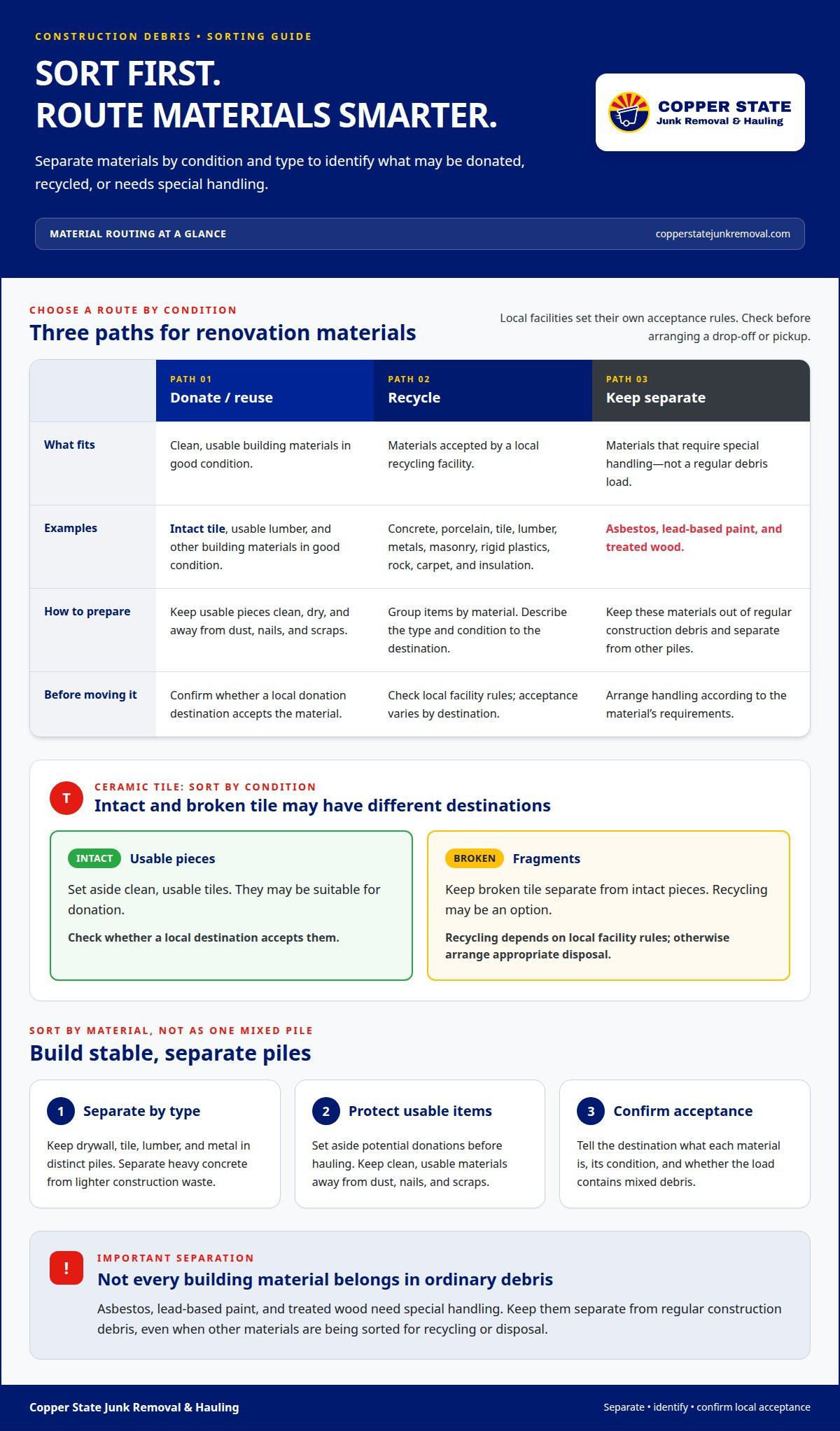
Broken ceramic tile doesn’t have to go straight to a landfill. For construction debris removal, separate intact, usable tiles from broken pieces. Usable tiles may be suitable for donation, while recycling options for broken tile depend on local facility rules. If neither option is available, arrange appropriate disposal.
It’s easy to assume all renovation debris belongs in one pile, especially after a project leaves dust, rubble, and offcuts behind. Sorting materials by condition and type helps you identify what may be reused or recycled and what needs hauling.
This guide explains how to handle ceramic tile and sort common construction materials for hauling, recycling, or donation. It also covers why treated wood, lead-based paint, and other materials need separate handling, so you can plan a cleaner, more orderly renovation cleanup.
Key Takeaways
- Sort ceramic tile by condition: intact pieces may be candidates for donation, while broken tile may have recycling options.
- Separate reusable materials from debris to make recycling and donation easier to plan.
- Keep asbestos, lead-based paint, and treated wood out of regular construction debris because they need special handling.
- Choose a hauling or container plan around the debris’ type, weight, volume, and how long cleanup will take.
Heavy lifting, loading, transport, and disposal
Plan cleanup around the debris type, the route to the loading area, and the material’s destination. Separating reusable items from mixed waste makes hauling and disposal more straightforward.
Pickup and Loading
Before pickup, clear a path from the work area to the loading point. Keep drywall, tile, lumber, and metal in separate, stable piles, with access around bulky items. Move vehicles and loose tools away from the route so the crew can reach the materials.
Estimate volume by measuring each pile’s length, width, and height, then multiplying those dimensions. Consider material type and amount when estimating weight: concrete weighs more than the same volume of drywall. These details help determine an appropriate hauling plan.
Transport and Disposal
During transport, debris must stay contained so loose pieces don’t spill. Separate heavy materials such as concrete from lighter construction waste when planning a load. Disposal rules vary by municipality, and a permit may be required depending on where a dumpster is placed.
Choose a disposal destination based on the material and local acceptance rules. Overloading a dumpster or truck can lead to extra fees or rejection at a disposal facility. Keep the load within the container’s limits and separate materials that need different handling.
Local Disposal and Donation Options
Local facilities may accept concrete, tile, metals, masonry, lumber, and rigid plastics for recycling. Building materials in good condition may also be suitable for donation. Separate intact ceramic tiles from broken fragments, and check whether local destinations accept each type.
Before transporting a sorted load, describe the materials to the destination. Identify broken tile separately from intact tile, for example. This helps prevent a wasted trip and directs reusable or recyclable debris away from mixed disposal when possible.
Disposal Costs and Pricing Factors
Dumpster rental costs can depend on container size and rental duration. Delivery, extra-day charges, overflow, overload, and taxes may also affect the total. With full-service hauling, the load’s type, volume, weight, and access help determine the work involved. A mixed load of drywall and heavy rubble differs from lighter, sorted materials.
For a rental estimate, first assess the pile’s volume and the heaviest materials. A 10-yard dumpster is listed as holding 4 pickup loads; a 20-yard holds 8, and a 40-yard holds 16. These comparisons help frame the amount of space needed, but weight limits and disposal rules also shape the plan.
Recycling and donating usable materials
Start with a sorting pass before deciding where materials should go. Keep clean, usable items separate from broken, contaminated, or mixed debris. Stack intact lumber apart from splintered offcuts, for example, and keep reusable tile away from fragments. This makes it easier to identify what may be donated and what needs recycling or disposal. Check local acceptance rules to determine the next destination.
Construction materials that may be recyclable include concrete, porcelain, rigid plastics, tile, lumber, metals, masonry, plastic, rock, carpet, and insulation. Sort by material rather than placing everything into one dumpster rental. A single mixed load can make useful items harder to recover, while separate piles help a recycling service identify what it can accept. Recycling options depend on local facility rules, so describe each material clearly when arranging a drop-off or pickup.
- Donate: Set aside usable materials, such as intact lumber or tile, in a clean, dry condition.
- Recycle: Group materials such as metal, concrete, and rigid plastic by type.
- Dispose: Keep broken or unsuitable pieces apart from reusable items.
For a renovation or remodeling project, set aside potential donations before hauling begins. Keep usable pieces together and away from dust, nails, and scraps. This helps preserve materials and makes it easier to assess what may be reused. Recycling can be a sustainable option for suitable construction waste, but acceptance varies by destination.
Ask about accepted materials before arranging a pick up or driving to a facility. Share the material type, condition, and whether the load contains mixed debris. If sorting still leaves a bulky pile after renovation, Renovation Cleanup can help clear the remaining debris and restore usable space.
Building debris and material types accepted
Construction and demolition debris can include materials from a remodel, tear-out, or building project. A load may contain drywall, framing offcuts, flooring, concrete, and packaging. Acceptance depends on the destination and how materials are separated. Sort by type before booking a dumpster or arranging a haul away. This helps clarify what belongs in a standard debris load.
Some construction materials that may be recyclable include concrete, porcelain, tile, lumber, metals, masonry, rigid plastics, rock, carpet, and insulation. Keep these materials separate where practical. Set clean lumber apart from mixed demolition scraps, for example, and separate concrete from lighter debris. A facility’s accepted-material rules determine whether it can take each item.
- Building materials: Drywall, lumber, flooring, and tile from renovation work.
- Heavy debris: Concrete and masonry from demolition or remodeling.
- Other potentially recyclable items: Metals, rigid plastics, carpet, rock, and insulation.
Not every building material belongs with ordinary construction debris. Asbestos, lead-based paint, and treated wood require special handling and should not be mixed into a regular load. Keep them separate from general debris, whether other materials are headed for recycling, a disposal facility, or a container at the property.
Before booking, describe the load by material, not just as “renovation waste.” A clear inventory, such as drywall, concrete, and tile, helps providers identify suitable hauling and disposal routes. It also supports an efficient pickup plan, because mixed or unsuitable materials may need a different destination. Separate piles make the site easier to assess and help prevent prohibited items from entering a standard debris load.
Construction debris removal
Options include dumpster rental, junk removal, and hauling to a disposal facility. A rental leaves loading and timing under your control; full-service hauling includes removing debris from the site. Choose according to the load, access, and how much of the cleanup you want handled.
For a licensed and insured provider, look for current documentation and a clear description of the work covered. The estimate should identify the debris, loading responsibility, transport, and disposal plan. Contractors can use those details to coordinate cleanup with renovation schedules and avoid confusion about what the service includes.
Container size should match both volume and material weight. A 10-yard or 12-yard dumpster is recommended for heavy materials such as concrete and asphalt. A 30-yard container suits office or large home renovation projects or junk removal. A 40-yard dumpster is recommended for large construction and remodeling projects.
Dumpster placement rules vary by municipality, and a permit may be required, especially when a container is placed on public property. Confirm placement requirements before arranging a rental. Overloading a dumpster or truck can lead to extra fees or rejection at a disposal facility.
Use this quick decision guide:
- Choose a rental when you can load debris and manage the cleanup timeline.
- Choose full-service hauling when lifting, loading, and transport are the main obstacles.
- Separate heavy materials such as concrete from lighter renovation debris.
Online booking can make scheduling more convenient, while flexible timing can help contractors coordinate a project’s final haul. For a residential cleanup with bulky items, decide whether the work calls for a container or hands-on removal. Keep recyclable materials separate, and direct remaining debris to an appropriate disposal destination rather than assuming everything belongs in a landfill.
For help clearing renovation debris and bulky items, discuss your cleanup needs.
Copper State Junk Removal & Hauling
Copper State Junk Removal & Hauling can help when a renovation cleanup also includes bulky items. Its Mattress Removal and Hot Tub Removal services address those specific items, while Hoarder Cleanout and Assisted Living Cleanouts can help with wider property-clearing needs. The crew handles lifting and loading, whether items are inside a home, garage, yard, or commercial space.
Keep materials requiring special handling, such as asbestos, lead-based paint, and treated wood, separate from ordinary debris. This keeps the cleanup plan clear and prevents those materials from being treated as standard waste. If a project combines renovation debris with bulky items, identify which materials need separate handling and which items fit a cleanout service.
Contact Copper State Junk Removal & Hauling to discuss the cleanup needs that match its services.
Set up the next phase of your project
Before work wraps up, decide how the cleared space will be used next. A room ready for new flooring needs a different finish from a property being prepared for a move or cleanout. That decision makes construction debris removal part of a clear project handoff, rather than an afterthought.
For broader property-clearing needs, Copper State Junk Removal & Hauling offers Hoarder Cleanout, Assisted Living Cleanouts, and Mattress Removal. These services can help when renovation plans overlap with a larger cleanout or bulky items need attention. Keep materials requiring special handling separate as you plan the work.
Ready to discuss the cleanup needs that fit? Contact Copper State Junk Removal & Hauling. A clear next step can help you move forward with confidence.
Frequently Asked Questions
How do I dispose of ceramic tile?
Separate intact tile from broken pieces, then consider donation or recycling for suitable material. Keep matching, usable tiles together so they’re easy to identify for reuse. A local recycling facility may accept broken tile, depending on its rules. If no suitable reuse or recycling option is available, arrange appropriate disposal instead of mixing the pieces with items meant for donation.
How do I dispose of concrete?
Separate concrete from lighter debris and identify a local facility that accepts concrete for recycling or disposal. When arranging a drop-off, describe broken patio pieces as concrete rubble. Keep the load free of unrelated materials where possible, since a clearly sorted pile is easier to direct to the right destination. Don’t mix concrete with materials requiring special handling.
How do you get rid of debris?
Sort the debris by material and condition, then decide what can be reused, recycled, or disposed of. For example, keep usable cabinet doors apart from broken panels and dusty scraps. Choose a pickup or container plan based on the amount, weight, and access to the pile. Separate any materials requiring special handling, and keep the path from the work area clear.
How much do you charge for building material disposal in Chino Valley, AZ?
Cost depends on the materials, load size, weight, access, and disposal needs. Building material piles can range from a few light offcuts to dense renovation debris. Copper State Junk Removal & Hauling serves Chino Valley, Prescott, Prescott Valley, Paulden, Dewey-Humboldt, Mayer, Jerome, Clarkdale, Cottonwood, Camp Verde, and Sedona, as well as communities throughout Yavapai County. Request a free estimate and describe the project and materials to get pricing suited to the cleanup.
How much does construction debris removal cost?
The price depends on debris type, volume, weight, site access, and the disposal route. A small, accessible pile differs from mixed heavy rubble that needs separate handling. For Copper State Junk Removal & Hauling, pricing is based on the specific project and provided after a quote request. Describe the materials and cleanup scope so the estimate can reflect the work involved.
What types of construction debris can be removed or recycled?
Materials that may be recyclable include concrete, porcelain, tile, lumber, metals, masonry, rigid plastics, rock, carpet, and insulation. A renovation may also leave drywall or mixed scraps that need another disposal route. Facility acceptance varies, so identify materials separately. Keep asbestos, lead-based paint, and treated wood out of regular construction debris because they require special handling.


