

A room full of retired electronics can quickly take over valuable business space. Electronics removal in Prescott Valley can involve gathering items such as TVs, monitors, and copy machines, then loading and transporting them for suitable disposal or recycling. The cost depends on the items and the work involved.
It’s reasonable to want a clear picture of the process before arranging a pickup. Bulky equipment can be awkward to move, and costs may vary based on item type, quantity, and access to the loading area.
This guide explains how business electronics pickup works, what can affect the cost of TVs, monitors, and copy machines, and how hauling, loading, and transport fit into the job. You’ll have a clearer sense of what to expect and how to plan for a less cluttered workspace.
Key Takeaways
- TV, monitor, and copy-machine disposal costs depend on the item and how it is handled, so understand the fee basis before planning a business cleanout.
- Bulky equipment takes more than a ride away: loading access, item size, and transport all shape the removal process.
- Learn which electronics the Prescott Transfer Station accepts for recycling and which may be treated as trash.
- Understand how electronics pickup differs from bulky-waste collection so you can plan the next step for your workspace.
Fees for TVs, monitors, and copy machines
Disposal fees depend on the electronics category and load weight. Analog TVs are accepted at the same rate as those appliances. Flat-screen and CRT TVs, along with monitors, are charged as trash in Prescott. The category matters, so a TV’s style can affect its disposal charge. For electronics removal in Prescott Valley, identifying each device type helps clarify the likely disposal route.
The free recycling list covers laptops without batteries, computer towers, VCRs, DVD players, and cable boxes. It doesn’t mean every electronic item is accepted for free. Phones, monitors, and copy machines have different handling needs. A copy machine’s size and construction can affect how a facility classifies it. Separate accessories and loose batteries before arranging disposal, and keep the item details together. That gives staff a clearer picture of the load.
For a business, weigh the transfer-station charge against the work of moving equipment. A single monitor may fit into a small load, while several bulky machines can change the total weight. A drop-off also requires transportation and handling at the destination. A pickup avoids that trip, but may involve separate hauling costs. These are different parts of the overall expense, so don’t treat a disposal fee as a pickup price. Businesses planning electronics removal in Prescott Valley can use an item list to compare the parts of the job.
Before planning a load, group items by type: televisions, monitors, and copy machines. Record whether each TV is flat-screen or analog, and note whether devices contain batteries. The U.S. Census Bureau recorded Prescott Valley’s population as 39,843 on April 1, 2010. That community context doesn’t change the fee schedule, but local disposal options still shape business planning. Choose a route that keeps reusable electronics out of disposal when possible, and directs end-of-life equipment toward environmentally responsible handling. Clear item details help you estimate the task and prepare the workspace.
Hauling, loading, and transport
A smooth electronics pickup starts with a clear item list. Group laptops, tablets, printers, and broken equipment separately. Note which items are bulky or awkward to carry. A copy machine, for example, needs a different loading plan than a stack of tablets. This sorting step helps estimate the space, handling, and transport the load requires.
Next, identify the route from each item to the loading area. Narrow hallways, stairs, elevators, and long walks can affect how equipment moves out of a business. Keep walkways clear and identify access points before pickup. Remove loose accessories and secure cords so they don’t snag during lifting. Keep battery-powered items easy to identify and handle them separately when required by the destination.
During loading, protect floors and doorways from heavy or sharp equipment. Keep screens upright where practical, and avoid stacking items that could shift or crack. Separate electronics from ordinary junk so they can be directed to suitable recycling or disposal. Responsible transport considers the destination, not just moving everything toward a landfill. Recycling in Prescott depends on which items a facility accepts and how it classifies them.
For businesses in Yavapai County, the transport plan should match the load and its destination. A small group of laptops may be manageable in a vehicle with enough protected space. Multiple printers or large machines may need a different hauling arrangement. Keep an inventory for the person receiving the load, including item types and battery status. That record helps prevent confusion at drop-off and supports responsible handling. If electronics are part of a wider property clear-out, explore broader cleanout support as a related next step.
Where can I recycle or dispose of electronics in Prescott Valley, Arizona?
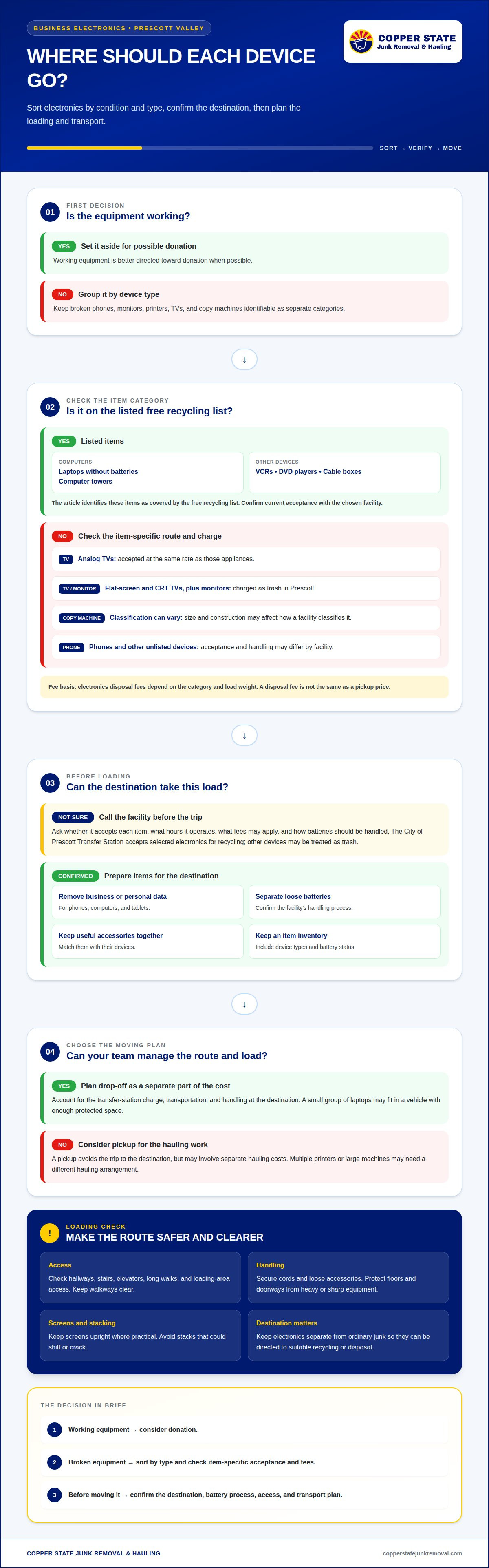
Start by matching each item with a suitable destination. The City of Prescott Transfer Station accepts selected electronics for recycling, while other devices may be treated as trash. Working equipment is better directed toward donation when possible. For electronics that need recycling, choose a certified recycling facility. Consider reuse and recycling before landfill disposal becomes the fallback.
Before taking equipment anywhere, call the facility and ask about accepted items, hours, and fees. A business load might include phones, printers, monitors, or copy machines, and acceptance can differ by item. Ask specifically about batteries and whether they must be removed or handled separately. Confirming these details before loading helps avoid a wasted trip or an unexpected disposal route.
Prepare devices before they leave the workplace. Remove personal or business data from phones, computers, and tablets. Keep useful accessories with their matching devices, and separate loose batteries. Consider donating working electronics first. For unusable equipment, use a certified recycling facility where available instead of defaulting to landfill disposal.
Use a simple destination plan:
- Set aside working electronics for possible donation.
- Group broken devices by type, such as phones, monitors, and printers.
- Keep batteries separate until the facility explains its handling process.
- Call the chosen destination about accepted items, operating hours, and fees.
The City of Prescott Transfer Station is one local option, but it isn’t the only kind of destination to consider. A certified recycling facility may be more appropriate for devices needing specialized recycling. For a business clearing several rooms, sort items before arranging transport. That makes it easier to separate reusable equipment from electronics headed for recycling or disposal. Treat landfill disposal as a last resort when other options aren’t available.
Prescott Valley residents should contact electronics recycling businesses directly to confirm which items they accept and any applicable fees. Calling a recycling center before visiting can also confirm accepted items, hours, and possible fees. Remove personal data from devices before recycling them. Prefer donation for working electronics, and use a certified recycling facility when recycling is needed.
In Prescott, flat-screen and CRT TVs, old monitors, phones, vacuums, microwaves, small appliances, keyboards, printers, and stereos are charged as trash.
Does Prescott Valley offer electronics pickup or bulky waste collection?
For electronics, the local option described here is drop-off at the City of Prescott Transfer Station. It accepts selected devices for recycling, including laptops without batteries, computer towers, VCRs, DVD players, and cable boxes. That’s a facility drop-off, not collection from a business address. Don’t assume bulky waste collection handles electronics the same way.
Separate the question into two parts: who collects the equipment, and where it can go afterward. A pickup removes items from your site; recycling acceptance depends on the destination and device type. TVs, monitors, copy machines, and mixed office electronics may follow different disposal paths. Before arranging transport, call the facility about accepted items, operating hours, and possible fees.
For a business planning a clear-out, make an inventory first. Include item types, approximate sizes, and whether batteries remain installed. Then sort the equipment into three groups: items for possible donation, devices for recycling, and items needing another disposal route. This keeps a collection plan from treating every appliance or electronic device as interchangeable.
Bulky waste collection and electronics recycling aren’t automatically the same service. A large monitor or copier may be bulky to move, yet still require a destination that accepts that specific equipment. The City of Prescott Transfer Station charges for certain electronics as trash, while its no-charge recycling list covers only selected items. That distinction affects whether a trip is worthwhile and how the load should be prepared.
For a clean handoff, confirm the destination’s item rules before loading. Keep accepted recycling items separate from equipment headed for disposal. If electronics are only part of a larger property clear-out, explore broader cleanout support for the remaining materials. This helps keep the electronics plan focused while the rest of the space gets cleared.
Prescott Valley's 2026 household hazardous waste pickup requests are closed. The U.S. generates over 7 million tons of e-waste annually, while only 15-20% of e-waste is properly recycled through safe e-waste disposal. Prescott Valley is estimated to generate approximately 40,400 pounds of electronic waste annually, and about 15% of its electronic waste is properly recycled. The environmental-impact calculation uses 1.8 pounds of CO2 savings per pound of e-waste recycled.
Copper State Junk Removal & Hauling
Copper State Junk Removal & Hauling can help when unwanted electronics are part of a larger property cleanout. The company handles projects such as Hoarder Cleanup, Assisted Living Cleanouts, and Renovation Cleanup, where clearing the surrounding space is part of the task.
For a business sorting old equipment, separate electronics from other items and follow the destination’s acceptance guidance for recycling or disposal. If the project also involves clearing a cluttered room, removing mattresses, or taking out a hot tub, Copper State Junk Removal & Hauling can help with those broader cleanout needs. This is a practical fit when the job extends beyond electronics alone.
Contact Copper State Junk Removal & Hauling to discuss your property’s cleanout needs.
Make the Next Workspace Decision Count
Planning electronics removal in Prescott Valley is also a chance to decide how the cleared space will serve your business next. Before equipment leaves, identify who needs to approve its removal, which devices contain business data, and what the room needs to support afterward. A simple internal plan can prevent useful equipment from being discarded by mistake and keep the cleanout organized around your team’s priorities.
If electronics are part of a larger property clear-out, Copper State Junk Removal & Hauling can help with the broader cleanup. Its Hoarder Cleanup, Assisted Living Cleanouts, and Mattress Removal services address cleanout needs beyond electronics. Keep the equipment plan and the surrounding space in view so each part of the project has a clear path forward.
For help with a related cleanout, contact Copper State Junk Removal & Hauling. A clear plan can help your business move toward a more usable space.


