

What if the biggest delay in an estate cleanout isn’t hauling, but deciding what should stay? If you’re asking, “How Long Does It Really Take to Clean Out an Estate?”, the answer depends on the home, the amount to clear, access, and how quickly decisions can be made. A property with clear instructions and belongings already sorted is a different project from one that needs careful family review.
It’s understandable to want a firm timeline, especially when a move, sale, or family transition is approaching. This guide will help you plan without rushing meaningful decisions. You’ll learn what affects the schedule, what to prepare before removal begins, and how to separate sorting from the physical work of clearing a home.
For families in Prescott and nearby Central Arizona communities, local hauling support can make the removal stage easier once items are ready to go. Copper State Junk Removal & Hauling is a family-run local business serving Prescott and nearby communities. With a clear plan, you can decide what stays and move the cleanout forward one manageable step at a time.
Key Takeaways
- How Long Does It Really Take to Clean Out an Estate? It depends on the home, the belongings, access, and how much sorting remains.
- Separate sorting and family decision-making from hauling to build a more realistic schedule.
- Use a walkthrough checklist to identify likely slowdowns, such as crowded rooms, stairs, and difficult access.
- Set a deadline, identify who makes decisions, and leave time to review keepsakes before removal.
- Once items are clearly set aside for removal, hauling help can reduce the lifting and loading involved.
How long does it take to clean out an estate, and what does the timeline include?
There’s no dependable single timeline for every estate. The answer to “How Long Does It Really Take to Clean Out an Estate?” depends on the home, the amount to remove, and how much sorting and decision-making remains. A mostly cleared property and a full home that needs careful family review are very different projects.
Plan for two kinds of time: elapsed calendar time and hands-on work time. Calendar time includes pauses for family discussions, access, and decisions about what stays. Hands-on time includes walking through the home, sorting belongings, and loading and hauling items identified for removal. If the property is part of the legal process of probate, the family may also need to understand the estate’s process before deciding when to move forward.
Which stages make up an estate cleanout?
A cleanout usually moves through distinct stages. First, walk through the property and agree on what stays, what goes, and what needs more review. Next, sort belongings and set aside keepsakes and important items. Once removal decisions are clear, the physical work of loading and hauling can begin. Deep cleaning, repairs, or preparing the home for sale may be separate work after items are removed.
Keep these stages separate in your plan. Sorting can take longer than physical removal, especially when family members need time to discuss sentimental belongings. There’s no need to rush those decisions to keep hauling on schedule.
Why a single estate cleanout estimate can mislead
A home where belongings are already sorted may be ready for removal, while a similar-sized property filled with items that need review can require much more decision time. Access matters, too. Stairs, narrow paths, or belongings spread across a garage and outbuildings can add handling and loading work. A useful estimate should state its assumptions about access, item volume, and how much sorting remains.
A planning estimate is guidance based on the known scope, not a guarantee of how long every estate will take. Describe the rooms and items involved, access conditions, and what work is still needed. Then leave room in the calendar for family decisions and any work the property needs after hauling.
What affects an estate cleanout timeline in Prescott and Central Arizona?
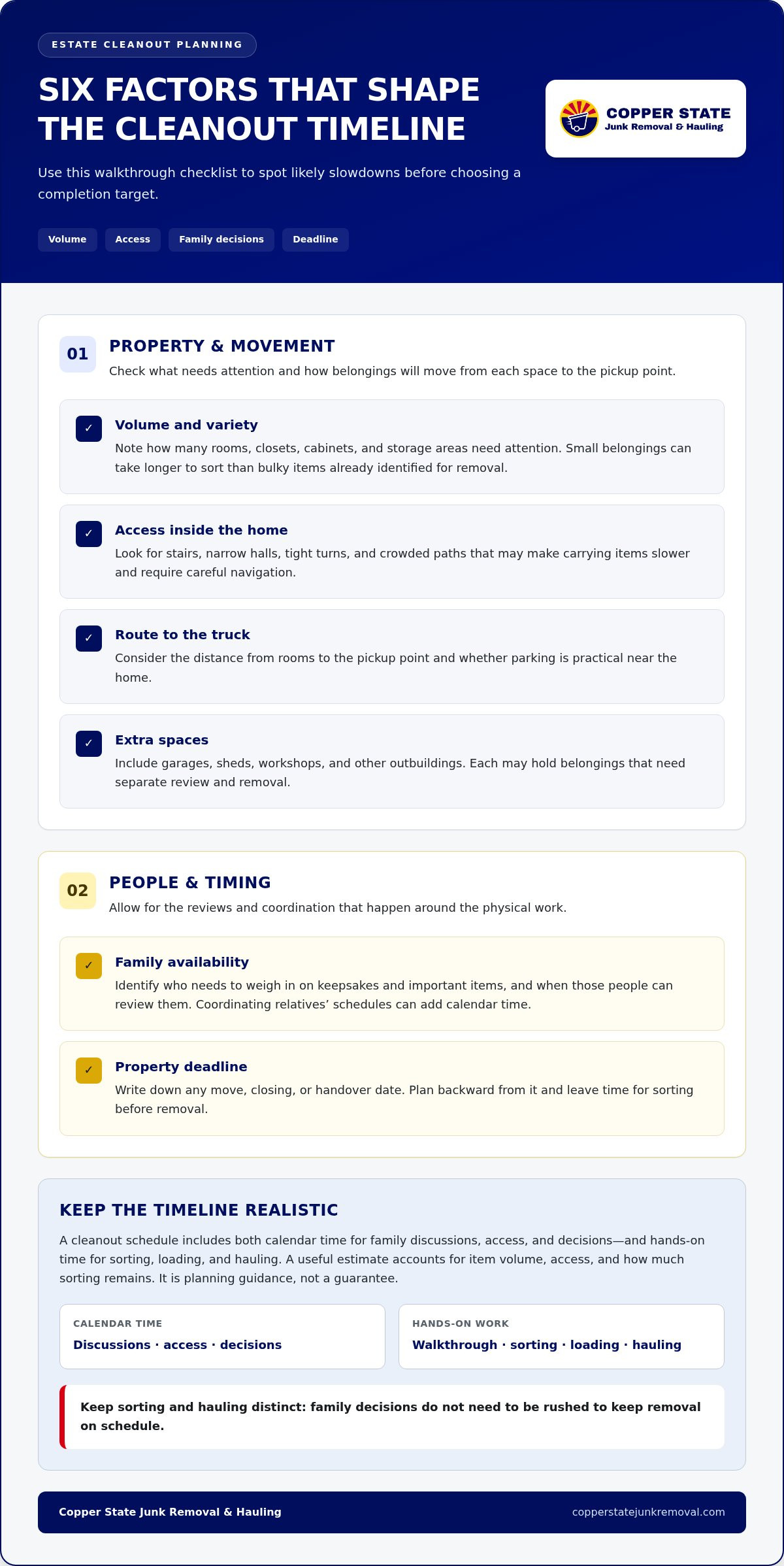
Two homes with similar square footage can take very different amounts of time to clear. The number and type of belongings, the property layout, and how quickly family members can make decisions all shape the schedule. Use this walkthrough checklist to spot likely slowdowns before choosing a completion target:
- Volume and variety: Note how many rooms, closets, cabinets, and storage areas need attention. Small belongings often take longer to sort than bulky items already identified for removal.
- Access inside the home: Check for stairs, narrow halls, tight turns, or crowded paths that could make carrying items slower and require careful navigation.
- Route to the truck: Consider the distance from rooms to the pickup point and whether parking is practical near the home.
- Extra spaces: Include garages, sheds, workshops, and other outbuildings in the walkthrough. Each can hold belongings that need separate review and removal.
- Family availability: Identify who needs to weigh in on keepsakes and important items, and when those people can review them.
- Property deadline: Write down any move, closing, or handover date so sorting and removal can be planned backward from it.
How belongings, access, and property layout change the work
An open home with clear paths and belongings already identified for removal is easier to work through than one where items are stacked in tight rooms. Stairs, narrow access, and a long carry to the truck can mean more trips and slower loading. Garages and outbuildings add their own sorting and removal tasks, even when the main living areas look manageable. Identify these constraints during the walkthrough, before setting a target date.
Prescott-area properties have different layouts and access conditions. Focus on the route through the specific home rather than making assumptions based on its size or location.
How family decisions and property deadlines shape the schedule
When several relatives need to review belongings together, coordinating schedules can add calendar time even if the physical work is straightforward. Agree on who makes decisions and mark items that need shared review. If a move, closing, or handover is approaching, work backward from that date and leave time for sorting before removal. For broader property-clearing context, see this house cleanout services guide.
Once items are clearly set aside, local hauling support can reduce the lifting and loading involved. You stay in control of what leaves the property.
How long might different estate cleanouts take? Compare scenarios, not promises
There’s no reliable way to assign one duration to every estate based on home size alone. A few items set aside for removal are a different scope from a full property with rooms of belongings still awaiting family review. The table below is a planning framework, not a promised timeline. Compare the amount to remove, the work still needed, and the property’s access when setting expectations.
| Scenario | Home size and preparation | Access and work remaining |
|---|---|---|
| A few selected items | Limited area; belongings are identified for removal | Clear paths and a straightforward route make hauling simpler. Sorting is minimal. |
| Prepared partial cleanout | Several rooms or areas; most items have been reviewed | Stairs, narrow hallways, or a longer carry may add handling. Some sorting or loading preparation may remain. |
| Full property | Multiple rooms, possibly including a garage or outbuilding; belongings may still need review | Access, item volume, family decisions, and removal all shape the schedule. Cleaning or repairs may follow separately. |
Use these comparisons to describe the scope before setting a target. Keep removal time separate from family sorting, deep cleaning, repairs, or other property-ready tasks. Those may extend the overall calendar even after hauling is complete.
What a small or already-sorted cleanout may involve
A limited removal can be relatively straightforward if everyone has agreed which belongings are leaving and the items are easy to reach. Clear access helps reduce extra handling and repeated trips through the home. Still, don’t assign a duration based on the phrase “a few items” alone. Describe what’s included, where it’s located, and any access constraints so the estimate reflects the actual work.
Why a full or decision-heavy estate needs more planning
A full property can involve multiple rooms, closets, a garage, and other storage areas. Each space may hold belongings that need review before removal can proceed. Pauses for relatives to consider keepsakes can extend calendar time, even when hauling itself is organized. Home size alone cannot predict completion time; the amount to remove, access, and decisions still to be made matter just as much.
To answer “How Long Does It Really Take to Clean Out an Estate?”, compare the actual scope with the work still ahead. A useful planning estimate should explain its assumptions and limits, not present a broad scenario as a guarantee.
How to plan an estate cleanout timeline without rushing important decisions
A clear sequence helps you move the cleanout forward while leaving space for meaningful choices. Work backward from any move, closing, or handover date, and reserve time for family review before scheduling hauling.
- Set a target date. Write down the property deadline and any earlier dates that affect access or family availability. Treat the target as a planning guide, not a reason to rush decisions.
- Identify decision-makers. Agree on who can decide what stays or goes, and how the family will handle items that need shared review.
- Sort at a manageable pace. Group belongings into keep, review, and remove areas. Set aside keepsakes and important items first. Leave anything uncertain in the review group until the right people can weigh in.
- Schedule removal after sorting. Once the items for removal are clear, plan the hauling stage around the remaining volume and property access.
- Review the property separately. Walk through each room, storage space, and outbuilding after removal. A separate final walkthrough helps catch missed areas and identify any cleaning or repair work still needed.
Keep a written room-by-room list. Add access notes, priority dates, and the names of people responsible for decisions. If belongings may be sold before the property is cleared, this guide to items to sell before a Prescott cleanout can help you plan that step. For a move, use the moving transition junk removal checklist to organize the changeover.
What to do when the property is part of a senior transition
An assisted living move can bring a firm transition date alongside personal decisions about familiar belongings. Involve the senior in choices at their preferred pace, and include authorized family decision-makers where needed. Set aside items for discussion rather than treating uncertainty as approval to remove them. The assisted living cleanouts guide offers more transition-specific guidance.
Once the remove group is settled, hauling support can take lifting and loading off the family’s hands while you remain in control of what leaves. Arrange hauling for identified items as one step in your schedule, not a substitute for sorting or family decisions.
When local estate cleanout help can make the timeline easier to manage
Once your family has decided what will leave, hauling support can reduce the physical work still ahead. Lifting, loading, and carrying identified items out of the property take time and energy, especially when belongings are spread across rooms or storage spaces. Keeping decisions with the family while arranging help for removal can make the plan easier to manage.
If you’re still asking, “How Long Does It Really Take to Clean Out an Estate?”, remember that hauling is only one part of the schedule. The scope of the removal and the property’s access shape the plan. A room-by-room list helps clarify what’s ready to go and what still needs review.
What to have ready before arranging hauling
A little preparation makes it easier to describe the work and keep important belongings out of the removal group. Before arranging hauling, gather these details:
- List selected items or areas: Note which rooms, furniture, or other belongings are ready for removal.
- Describe access: Include stairs, narrow routes, the distance from the items to the truck, and practical parking details.
- Separate review items: Keep keepsakes, valuables, and anything awaiting a family decision apart from belongings identified to go.
- Note timing needs: Write down property access details and any move, handover, or other priority dates that affect the plan.
This information helps keep the work focused. You remain in control of what leaves, and items that need more thought stay out of the hauling plan until a decision is made.
A practical next step for a Central Arizona estate
Every property has its own scope. A few selected items in an accessible area call for a different plan than belongings spread throughout a home and its storage spaces. Copper State Junk Removal & Hauling is a family-run local hauling partner serving Prescott, Chino Valley, Prescott Valley, and communities across Central Arizona. Support with physical removal can help move the property-clearing plan forward without taking decisions away from the family.
When you’re ready to plan the removal of identified items, Plan an estate cleanout with Copper State.
Build a Clear Plan for the Property’s Next Step
There’s no single timeline that fits every estate. The schedule depends on what still needs sorting, how much is ready to go, and the property’s access. To answer “How Long Does It Really Take to Clean Out an Estate?”, separate family decisions from physical removal, set a practical target date, and leave time to review keepsakes without pressure.
A room-by-room list can keep everyone aligned. Once belongings are clearly identified for removal, hauling help can ease the lifting and loading while leaving decisions about what stays with you. Copper State Junk Removal & Hauling is a family-run local company serving Prescott and nearby Central Arizona communities, with residential and commercial hauling and specialized property cleanout services.
Ready to plan the removal stage? Plan an estate cleanout with Copper State and take the next step at a pace that works for your family. A clear plan can make a difficult transition feel more manageable.
Frequently Asked Questions
How long does a typical estate cleanout take?
There’s no dependable single timeline for a typical estate cleanout. The schedule depends on the amount of property to clear, whether belongings are already sorted, access inside and outside the home, and how much family review is needed. Separate hands-on removal time from elapsed calendar time, which may include pauses for decisions. For a useful estimate, describe the actual rooms, belongings, access, and work remaining rather than relying on a broad average.
Can an estate cleanout be completed in one day?
A limited, prepared removal may be possible within a day, but a full estate cleanout can’t be promised on that schedule. A few items already identified for removal, clear paths, and convenient access create a different scope from multiple rooms that still need sorting. Family decisions, loading, and any separate cleaning or repairs also affect the overall timeline. Treat one day as a possibility for some scopes, not a guaranteed completion time.
What factors affect an estate cleanout timeline the most?
The biggest factors are the volume and type of belongings, how much sorting remains, property access, and the time needed for family decisions. Stairs, narrow hallways, a long route to the truck, or belongings stored in a garage or outbuilding can add handling and separate tasks. A move, sale, or handover date matters too. A room-by-room walkthrough helps reveal these details before you set a target.
Does sorting belongings make an estate cleanout take longer?
Yes, sorting can extend the calendar schedule because belongings may need careful review before removal decisions are made. Keepsakes, valuables, and items several relatives want to discuss can require additional time, even if the physical hauling is straightforward. Create separate keep, review, and remove groups. Set aside time for the review group before arranging removal, so meaningful choices aren’t rushed and items aren’t taken before the family is ready.
Should I clean out an estate before putting the house on the market?
Clearing belongings before listing can make it easier to see the rooms and plan the property’s next steps. The right order depends on what the home needs and which items the family wants to keep. Separate hauling from deep cleaning, repairs, or other sale preparation, since those may be distinct tasks. If a deadline is approaching, plan backward from it and leave time for decisions before removal begins.
What should I do before scheduling an estate cleanout?
Confirm who will decide what stays and what goes, then walk through each room, garage, and storage area. Make a written list of items selected for removal, belongings that need review, access constraints such as stairs or narrow paths, and any important dates. Keep keepsakes and valuables separate from items ready to leave. A clear scope helps make the removal plan more practical and keeps family decisions in your hands.
Can a local hauling company help with an estate cleanout in Prescott?
Yes. Local hauling support can reduce the physical work of lifting, loading, and removing belongings the family has already identified. Copper State Junk Removal & Hauling is a family-run company serving Prescott and nearby communities, including Chino Valley, Prescott Valley, Paulden, Dewey, Mayer, Jerome, Clarkdale, Cottonwood, Camp Verde, Verde Valley, and Sedona. Prepare a room-by-room list and access notes so the removal plan reflects the property’s scope.


