

What if the simplest way to finish a renovation isn’t renting a dumpster? When scrap wood, drywall, old cabinets, or flooring block access to the work area, renovation debris removal can clear the way for finishing work and restore usable space. The right cleanup approach depends on the amount and type of debris, how bulky it is, and how long it will remain on-site.
It’s understandable if the options feel unclear. Handling cleanup yourself takes time and effort, while a rental container needs space and may not suit every project. This guide compares DIY cleanup, container rentals, and professional hauling so you can choose an approach that fits your debris, access, and schedule.
You’ll also learn how to sort common renovation materials, plan for items that need special handling, and prepare for a smoother project handoff. For homeowners and businesses across Central Arizona, Copper State Junk Removal & Hauling provides renovation cleanup to clear unwanted project debris. A little planning can help move the space from cluttered to ready for what comes next.
Key Takeaways
- Renovation debris removal clears leftover materials that can block access, delay finishing work, and make a property harder to use.
- Sort debris into broad groups, then consider volume, weight, item size, and carrying distance when planning cleanup.
- Compare self-hauling, container rental, and professional hauling based on your project’s debris, access, and available labor.
- Before cleanup, note where the debris is, its approximate amount, any bulky items, and the route from the work area to the pickup point.
- Copper State Junk Removal & Hauling provides renovation cleanup for residential and commercial properties in Prescott, Prescott Valley, Chino Valley, Cottonwood, Sedona, and nearby communities.
Renovation debris removal: why the cleanup plan matters
Renovation debris removal is the clearing and hauling of unwanted materials left after remodeling or repair work. It covers what remains after the construction or renovation task itself: materials that need to be moved out of work areas or away from the property. Cleanup is separate from the work that created the debris. For example, a crew may install new flooring while cleanup clears the old flooring and packaging from the room.
A cleanup plan matters because debris can take up more than floor space. Scraps stacked in a hallway can restrict access between rooms. Offcuts, boxes, or removed fixtures can occupy surfaces needed for tools and supplies. Until those obstacles are cleared, trades may have less room to finish their work, and household members or tenants may have difficulty using the space. Planning removal helps keep cleanup from competing with the remaining work.
Start with a realistic picture of what is left. A few light boxes and short offcuts are different from bulky cabinets, long boards, or piles spread across several rooms. The material matters, too: renovation waste can have different reuse, recycling, or disposal options. The overview of Demolition waste describes common material types and waste-management approaches. Your project’s actual leftovers determine what needs attention.
What renovation debris can include
Common leftovers include cardboard and protective packaging, removed flooring, lumber, drywall pieces, and old fixtures. The mix depends on the work completed: a bathroom update may leave different materials than a flooring replacement or wall repair. Separate ordinary project leftovers from materials that may be hazardous, such as asbestos-containing material, lead paint debris, or chemicals. These require specialized handling rather than routine cleanup and hauling.
Sorting the pile into broad groups can make the scope easier to understand. Keep bulky items together, distinguish building materials from packaging, and set aside anything that may need special attention. Don’t assume every item can go in the same container or follow the same disposal route. Local acceptance guidance can vary by material, so keep uncertain items separate from ordinary debris.
When post-renovation cleanup becomes a priority
Prioritize cleanup when debris narrows walkways, blocks access to a work area, or prevents a room from being used as planned. Clearing a path can help final trades reach the surfaces they need and give homeowners room to prepare a finished space for everyday use. It also makes the property easier to review before a handoff, without confusing leftover project material with unfinished renovation work.
Contractors and property managers may coordinate removal across several rooms or residential and commercial spaces. Note which areas are ready to clear and which still need materials or tools. A practical renovation debris removal plan accounts for the project’s remaining tasks as well as the debris itself. This distinction helps protect access, reduce avoidable clutter, and move the property toward its next use.
Which renovation debris needs clearing, and what affects the job?
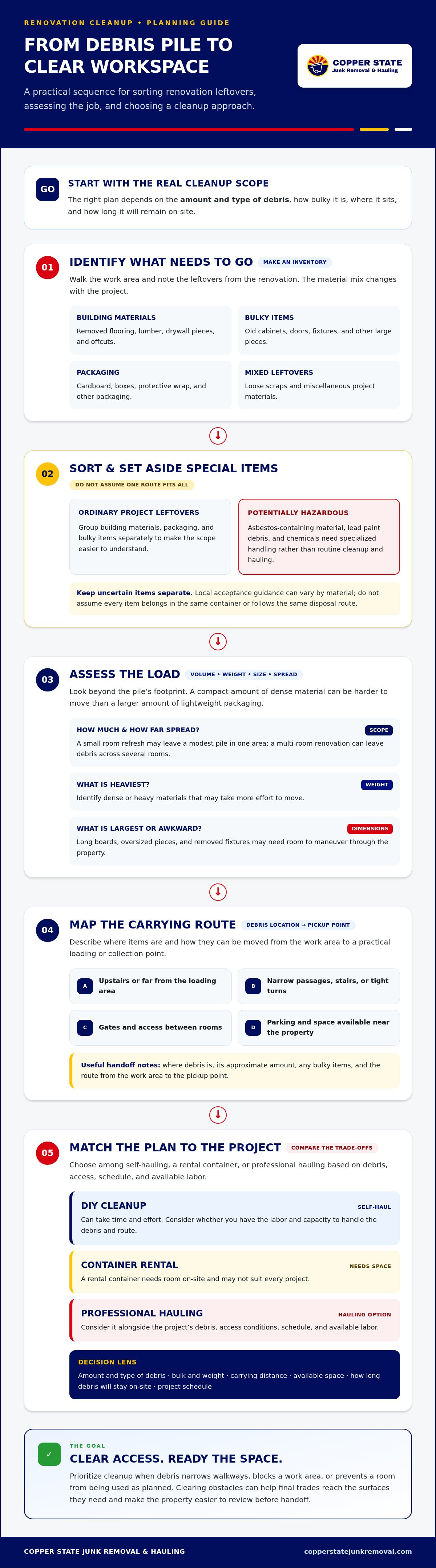
A useful cleanup plan starts with two questions: what needs to go, and how difficult is it to move? Renovation debris can be light but scattered, like packaging across several rooms, or bulky and awkward, like removed fixtures and long pieces of building material. The mix affects how items are gathered, carried, and cleared from the property.
- Bulky items: Removed cabinets, doors, fixtures, and other large pieces can be hard to maneuver through narrow doorways or hallways.
- Building materials: Flooring, lumber, drywall, and similar leftovers vary in size, weight, and how easily they can be carried.
- Packaging: Boxes, wrap, and protective materials may be light, but can spread through work areas and obstruct access.
- Mixed leftovers: Scraps and miscellaneous project items may need to be separated before they can be moved efficiently.
How material mix and volume change cleanup needs
A small room refresh may leave a modest pile of flooring scraps and packaging in one accessible area. A multi-room renovation can create more debris across several rooms, with items of different sizes and weights. Mixed loads can take more sorting and handling than a single material type. These differences help define the cleanup scope without assuming a particular load size or disposal outcome.
Weight and dimensions matter alongside volume. A compact pile of dense material may be harder to move than a larger amount of lightweight packaging. Long boards or oversized pieces may need a clear route through the property, while small loose leftovers can be easier to gather but more widely scattered. Identify both the heaviest items and the largest pieces before planning the work.
Access and carrying distance matter
The route from the debris to the collection point can shape the job. Note whether items are upstairs, beyond a narrow passage, or far from a practical loading area. Stairs, tight turns, gates, parking, and the space available near the property may all affect how debris can be moved. A clear path and a designated collection point make the scope easier to understand. When planning renovation debris removal, describe both what needs clearing and where it is located.
What to know about hazardous renovation materials
Suspected hazardous materials need a different level of care from ordinary project leftovers. Don’t combine uncertain materials with routine debris or assume they follow the same disposal rules. Before making decisions about them, consult current Arizona and local guidance for the material and project involved.
Once you’ve separated ordinary renovation leftovers from anything requiring specialized handling, plan the rest of the cleanup around the actual volume, item sizes, and access route. If the project has left more to haul than you can manage, Copper State renovation cleanup can help clear unwanted debris and reclaim usable space.
DIY cleanup, a rental container, or renovation debris hauling?
The best cleanup method depends on how much debris you have, how easy it is to reach, and how much time you can set aside. Consider the whole job, not just the pile: someone needs to gather the material, move it through or out of the property, and arrange transport or collection.
- Self-hauling can work for a small amount of manageable debris when you have suitable transport, safe lifting capacity, and a clear route.
- A rental container gives you a place to load debris as the project progresses, but it needs room for placement and access for loading. The rental period and placement location also affect whether it fits your schedule.
- Professional hauling can reduce the lifting and transport work, especially when debris is bulky, mixed, spread across rooms, or difficult to carry.
Compare the options against your actual project. A container can be useful when renovation work is ongoing and debris builds up over time. If your goal is to clear completed work areas without managing a container, hauling may be a more direct fit. For renovation debris removal, access and labor matter as much as volume.
When handling cleanup yourself may make sense
DIY cleanup may suit a small quantity of light, manageable material. Choose it only if you can lift items safely, have suitable transport, and can carry them without an unreasonable distance. Keep walkways clear, separate debris from active work areas, and avoid stacking items where they could obstruct workers or household members. Don’t assume every leftover belongs in ordinary household disposal; rules can differ by material.
What a rental container requires
A container can provide a central place to collect debris while work continues, but it also requires site planning. Consider where it can be placed, whether vehicles can reach it, and whether its location leaves room for normal access to the property. Loading is still part of the job, so think through how heavy or oversized pieces will get from the work area into the container. A container may be less convenient if space is tight or the debris is difficult to move.
When hauling help can simplify the project
Professional hauling can help when lifting is difficult, debris is mixed or bulky, access is awkward, or cleanup is competing with other project tasks. It reduces the transport burden and can help reclaim rooms or work areas without you organizing each trip yourself. The scope depends on the debris and property access, so a clear description of the items and their location helps set expectations.
If you’re weighing service considerations, junk removal pricing factors can help explain what may shape a hauling job. For local help clearing renovation leftovers, explore local junk removal and hauling with Copper State Junk Removal & Hauling.
How to prepare for renovation debris removal
A little preparation makes cleanup easier to plan and helps protect parts of the property that are still in use. Before renovation debris removal begins, identify what should go, where it is, and how it can be carried to the loading area. Keep the plan simple and specific.
- Mark the debris areas. List the rooms or project zones where unwanted material is located. Note whether it is in one pile or spread across multiple spaces.
- Estimate the amount. Describe the overall volume, such as a small corner pile, several grouped stacks, or debris across multiple rooms.
- Identify bulky items. List oversized or awkward pieces separately so they don’t get lost in a general debris estimate.
- Describe the access route. Note stairs, narrow passages, gates, distance to the collection point, and where a vehicle can load.
- Separate keepers from removals. Clearly mark materials or belongings that should stay, and keep them apart from items intended for removal.
Create a clear, useful debris inventory
Group unwanted items by room or project area rather than mixing them with materials you plan to keep. Include loose debris and bulky pieces, then note any stairs, gates, or tight turns along the route out. A written list or a few photos can show the cleanup scope clearly, especially if debris is spread across different parts of the property.
Be precise about what belongs in the removal pile. A labeled area or clear boundary helps prevent confusion between discarded materials and items saved for reuse. If something is uncertain, keep it separate until you’ve decided what should happen to it. A clear inventory also helps distinguish routine renovation leftovers from materials that may need specialized handling.
Make the property easier to access
Before cleanup, clear a safe path between the debris and the available loading area. Move vehicles, renovation supplies, and other obstacles where possible, while keeping people and pets away from the route. If renovation work is still active, keep the loading area separate from tools and ongoing tasks so cleanup doesn’t interfere with the work underway.
Access details matter. A pile near an open entrance is different from the same pile upstairs or behind a narrow gate. Include those details in your inventory so the work can be planned around the property, not just the debris. If you’re weighing the effort against the convenience of help, read about the value of hiring junk removal.
With keepers set aside, debris areas identified, and the access route cleared, you’ll be better prepared to arrange a straightforward cleanup. For help clearing renovation leftovers and reclaiming usable space, arrange renovation cleanup with Copper State.
Renovation debris removal in Prescott and Central Arizona
Once renovation work is done, leftover materials can keep a room, work area, or commercial space from serving its next purpose. Copper State Junk Removal & Hauling is a family-run local provider of renovation cleanup and hauling for residential and commercial customers. The goal is straightforward: clear unwanted project debris so you can reclaim usable space and move toward the next stage of your project.
Cleanup needs vary from one property to another. A homeowner may need a room cleared before putting it back into daily use. A contractor may want project leftovers out of the way before final work continues. A property manager may be coordinating debris removal across a commercial site or several areas. Sharing what needs to be cleared and how the property is laid out helps shape a plan around the actual job.
A local cleanup option for homes and businesses
Copper State serves Prescott, Prescott Valley, Chino Valley, Paulden, Dewey, Mayer, Jerome, Clarkdale, Cottonwood, Camp Verde, the Verde Valley, and Sedona. For residential properties, renovation cleanup can help restore rooms and access around the home. For commercial spaces, clearing unwanted project debris can make work areas usable again and help prepare the property for its next phase.
Not every project has the same cleanup scope. Debris may be gathered in one accessible area or left across different parts of a property. The kind and amount of material, item size, and route to the collection point all help describe the job. Whether you’re planning cleanup for a home or business, a clear picture of the space helps keep the plan practical.
What happens when you arrange renovation cleanup
Start with the basics: where the debris is, roughly how much there is, whether any items are bulky, and what the access route looks like. Mention relevant details such as stairs, gates, or the distance to the loading area. It can also help to identify what should stay, so unwanted materials are clearly separated from anything being kept. These details give the cleanup plan a useful starting point.
The plan is tailored to the project and property rather than built around a fixed package. That keeps the focus on your specific cleanup needs, whether the priority is opening up a room, clearing a work area, or preparing space for a handoff. Copper State is a local, family-run team serving homeowners, contractors, and property managers across Central Arizona, with renovation cleanup and hauling for residential and commercial projects.
Ready to clear the way for what comes next? Get started with Copper State Junk Removal & Hauling and share a few details about your project. A clear description of the debris and access helps set the next step in motion.
Make room for what comes next
A renovation doesn’t feel finished while leftover debris keeps the space from serving its next purpose. Choose a practical next step: set aside anything you’re keeping, make the debris area easy to identify, and decide whether you have the time and transport to handle cleanup yourself. If moving the remaining material feels like one more project, renovation debris removal can help you shift your attention back to using the space.
Copper State Junk Removal & Hauling helps residential and commercial customers clear unwanted renovation debris. Share what needs to go and where it’s located to arrange a cleanup plan suited to the property and project. You don’t have to figure out every detail before taking that first step.
Get help clearing renovation debris with Copper State. A cleared space is a fresh start, and your next project milestone is within reach.
Frequently Asked Questions
What counts as renovation debris?
Renovation debris includes unwanted material left by remodeling, repairs, or upgrades. It might be discarded flooring after a room refresh, cut lumber from a repair, drywall pieces, empty product packaging, or fixtures removed during an update. Items set aside for reuse aren’t debris if you intend to keep them. Identify what’s truly unwanted before cleanup so useful supplies or belongings don’t get mixed into the removal pile.
Can renovation debris go in a regular dumpster?
Some common, non-hazardous renovation leftovers may be allowed in a rental dumpster, but acceptance depends on the dumpster provider and disposal site. Don’t assume every material is permitted just because it came from a renovation. Heavy materials and items needing special handling can have different restrictions. Check current local waste guidance for the materials in your load, and keep anything potentially hazardous separate from ordinary debris.
Should I rent a dumpster or hire a hauling service for renovation debris?
Choose based on how debris accumulates and who will load it. A rental container can suit a project that generates material over several workdays, provided there’s room to place and load it. A hauling service may be more practical for a concentrated pile, bulky items, or when you’d rather not arrange transport and do the lifting. Consider the project schedule, site access, and cleanup labor alongside volume.
Does renovation debris removal include hazardous materials?
Hazardous materials need separate, specialized handling and should not be treated as routine renovation debris. If renovation work leaves material you suspect is hazardous, keep it apart from ordinary debris. Disposal requirements depend on the material and location. Consult current Arizona and local guidance to understand the appropriate handling and disposal process before arranging cleanup for the remaining project debris.
Do I need to sort renovation debris before it is hauled away?
You don’t necessarily need to separate every ordinary leftover by material type before arranging hauling. Do separate anything you plan to keep, and point out items that are unusually bulky or need special attention. For example, mark a stack of reusable trim clearly so it isn’t confused with discarded offcuts. If you’re unsure whether something is hazardous, isolate it and seek guidance rather than mixing it with routine debris.
Does Copper State provide renovation debris removal near Prescott and Sedona?
Yes. Copper State Junk Removal & Hauling provides renovation cleanup and hauling in Prescott and Sedona, as well as Chino Valley, Prescott Valley, Paulden, Dewey, Mayer, Jerome, Clarkdale, Cottonwood, Camp Verde, and the Verde Valley. For a residential or commercial project, share where the debris is located, the general scope, and any access challenges. Those details help frame a cleanup plan around the property.


