

Nails and screws don’t automatically make scrap wood impossible to haul. Scrap wood removal in Chino Valley can account for boards with attached hardware, but pile size, access, and the kind of wood affect the work and disposal options. The price depends on the job and is given after a quote request; pile volume, loading access, and disposal needs all influence the cost.
Before arranging a pickup, it helps to know what the service includes and what details affect the estimate. This guide explains how pile size and access shape hauling, how to describe treated wood and mixed debris, and what to expect when scrap wood is part of a home or business cleanup in Chino Valley and nearby Yavapai County communities.
Key Takeaways
- Understand how wood quantity, loading conditions, and disposal needs shape a removal quote.
- Learn why construction debris may need different handling from ordinary household wood waste.
- See how nails, screws, and mixed materials can affect sorting and hauling.
- Find out what to expect when arranging wood removal for a home or commercial property.
How much does scrap wood removal cost?
For scrap wood removal in Chino Valley, the price depends on the pile’s volume, loading access, and disposal needs. The price is provided after a quote request, with those job details shaping the estimate. A compact stack near a driveway takes less loading effort than scattered boards behind a building or inside a crowded garage. Photos that show the pile and route to it can help describe the job clearly.
Hauling starts with assessing the wood, separating it from other debris, and loading it for transport. The appropriate destination depends on the material and available disposal or recycling options. Clean, usable boards may be suitable for reuse or donation, while broken, mixed, or unsuitable pieces may need disposal. Mention nails and screws because they affect sorting and handling.
Ask what the hauling service includes: loading, transport, sorting, and any cleanup after removal. These steps clarify what the estimate covers. If the pile includes wood alongside furniture or renovation debris, describe each material separately. A single mixed load can involve different handling needs from a stack of similar boards, which may influence the work and disposal route.
California commercial recycling rules provide context, but they are not Chino Valley, Arizona requirements. The California Department of Resources Recycling and Recovery (CalRecycle) states the AB 1826 schedule would cover businesses generating at least 2 cubic yards of solid waste per week if statewide organic waste disposal was not reduced to 50% of its 2014 level. California’s AB 341 requires businesses producing at least 4 cubic yards of solid waste per week to have recycling service, according to CalRecycle. CalRecycle also says AB 341 requires multifamily dwellings with 5 or more units to have recycling service. These rules concern California’s commercial recycling requirements, not a local Arizona hauling quote.
To describe the job clearly, share the pile’s approximate size, the wood’s condition, and its distance from the loading area. Mention examples such as cut framing lumber, pallet boards, or scraps mixed with packaging. These details help Copper State plan the hauling and consider responsible reuse, recycling, or disposal without assuming every board belongs in the same stream.
Construction debris hauling and disposal
Chino Valley bulk trash pickup rules for scrap wood depend on local collection instructions, so don’t assume renovation lumber is accepted. Curbside acceptance can vary, too. Separate construction debris from household items and follow the program’s material rules.
Construction Debris and Lumber Removal
Professional hauling can include loading lumber and other construction debris, transporting the load, and directing materials toward appropriate disposal or recycling options. A renovation pile, for example, might contain boards, broken trim, packaging, and bricks. Describe the materials and where they’re located so the hauling plan accounts for the load and access.
Scrap Wood and Construction Debris
Scrap wood means leftover or discarded wood, such as offcuts, broken boards, and unwanted pallet pieces. Construction debris is a broader category that can include lumber alongside bricks, scrap metal, and packaging. Sorting materials helps identify what may be suitable for reuse or recycling and what needs disposal. Keep branches and leaves separate from building materials.
Accepted Lumber and Wood Debris
Common examples to describe include framing lumber, trim, plywood offcuts, pallet boards, and broken wooden pieces. Acceptance depends on the hauling or disposal program and the material’s condition, so avoid treating every wood product as interchangeable. Note whether boards are painted, treated, or mixed with other debris. That description helps determine appropriate handling without assuming every item can be recycled.
Green waste differs from construction lumber. Branches and leaves are landscape debris, while cut boards come from building or repair work. Keeping yard material separate from renovation debris makes the load easier to assess and helps direct each material toward a suitable disposal route.
Pressure-treated wood needs particular care: don’t burn it or put it in compost, because chemicals can contaminate smoke, ash, or soil. Identify treated boards before hauling. Clean, reusable lumber may have a second life, while damaged or unsuitable pieces need an appropriate disposal route.
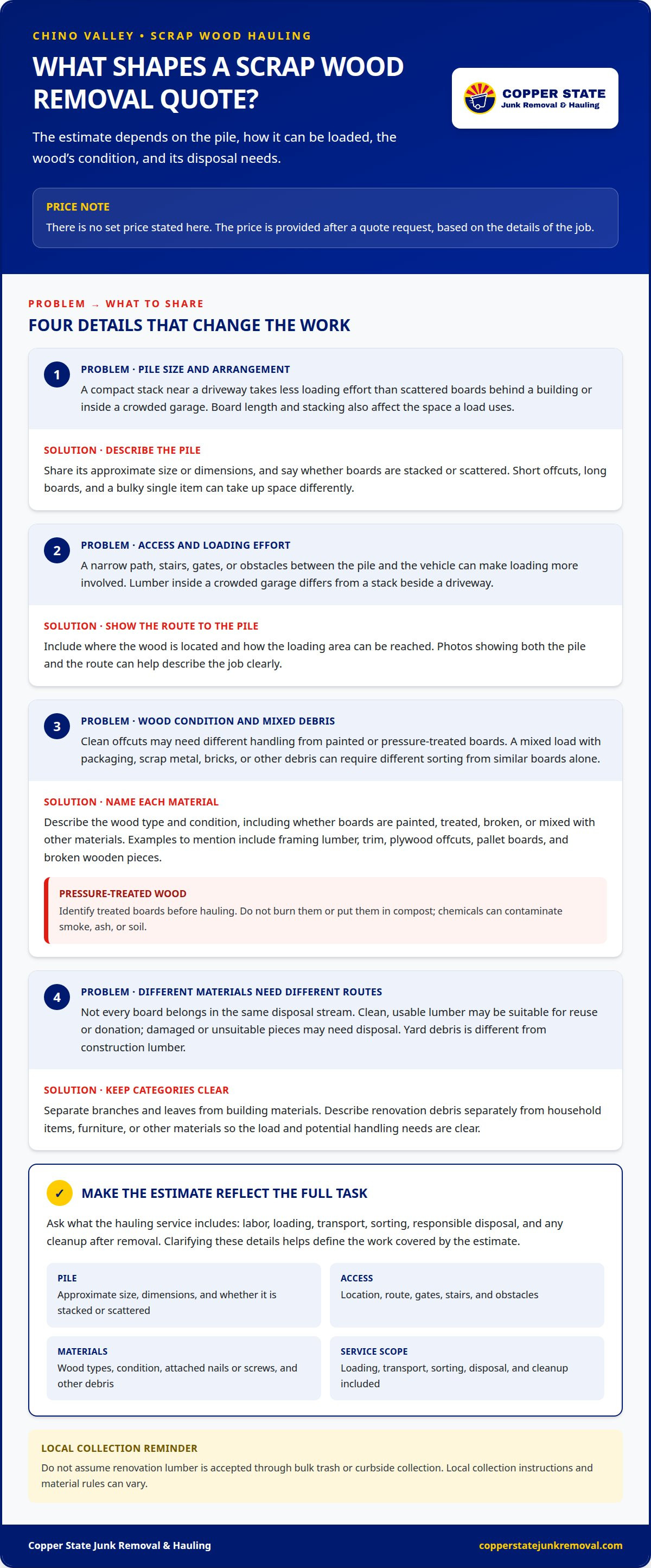
Pricing factors such as pile volume and access
Scrap wood removal services in Chino Valley, AZ are priced according to the job’s scope. The price depends on the case and is given after a quote request; pile volume, access, wood condition, and loading needs shape the estimate.
Truck-Volume and Single-Item Pricing
Some hauling estimates are based on the truck space a pile uses; others account for a single bulky item or a defined task. For lumber, board length and stacking affect the space required. A bundle of short offcuts takes up space differently from long boards spread across a work area. The estimate should reflect the actual load and removal work.
Task and Pickup Pricing
Task-based pricing reflects the specific work involved, while pickup pricing accounts for the material being hauled. For scrap wood, describe the pile, its location, and whether other debris is included. A stack beside a driveway differs from lumber inside a crowded garage, where loading takes more effort. Those details help define the pickup scope.
Junk Removal Estimates
A useful estimate connects the price to the work involved. Volume matters, but access can affect loading effort. A narrow path, stairs, or obstacles between the pile and vehicle can make loading more involved. Wood condition matters, too: painted boards, treated lumber, or scraps mixed with packaging may need different handling from clean offcuts.
For a clear assessment, provide the pile’s location, approximate dimensions, wood types, and access route. A photo can show whether boards are stacked or scattered. Mention gates, stairs, and mixed materials such as scrap metal or bricks so the estimate reflects the full task, not just the wood.
Review what the estimate includes: labor, loading, transportation, responsible disposal, and cleanup. A single-item pickup and a larger load may involve different amounts of work. Matching the estimate to the actual materials and access makes the options easier to assess.
Residential and commercial junk hauling
Local junk removal companies serving Chino Valley can haul scrap wood from homes and business properties. A useful service plan accounts for the wood, loading route, and any other items included.
Residential Scrap Wood Hauling
At home, scrap wood can accumulate after repairs, a fence project, or replacing shelves. Residential hauling includes gathering the identified material, loading it, and transporting it for appropriate handling. The work can vary depending on whether boards are in a backyard, garage, or side passage. Stairs, gates, and obstacles shape the loading route, so mention them when describing the pile.
Mixed household items also affect the job. A pile of lumber beside an old mattress, for example, differs from wood alone. Describe each item and its location rather than treating everything as one material. That helps the removal team understand the scope and plan how to clear the space.
Local Hauling Companies
For a home or business pickup, describe the actual load and the work involved. Share the property type, where the wood is, whether it’s mixed with other debris, and how the crew can reach it. Those details clarify loading, hauling, and disposal expectations before work begins.
Commercial sites may have scrap wood near a renovation area, storage room, or loading zone. A clear description helps account for access and surrounding activity. Boards stacked beside a receiving area, for instance, may need a different loading plan from scraps inside a back room. Be specific about the work area and materials.
Before scheduling, define the removal scope for the property. Identify which wood should go, note any bulky items, and explain access constraints. Copper State can then assess the job and outline the hauling steps. If a home cleanup also includes a mattress, describe it as a separate item to make the requested work clearer.
Plan your property cleanup around the materials and access details that matter.
Copper State Junk Removal & Hauling
Copper State Junk Removal & Hauling helps clear property clutter with renovation cleanup and yard clean up. If scrap wood is part of a larger project, these services can address the broader cleanup. Share where the material is and what else needs clearing, such as yard debris or renovation leftovers, so the scope is clear.
For a home or business with several cleanup needs, a coordinated property-clearing plan can make the next step easier. Copper State also offers Hoarder Cleanup, Assisted Living Cleanouts, Mattress Removal, and Hot Tub Removal. These services address distinct cleanout needs alongside broader property cleanup.
Contact Copper State Junk Removal & Hauling to discuss your cleanup needs.
Make room for what comes next
A cleared space can make a renovation, yard project, or property transition easier to manage. Before arranging scrap wood removal in Chino Valley, consider how you want to use the area once the pile is gone. A clear goal keeps the cleanup focused, whether you’re reclaiming a garage corner or opening up a work area.
When you’re ready to move forward, share the general scope of the cleanup and what you hope to clear. Copper State Junk Removal & Hauling can discuss the property-clearing needs that fit its services. There’s no need to turn the project into a bigger plan than it is. Start with the space causing the most disruption, then decide what should happen next.
Contact Copper State Junk Removal & Hauling to talk through your cleanup needs and take a practical next step toward a clearer space.
Frequently Asked Questions
Are nails, screws, or hardware in the boards a problem?
Nails and screws don’t automatically rule out hauling, but they matter for safe handling. Point out exposed fasteners and attached brackets before removal, especially on broken boards or short offcuts. For example, flag a loose nail near a walkway so the crew can account for it while loading. Don’t mix sharp hardware with loose household items in the same container.
Do I need to stack or bundle the wood before pickup?
No, you don’t need to move items to the curb or prepare a bundle. The crew handles lifting and loading from inside a home, garage, yard, or commercial space. To describe the job, note whether boards are stacked, scattered, or mixed with other debris. That gives the removal team a clearer picture of the pile and its location.
Do you accept treated, painted, or pressure-treated wood?
Identify painted or pressure-treated boards when describing the material, rather than grouping them with clean, untreated lumber. Their condition can affect suitable handling and disposal. Never burn pressure-treated wood or put it in compost, because chemicals can contaminate smoke, ash, or soil. Describe coatings or treatments clearly as part of the removal request.
What do junk removal services include?
Junk removal includes labor, loading, transportation, responsible disposal, and cleanup. You don’t have to carry items outside or load them into a vehicle. A pickup might involve removing boards from a garage and clearing the loading area afterward. The all-inclusive estimate covers these tasks, so describe the items and locations involved.
What happens to the wood after it’s picked up?
Reusable wood may be directed toward donation or reuse, and suitable materials may go for recycling. Other pieces may need responsible disposal based on their condition and material. Not every item will be accepted for donation or recycling, so reuse isn’t guaranteed. Separating clean boards from painted, treated, or broken pieces helps identify different handling needs.


