

A shed removal and hauling plan isn’t always as simple as knocking down the structure and loading the pieces. A narrow gate, concrete base, nearby buildings, or heavy materials can change what’s safe and practical. Before moving anything, take time to understand the work involved and what the finished site should look like.
The right approach depends on the shed, access to it, and what needs to happen to its contents and debris. This guide will help you assess those details, compare DIY work with professional help, and prepare the site before scheduling. You’ll also learn what to clarify about dismantling, hauling, and disposal to avoid surprises on removal day.
Start by noting the shed’s size, construction, condition, foundation, utility connections, and route out of the yard. Then check any local or HOA requirements that may apply to your property. If you’re considering a local provider such as Copper State Junk Removal & Hauling, ask whether it can handle your specific shed and confirm the job scope and coverage for your location. A little preparation can make a complicated project easier to plan.
Key Takeaways
- Define whether the job includes only the shed, or also its contents, foundation, and nearby debris.
- Match your removal plan to the structure’s condition, materials, access, and your experience with tools and heavy work.
- Use a pre-visit checklist to protect pets, clear pathways, and flag parking limits or nearby obstacles.
- For shed removal and hauling, confirm dismantling, debris handling, cleanup, and exclusions before agreeing to the scope.
- Share your location and clear photos with a local provider to check whether your Central Arizona property is within its service area and whether the shed-specific work is available.
Shed removal and hauling: what the job includes
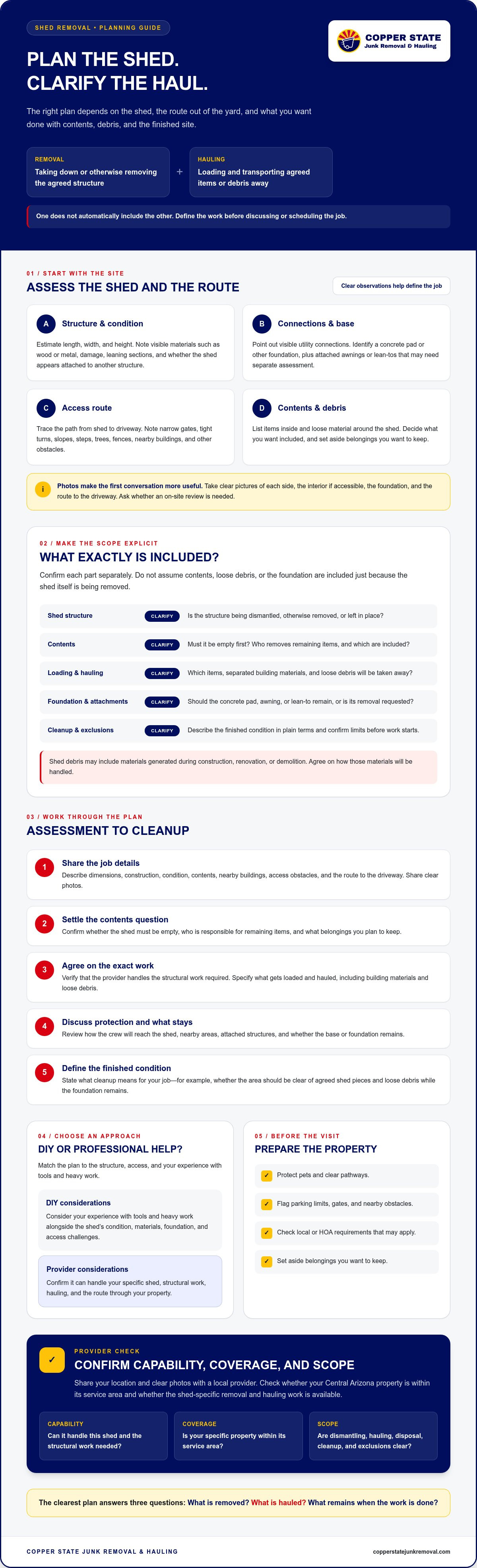
Shed removal means taking down or otherwise removing an agreed structure. Hauling means loading and transporting agreed items or debris away. One doesn’t automatically include the other. A provider might haul loose boards without dismantling the shed, so describe exactly what you want removed before discussing the job.
A shed removal and hauling plan starts with an assessment, followed by a clear agreement on what gets cleared, what work is included, and how materials will be handled. The approach depends on the shed’s size, construction, condition, and access. For background on how structures may be taken down or carefully dismantled, see Demolition.
What may be included in a shed-removal project?
Confirm each part of the project separately. Contents may need to be cleared before structural work begins. Dismantling, loading, hauling, and cleanup can also have different scopes. Ask which tasks the provider performs, which materials it will take, and what the site should look like when the work is complete. Don’t assume loose debris or shed contents are included just because the structure is being removed.
Foundations, concrete pads, and attached awnings or lean-tos may need a separate assessment. A wooden shed on an open lot presents different access and handling questions than a metal structure beside a fence or a shed connected to another building. If you’re in Sedona, share those details with a local provider and confirm whether it can take on the specific structural work and hauling you need.
Which shed details should you assess first?
You don’t need technical terms. Clear, practical observations help a provider understand the job and identify questions to resolve.
- Size and construction: Estimate the length, width, and height. Note visible materials, such as wood or metal.
- Condition and connections: Point out damage, leaning sections, or signs that the shed is attached to another structure. Mention any visible utility connections.
- Access route: Trace the path from the shed to the driveway. Note gates, slopes, narrow turns, steps, trees, fences, or other obstacles.
- Contents and surrounding debris: Identify items inside and loose material around the shed, then clarify what you want included.
- Photos: Take clear pictures of each side, the interior if accessible, the foundation, and the route to the driveway.
These details make the first conversation more useful. They also help you compare the proposed scope with the work you want done before anything is scheduled.
How shed removal and hauling works from assessment to cleanup
A shed-removal plan depends on the structure’s condition, materials, access, and your priorities for contents, hauling, and the finished site. Work through these steps before setting a date so you and the provider agree on what will happen and what will remain.
- Share details for an initial assessment. Describe the shed’s dimensions, construction, condition, and contents. Point out nearby buildings, fences, gates, slopes, and tight turns on the route to the driveway. Photos may be enough to start the conversation, but ask whether an on-site review is needed to assess the structure and access.
- Settle the contents question. Ask whether the shed needs to be empty before structural work begins. If items will remain, confirm who is responsible for removing them and which items, if any, are included in the agreed scope. Set aside belongings you want to keep.
- Confirm the exact work. Before scheduling, verify that the provider handles the structural dismantling or removal your project requires. Clarify what will be loaded and hauled, including separated building materials and loose debris. The U.S. Environmental Protection Agency describes Construction and Demolition materials as materials generated during construction, renovation, and demolition. That makes debris handling an important part of the plan.
- Agree on site protection and what stays. Discuss how the crew will reach the shed and protect nearby areas from avoidable damage. Be specific about attached structures and the base. Should a concrete pad or other foundation remain, or is its removal part of the request? Confirm limits or exclusions before work starts.
- Review the finished condition. Define cleanup in plain terms. For example, should the agreed work leave the area clear of shed pieces and loose debris while leaving the foundation in place? Make sure you and the provider share the same expectation. “Cleanup” can mean different things unless it’s spelled out.
These steps turn an uncertain project into a clear scope. If you’re speaking with a local provider such as Copper State Junk Removal & Hauling, explain your location in Sedona and ask whether the company can handle your specific shed work and hauling. You can also learn about local hauling and cleanup services while confirming availability and the work included.
DIY shed removal or professional hauling: how to compare
DIY may suit a straightforward shed, but the work involves more than taking it apart. You’ll need to assess the structure, move materials safely, and plan how debris will be handled. A professional assessment may help with a more complex site, but first confirm that the provider handles the specific structural work and hauling you need.
| Factor | DIY | Professional assessment and help |
|---|---|---|
| Labor | You supply the time and any helpers. Plan for lifting, sorting, and repeated trips. | Ask which tasks the provider will handle and what you must do beforehand. |
| Tools | You need suitable tools and the know-how to use them safely. | Confirm what equipment the job requires and whether the provider brings it. |
| Access | Narrow gates, slopes, and obstacles can make moving pieces difficult. | Share access details and ask how they affect the proposed work plan. |
| Safety | You’re responsible for judging stability and managing the work area. | Ask how the provider evaluates the structure and protects nearby property. |
| Debris | You arrange sorting, loading, transport, and appropriate disposal. | Confirm which materials and loose debris are included in hauling and what’s excluded. |
When might DIY removal be a reasonable option?
A small, detached shed with a clear route to the driveway may be more manageable for an experienced owner with suitable tools and reliable help. Consider the full job, including lifting and arranging a way to handle every load of debris. Check local requirements before dismantling or transporting materials. If you find damaged materials or can’t tell whether the structure is stable, stop and seek qualified help rather than guessing.
When should you ask a hauling provider to assess the shed?
Request an assessment if the shed is large, attached, damaged, unstable, hard to reach, or close to a fence, home, or other property. Describe the structure and access, then ask about experience with the exact removal tasks, hauling, and cleanup you need. Don’t assume that a provider offering hauling also dismantles structures. Confirm the complete scope in writing and compare what each proposal includes, not just headline rates. For broader quote-comparison context, look for a guide to junk removal pricing factors.
The right choice is the one that matches your skills and the site without leaving a risky structure or unmanaged debris. If the work involves uncertainty, pause and get the scope assessed before deciding how to proceed.
Prepare your property for shed removal in Central Arizona
A little preparation can prevent confusion on the day of shed removal and hauling. Before the visit, confirm what’s included, clear the access route, and check where materials may be taken. Requirements and conditions can differ between Sedona, Prescott, Prescott Valley, and communities across the Verde Valley, so verify details for your property rather than relying on a neighbor’s experience.
What should you clear or communicate before the appointment?
Use this checklist to prepare the site and protect belongings you want to keep:
- Sort the contents. Separate items to keep, donate, or remove. Clearly mark anything that must stay, and ask in advance whether the shed should be empty before the crew arrives.
- Explain access. Share gate widths or limits, ground conditions, slopes, steps, and tight turns between the shed and driveway. Mention parking instructions and where a vehicle can safely stop.
- Point out obstacles. Flag fences, trees, overhead branches or lines, nearby buildings, and anything else that could affect movement around the structure.
- Plan for pets and people. Arrange to keep pets and household members away from the work area and access path during the visit.
- Identify unusual materials. If you suspect hazardous materials, don’t disturb them or set them out with ordinary debris. Seek guidance from the appropriate local authority or a qualified professional. Copper State Junk Removal & Hauling does not offer hazardous-waste disposal.
Get the contents question answered beforehand. If you’re unsure whether an item can be handled as part of the agreed work, describe it and ask before the appointment.
What local checks matter around Prescott and Sedona?
First identify the jurisdiction for the property. Check with the relevant city or county about requirements that may apply to the planned work, and contact the intended disposal facility to confirm which materials it accepts and any restrictions. Don’t assume a facility will accept mixed shed debris, or that rules in Prescott also apply in Prescott Valley or Sedona. Confirm route and acceptance details before arranging transport.
Storm damage can complicate the plan. Note which parts of the shed are damaged and avoid disturbing materials if their condition raises safety concerns. For broader recovery planning, consult a storm debris removal and property recovery guide.
Copper State Junk Removal & Hauling is a family-run local business serving Central Arizona communities, including Chino Valley, Prescott, Prescott Valley, Paulden, Dewey, Mayer, Jerome, Clarkdale, Cottonwood, Camp Verde, the Verde Valley, and Sedona. Shed-specific removal capability and coverage for your exact location need to be confirmed. Share your project details with Copper State to ask whether the company can assess the requested work and hauling.
Choose a shed-removal and hauling provider with a clear scope
A clear agreement helps prevent surprises, especially because hauling loose debris and dismantling a shed are different tasks. Before scheduling, confirm what the provider can do for your specific structure, what you need to prepare, and what condition the site should be in afterward.
Questions to ask before scheduling shed hauling
Discuss each part of the job rather than relying on a broad service description. Ask:
- Experience and removal: Have you handled a shed like this one, and can you perform the structural dismantling required for this project?
- Contents: Does the shed need to be empty? If items remain, who will handle them, and which items are included?
- Hauling: Which dismantled materials and loose debris will you load and transport? Are there materials you can’t accept?
- Foundation and attachments: Is removing the base, concrete pad, or attached structure included, or will it remain?
- Access and preparation: What must be clear before work begins? Discuss gates, parking, slopes, nearby structures, and any site-protection needs.
- Cleanup and exclusions: What will the area look like when the agreed work is finished? Ask for exclusions to be stated clearly, too.
Get the scope in writing where possible. Compare the tasks, hauling, exclusions, and expected final condition, not just a short service description.
How to take the next step in Central Arizona
Share the property’s city, approximate shed dimensions, visible construction materials, and access details. Photos of the shed, its contents, foundation, and route to the driveway can make the first conversation more specific. Then confirm directly whether the provider serves your exact location and can handle the structural work and hauling you need.
Copper State Junk Removal & Hauling is a family-run local business serving communities across Central Arizona. Its services include junk removal, hauling, and specialized clean-outs, but shed-specific dismantling or removal isn’t confirmed. Contact the company to discuss your project and verify availability and scope before making plans. Contact Copper State about shed removal for a project-specific conversation.
Make your shed project easier to plan
A smooth shed removal and hauling project starts with a clear scope. Decide whether you need the contents, structure, foundation, and surrounding debris handled, then consider the shed’s condition and the route out of your yard. DIY may suit an experienced owner with a small, detached structure and a practical debris plan. For a damaged, attached, or hard-to-access shed, ask for an assessment before work begins.
Before scheduling, confirm what dismantling and hauling are included, which materials can be accepted, how the site will be protected, and what cleanup means. Check local requirements and disposal options for your property rather than assuming they’re the same across Central Arizona.
Copper State Junk Removal & Hauling is a family-run local business with services that include junk removal, hauling, and specialized clean-outs. Shed-specific work and coverage for your location need to be confirmed directly. Share your city, photos, and access details, then ask Copper State about your shed-removal project.
Frequently Asked Questions
Can a junk removal company dismantle and haul away an entire shed?
Some providers handle structural removal, while others haul only loose items or debris. Don’t assume dismantling is included. Ask whether the company can take on your specific shed, materials, access conditions, and requested tasks. Copper State Junk Removal & Hauling’s shed-specific scope isn’t confirmed, so contact the company directly to verify whether it can help before scheduling.
How do I prepare a shed for removal and hauling?
Set aside items you want to keep and identify anything the crew shouldn’t take. Share photos, approximate dimensions, construction details, and access limits with the provider. Ask whether the shed needs to be emptied and whether the foundation or surrounding debris is included. Before the appointment, confirm the agreed scope and site-preparation instructions so you know what to clear and what to leave in place.
Is it safe to remove a shed myself?
It depends on the shed’s condition, construction, size, access, and your experience with tools and dismantling. A damaged or unstable structure, a tight route, or nearby buildings can increase the risks. Don’t proceed if you’re unsure about stability or materials. Ask a qualified provider to assess the situation, and check the requirements for your property’s jurisdiction before starting work or transporting debris.
How much does shed removal and hauling cost?
The amount depends on the project scope, including the shed’s size, construction, condition, access, contents, and whether dismantling or foundation removal is requested. Local disposal requirements may also affect the work plan. Ask providers for a project-specific quote that lists included tasks and exclusions. Compare the scope, not just a headline figure, and confirm whether the quote covers structural removal or only hauling loose debris.
Do I need a permit to remove a shed in Arizona?
Requirements can depend on the shed, property, and local jurisdiction, so don’t assume one rule applies across Arizona or Central Arizona. Contact the city or county responsible for your property and ask whether the planned removal or related work needs approval. Check disposal requirements separately with the relevant facility. Confirm these details before scheduling work or arranging to transport shed materials.
What happens to the materials after a shed is hauled away?
The destination depends on the materials, their condition, and the receiving facility’s rules. Ask the provider how accepted materials and remaining debris will be handled, and verify facility requirements when needed. Don’t assume all shed materials can be recycled or accepted together. If you suspect hazardous materials, don’t disturb them or mix them with ordinary debris. Seek appropriate guidance, since Copper State doesn’t offer hazardous-waste disposal.
How long does it take to remove and haul away a shed?
Timing varies with the shed’s size, construction, condition, access, contents, and the work included. Clearing loose items differs from dismantling a structure or addressing a foundation. Share photos and site details when requesting an assessment, then ask the provider for a project-specific time estimate. Confirm whether you need to prepare the shed or verify disposal options before work is scheduled, as those steps can affect the plan.


