

Tackling DIY heavy item removal to save a quick buck often ends up being the most expensive project you take on all year. We get the temptation. That bulky sleeper sofa or broken appliance is taking up valuable room, and you simply want your living space back. It's easy to assume an extra set of hands and a borrowed pickup truck can solve the problem fast. But one awkward twist can leave you with severe back strain, deeply gouged hardwood floors, or cracked drywall before you even reach the front porch.
You shouldn't have to risk your physical health or your home just to clear out clutter. In this guide, you'll discover the genuine dangers of DIY lifting and learn how full-service removal protects your body, your property, and your wallet. We'll break down common hauling myths, highlight the specialized equipment needed to move bulky loads safely, and show you a simple, friction-free way to clear your space without lifting a finger.
Key Takeaways
- Learn why standard municipal trash programs reject bulky loads and which oversized items require specialized handling.
- Uncover common DIY lifting myths that lead to acute spinal strain, muscle tears, and costly medical visits.
- Discover how moving dense furniture without proper protection causes severe floor and drywall damage that quickly drains your budget.
- See the exact leverage tools and clearance strategies professional crews use to navigate tight spaces effortlessly.
- Learn how to choose a dependable heavy item removal partner that offers complete indoor pickup so you never have to lift a finger.
What Defines Heavy Item Removal (And the Curbside Myth)
Most homeowners assume getting rid of unwanted household clutter is as simple as scheduling a bulk pickup day. That assumption works fine for broken plastic lawn chairs or lightweight shelving. However, true heavy item removal is an entirely different challenge. The label covers dense, massive objects that far exceed the physical capacity of standard residential handling. We are talking about cast-iron bathtubs, commercial-grade treadmills, solid timber armoires, and oversized appliances that refuse to budge without specialized leverage.
Bulky Household Waste vs. True Heavy Items
Understanding the distinction between bulky waste and genuine heavy cargo protects your home and your spine. Bulky items are often just awkwardly sized, like a hollow flat-pack desk or a queen mattress. You can usually reposition them with minimal physical strain.
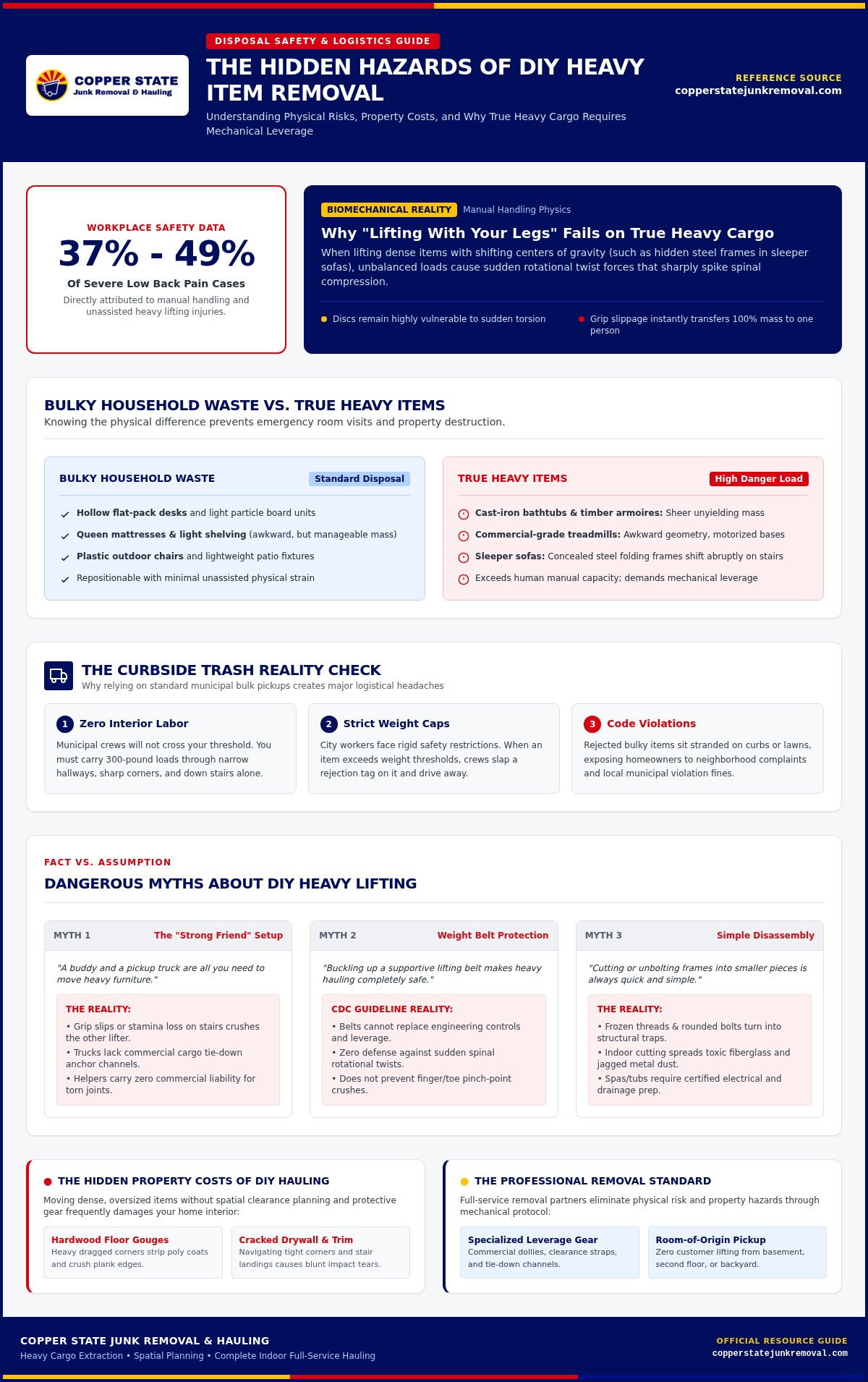
True heavy items, by contrast, combine sheer mass with awkward, uneven weight distribution. A sleeper sofa hides a dense steel folding frame beneath its cushions, shifting its center of gravity abruptly the moment you tilt it down a staircase. The physics behind the manual handling of loads demonstrates that uneven, shifting weight sharply spikes spinal compression forces, making even a short lift hazardous for an unassisted homeowner.
The Curbside Trash Reality Check
National waste management companies and municipal trash services promote an easy solution: just roll your bulky items to the curb. What their automated booking portals routinely ignore is the distance between your basement and the street. They assume you can effortlessly haul a 300-pound object through narrow hallways, around sharp corners, and down front steps on your own.
Here is what actually happens when you rely on curbside trash programs for oversized loads:
- Zero interior labor: Municipal crews will not cross your threshold. Every inch of moving falls entirely on you.
- Strict weight caps: City workers face rigid safety restrictions. If an item exceeds municipal weight thresholds, workers routinely slap a rejection tag on it and drive away.
- Code violations: When an oversized load gets rejected, it sits on your lawn or curb. That exposes you to neighborhood complaints and local municipal code violation fines.
Relying on standard curbside services trades convenient disposal for massive physical effort and mounting logistical headaches. Smarter heavy item removal starts with teams that handle the load from the exact room where it sits.
Four Dangerous Myths About DIY Heavy Lifting
Telling yourself that you can easily move massive furniture with basic grit is an expensive gamble. Workplace safety data confirms that lifting injuries account for roughly 37% to 49% of severe low back pain cases. In a residential setting, manual handling accidents send thousands of weekend warriors to local emergency rooms each year. The age-old advice to "lift with your legs" falls apart when you grapple with an unbalanced 250-pound object. Safe heavy item removal relies on mechanical leverage, specialized gear, and spatial planning, not raw muscle.
Myth 1: A Strong Friend and a Pickup Truck Are Enough
Enlisting a buddy often creates an illusion of security. The trouble begins when one person's grip slips or stamina suddenly gives out on a flight of stairs. That leaves the second lifter bearing the full, crushing weight without warning. Standard pickup trucks also lack commercial tie-down anchor channels designed to secure high-center-of-mass cargo over bumpy back roads. Worse yet, friendly helpers rarely carry commercial liability coverage to protect either of you if a joint tears or an ankle fractures.
Myth 2: Weight Belts Make Heavy Lifting Safe for Anyone
Buckling up a supportive belt might give you a mental boost, but it cannot alter your body's mechanical limits. The CDC's publication on Ergonomic Guidelines for Manual Material Handling highlights that personal equipment cannot replace administrative controls and proper engineering tools. Spinal discs remain extraordinarily vulnerable under sudden rotational twist forces. Belts do nothing to protect fingers and toes from brutal pinch-point crushes when gripping raw metal or heavy wooden framing.
Myth 3: Disassembly Is Always Fast and Simple
Breaking bulky units down into portable pieces sounds logical until reality hits. Homeowners frequently encounter rounded bolt heads, frozen threads, and industrial adhesive joints that turn a quick afternoon project into a structural trap. Cutting frames apart indoors sends dangerous airborne particles, toxic fiberglass dust, and jagged metal fragments across finished living spaces.
Complex backyard additions require specialized electrical disconnects, structural drainage, and certified crew coordination before projects like hot tub removal Prescott can happen safely. When you want to eliminate personal injury and skip the mechanical headaches entirely, partnering with a dependable team like Copper State Junk Removal & Hauling ensures your bulky belongings disappear smoothly without putting your health on the line.
The Hidden Property Costs of DIY Hauling
Most people consider the physical sweat of moving heavy cargo, but very few calculate the structural damage left behind. Commercial trash providers often warn about container placement on asphalt, yet they stay silent about what happens inside your living room. The moment you slide an iron-framed appliance across finished floors, you trade a free weekend chore for expensive home repairs. In many cases, fixing gouged floorboards, patched drywall, and split baseboards costs far more than hiring a crew for professional heavy item removal ever would.
Flooring and Wall Damage Disasters
Dragging heavy objects across residential surfaces creates immediate, severe scars. Even tiny grit particles trapped beneath a sliding dresser leg act like coarse sandpaper under heavy downward pressure.
Consider the classic interior choke points where domestic moves turn destructive:
- Hardwood and vinyl gouges: Heavy steel feet bite straight through polyurethane protective coats, leaving permanent trenches in luxury vinyl plank or solid oak.
- Split door jambs: Maneuvering an oversized credenza through a narrow 30-inch frame often causes corners to wedge tightly, cracking decorative trim and splintering wooden casings.
- Drywall punctures: When lifters lose control on stairways, items slam backward into walls. A single corner impact can easily blow straight through half-inch sheetrock, requiring tape, mud, and complete wall repainting.
Transport Hazards and Landfill Red Tape
Getting a massive item past the front door is only half the battle. Securing heavy, top-heavy cargo in a standard personal vehicle brings a fresh wave of mechanical stress and legal hurdles. Small utility trailers routinely suffer blown tires and bent leaf springs when loaded past their rated suspension thresholds.
Federal agencies emphasize structural controls in their safe lifting guidelines, and the same discipline applies to highway transport. Loose items shifting in an open bed violate vehicle securement laws and expose you to severe traffic citations. When you finally arrive at a transfer station, complex sorting rules take over. Municipal facilities frequently reject mixed-material trailer loads or require separate disposal bays for metal, treated timber, and electronic parts. Add rental trailer deposits, insurance fees, and fuel mileage, and the self-haul approach quickly becomes an exhausting drain on your wallet.
How Professional Haulers Clear Massive Objects Safely
Safe extraction starts long before anyone lifts an item off the ground. While automated curbside trucks rely on hydraulic arms out on flat pavement, professional teams solve the architectural puzzle inside your home. Crews assess doorway clearances, pivot angles, and structural floor loads before touching the load. This careful planning prevents sudden balance shifts on stairwells or tight entryway turns. By combining structured deconstruction with specialized gear, pros turn awkward, high-risk loads into manageable moves.
Specialized Equipment and Rigging Methods
Skilled haulers rely on mechanical advantage rather than brute strength. Commercial rigging gear isolates physical strain, protecting both workers and residential finishes.
Every successful extraction depends on a few core tools:
- Shoulder and forearm leverage straps: These harnesses shift heavy weight off vulnerable wrists and lower backs, anchoring it directly onto larger leg and core muscle groups.
- Stair-climbing hand trucks: Multi-wheel rotating assemblies glide dense metal appliances down flights step by step without jarring impacts.
- Neoprene surface blankets and runners: Padded floor shields cover delicate entryways, preserving high-traffic paths from dirt, wheel marks, and friction burns.
Handling Awkward Bulky Furniture and Bedding
Navigating mountain properties, steep gravel drives, and multi-level floor plans requires customized strategies. Dense solid-wood credenzas demand distinct balance points, while bulky soft goods present completely different maneuvering challenges. For instance, oversized dressers and sectional sets often require partial disassembly to clear narrow hallway choke points without gouging drywall.
Homeowners facing full room cleanouts can easily coordinate seamless furniture removal in Chino Valley without placing their family or property at risk. Cumbersome bedding poses similar challenges. Floppy, multi-layer pillow tops have zero rigid handholds, turning tight turns into an exhausting struggle. You can rely on an established mattress removal service to clear awkward bedding effortlessly from upstairs suites down to the transport rig.
Once loaded, everything is anchored securely inside enclosed box trucks, preventing high-speed load shifting over winding mountain routes. If you are ready to reclaim your living space without lifting a finger, schedule reliable heavy item removal today and let experienced local pros handle every inch of the job.
Choosing the Right Heavy Item Removal Partner
Large municipal waste corporations lock customers into rigid schedules and automated call centers. That leaves homeowners stuck waiting weeks for designated bulk days, only to discover they still have to drag everything out to the street. Reclaiming your living area should bring instant relief, not another round of grueling manual chores. Finding the right heavy item removal partner ensures the job gets handled cleanly from start to finish without asking you to lift a single pound.
Essential Verification Checklist for Homeowners
Hiring a crew to work inside your home requires high standards. Asking a few direct questions before booking prevents property disputes and guarantees peace of mind.
Review these critical factors before signing off on any indoor hauling project:
- Active commercial insurance: Confirm the hauler carries general liability and worker injury insurance. This protects your residential property and shields you from third-party liability if an unexpected accident occurs.
- Turnkey indoor labor: Ask upfront if the service includes point-of-origin extraction. A dependable crew handles every phase, from navigating narrow interior hallways to final floor sweeping.
- Responsible eco-sorting: Verify that usable furniture undergoes donation triage and scrap metals go to recycling processors instead of taking up space in local landfills.
The Stress-Free Solution for Central Arizona Properties
Regional geography presents unique hauling hurdles. Between steep hillside properties in Prescott, sprawling acreage in Chino Valley, and tight tourist corridors in Sedona, national franchises often struggle with local access. Family-operated haulers bring the right truck dimensions, neighborly accountability, and terrain knowledge needed to maneuver challenging driveways safely.
Whether you need to clear out heavy estate remnants, dismantle a damaged backyard spa, or haul away dense renovation debris, working with local specialists restores your space effortlessly. You gain your weekends back, keep your home intact, and avoid painful physical strain. When it is time to clear the way, choosing a dependable, community-rooted crew delivers the prompt transformation your property deserves.
Reclaim Your Space Without the Strain
Tackling bulky castoffs on your own puts your spine at risk and invites costly flooring repairs. Curbside pickup programs leave the hardest hauling right in your living room, but you don't have to navigate tight stairways and awkward loads alone. Professional heavy item removal preserves your home, protects your physical health, and gives you back your hard-earned weekend.
As a family-owned team locally operated in Yavapai County, we believe clearing out clutter should feel completely seamless. Our full-service indoor pickup eliminates all lifting on your end, meaning you never touch a heavy frame or appliance. Our fully insured crew safeguards your floors, drywall, and doorways from initial pickup to final transport. Ready to restore order to your living space without the physical toll? Schedule your stress-free heavy item pickup with Copper State Junk Removal and let your trusted local neighbors handle the heavy lifting today.
Frequently Asked Questions
What items are considered too heavy for standard municipal trash pickup?
Standard municipal trash programs reject items exceeding individual weight thresholds, typically anything over 50 to 75 pounds that cannot be loaded easily by a single worker. This includes cast-iron tubs, solid oak cabinets, stone countertops, large appliances, piano consoles, and heavy exercise rigs. City routes operate on speed and strict employee safety rules. If an item strains a curbside crew, they tag it with a non-collection notice and leave it behind on your curb.
Can regular trash collectors take old refrigerators or heavy chest freezers?
No, municipal trash collectors cannot accept refrigerators or freezers during routine collection due to federal environmental laws. Federal regulations require certified technicians to recover chemical refrigerants before disposal to prevent hazardous atmospheric release. Municipal crews lack the certification and equipment to safely decommission cooling units. Instead, homeowners need specialized appliance hauling services that guarantee certified refrigerant recovery and transfer the remaining steel framing to local scrap recyclers.
How do professional junk haulers move heavy items without scratching hardwood floors?
Professional crews protect your flooring by using heavy-duty neoprene runners, non-marking rubber dollies, and specialized lifting straps that suspend the load entirely off the ground. By using leverage harnesses, haulers bear weight across shoulder frames instead of dragging friction points across luxury vinyl, tile, or wood. Moving blankets and corner bumpers shield baseboards and doorways. This turnkey approach keeps interior pathways completely protected throughout the heavy item removal process.
Do I need to carry my heavy furniture out to the driveway before pickup?
Not when you hire a full-service hauling partner. Unlike municipal bulk services that mandate curbside staging, a dedicated crew provides complete indoor pickup from whatever room the item occupies. Whether your sofa is in an upstairs den in Prescott or an old credenza is tucked in a Sedona basement, the hauling team handles every step. You simply point to the items you want gone, and the crew does all the lifting.
What happens to heavy items after a professional junk hauling crew removes them?
Responsible haulers sort items for donation, component recycling, and proper disposal rather than heading straight to the dump. Solid wood tables, functional dressers, and intact bed frames are often redirected to local community charities across Central Arizona. Scrap metals, wiring, and steel frames get separated for secondary processing at certified recycling yards. Landfill disposal is kept strictly as a last resort for non-recyclable, degraded materials.
Is it possible to remove an old hot tub from a backyard deck safely?
Yes, but removing a spa safely requires systematic electrical disconnects, proper drainage, and mechanical deconstruction. Built-in units cannot be carried out in one solid piece through typical side gates. Experienced crews cut the fiberglass shell and wooden cabinet into manageable panels using specialized cutting tools while safeguarding the underlying deck structure. This turns a complex, high-risk teardown into an orderly afternoon project that keeps your patio and yard pristine.
Can junk haulers remove heavy exercise equipment from upstairs rooms or basements?
Yes, professional crews routinely dismantle and extract bulky ellipticals, commercial treadmills, and multi-station weight gyms from awkward interior spaces. These machines pack dense motors and heavy flywheels into awkward geometries that can easily crush fingers or damage walls. Haulers use specialized hand tools to disassemble heavy frames into portable sections. Utilizing dedicated heavy item removal techniques ensures these massive steel components exit upstairs rooms and basement stairs without marking your drywall.


