

A property handover is easier when belongings have clear destinations before move-out day. A moving transition cleanout sorts what stays with family, goes to donation or sale, moves into storage, or needs responsible disposal. Clearing remaining items also makes room for photography, staging, cleaning, repairs, or listing.
It’s normal for this process to feel like too much at once, especially when a home holds years of belongings and a move or sale is already underway. A simple plan can turn one overwhelming job into manageable decisions.
Here, you’ll learn how to prepare a property for sale or handover, decide where belongings should go, and break the cleanout into practical stages. You’ll also learn when a focused cleanout can help homeowners and renters clear space and move forward with less disorder.
Key Takeaways
- Match the cleanout plan to the property’s next step, such as preparing it for photography, repairs, or handover.
- Give each remaining item a destination, from family or sale to donation, storage, recycling, or responsible disposal.
- Break the work into clear stages so decisions, removal, and final clearing feel more manageable.
- Choose a focused cleanout for the spaces and belongings that need attention, whether you’re moving or simply reclaiming room at home.
Clearing a property before sale or handover
A home occupied for 20, 30, or 40 years may hold decades of belongings. A moving transition cleanout helps sort those items before a sale or handover. Start by identifying what must leave, what stays with family, and what needs another destination. This keeps useful possessions from getting mixed with unwanted items.
When a move and home sale happen together, clear the property before photography, staging, cleaning, repairs, or listing. Leftover clutter can delay a sale and make it harder to present rooms clearly or prepare the property for its next occupants. Schedule clearing around the next property task.
Renters should remove trash and forgotten belongings. Landlords may withhold some or all of a security deposit if the property isn’t cleaned to their satisfaction. A move-out clean should also cover empty closets, wiped shelves and rods, kitchen appliances, and bathroom surfaces.
Work room by room. In living areas and bedrooms, dust shelves, tables, baseboards, and light fixtures. Clean window glass and tracks, and remove cobwebs from corners. Vacuum carpets, then sweep and mop hard floors. In the kitchen, wipe cabinet interiors and exteriors, then remove crumbs and stains. Clean inside the refrigerator, oven, microwave, and dishwasher. In the bathroom, remove soap scum or mildew from tubs and showers. Remember areas behind large furniture, such as beds and couches.
Separate hazardous waste, paint, electronics, and appliances from ordinary belongings. Direct each category to an appropriate local collection, recycling, or disposal route rather than assuming everything belongs in one load.
- Keep family keepsakes and important papers aside before clearing rooms.
- Make separate groups for donation, sale, storage, recycling, and disposal.
- Leave the property’s final cleaning until belongings and unwanted items are out.
Leftover clutter can delay a property sale or affect a security deposit. Tenants should remove trash and forgotten items before moving out to avoid possible deductions.
Thoughtful sorting can direct belongings to family, donation, sale, storage, recycling, or responsible disposal instead of the trash. Tenants short on time or energy can consider hiring professional cleaners for move-out cleaning.
Planning destinations for remaining belongings
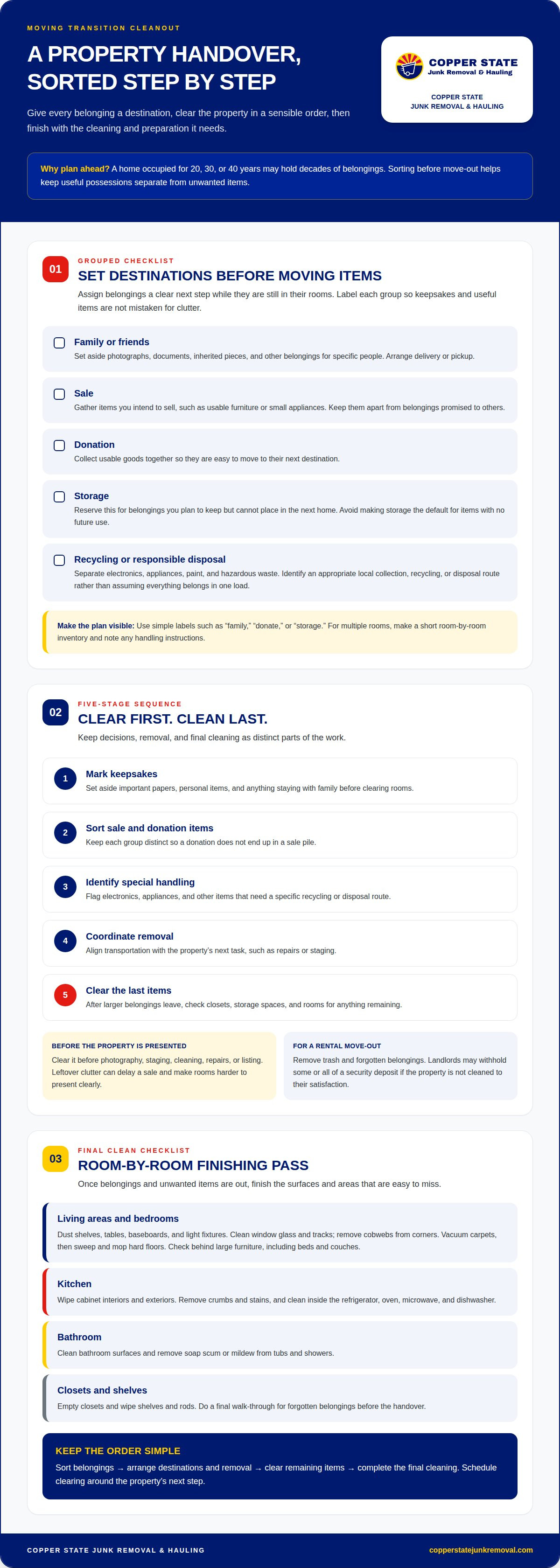
Assign each item a destination before moving it from its room. During a moving transition cleanout, sort belongings for family or friends, donation, sale, storage, recycling, or responsible disposal. Clear labels help keep a useful chair or box of keepsakes from being mistaken for unwanted clutter.
Start with ownership and intention. Set aside family photographs, documents, and inherited pieces for the people who should receive them. Group items for sale separately, such as usable furniture or small appliances. Keep donations together, and separate items needing specialty recycling or disposal. This makes each decision visible instead of leaving a mixed pile to sort again later.
- Family or friends: Set aside items for specific recipients, then arrange delivery or pickup.
- Sale: Gather belongings you intend to sell, and keep them apart from items already promised to others.
- Donation: Collect usable goods together so they’re easy to move to their next destination.
- Storage: Reserve this for belongings you plan to keep but can’t place in the next home.
- Recycling or disposal: Identify specialty needs before arranging removal, especially for electronics or appliances.
Consider timing as well as destination. A family member may need time to collect a keepsake, while sale items require a plan for anything unsold. Storage can bridge the gap between homes, but it shouldn’t become the default for belongings with no future use. Naming a recipient, purpose, or next step keeps the plan organized.
Mark each group with its destination and handling instructions. Keep labels simple, such as “family,” “donate,” or “storage,” and place them where movers can see them. If several rooms are being cleared, make a short inventory by room. A living-room sofa marked for family and a spare-room desk marked for donation are less likely to be confused during removal.
For help clearing unwanted items after destinations are sorted, property cleanout support can help move the plan toward a cleared space.
Breaking a cleanout into manageable stages
A moving cleanout removes belongings and clutter; standard move-out cleaning focuses on cleaning surfaces and rooms. Plan them as separate jobs, with removal first and final cleaning afterward. Starting early also helps prevent rushed work and missed spots.
Use a clear sequence. First identify belongings to keep and set aside items for family. Next, decide what to sell or donate. Flag specialty recycling or disposal needs, arrange removal and transportation, then finish with a final clearing. This order keeps decisions separate from hauling.
- Mark keepsakes. Separate important papers, personal items, and anything staying with family.
- Sort sale and donation items. Keep each group distinct, so a donation doesn’t end up in a sale pile.
- Identify special handling. Note electronics, appliances, or other items needing a specific recycling or disposal route.
- Coordinate removal. Align transportation with the property’s next step, such as repairs or staging.
- Clear the last items. Walk through closets, storage spaces, and rooms after larger belongings leave.
Pricing depends on the specific job and is provided after a quote request; home size, the volume and type of items, and removal needs affect the estimate.
To prepare for a cleanout service, decide what stays and set those belongings apart from items for removal. Share which rooms need clearing and identify items requiring special handling, so the work can be organized around your priorities.
For example, a spare bedroom may need only unwanted furniture removed, while a garage may hold mixed household items and appliances. Treat each area as a separate stage and define what “cleared” means there. In a bedroom, that might mean removing a discarded bed and boxes while leaving a dresser. In the garage, it could mean clearing loose belongings before repairs begin.
Keep the property’s next deadline visible during planning. A home awaiting photography needs clear paths through the rooms being staged. Before a handover, remove unwanted belongings ahead of final cleaning. These milestones help determine which stage comes first.
Cleanout services for homeowners and renters
A cleanout can target one space instead of an entire property. Homeowners might clear a garage, spare bedroom, or storage area to make the home more functional without moving. For example, removing unused boxes and unwanted furniture from a spare room can open it up for work or guests.
During a move, the job may cover belongings left after packing. Separate what stays from what needs removal, then identify rooms that must be cleared for repairs, staging, or handover. A focused plan keeps useful possessions out of the removal pile and gives each cleared area a clear purpose.
Renters have a different finish line: a move-out clean aims to leave the rental ready for its next tenant. Some rental agreements require tenants to leave the property clean when they vacate. Remove forgotten items and trash, then clean the rooms and surfaces required for handover. Clearing belongings and cleaning are separate tasks, so plan both.
To choose a reputable cleanout company, define the rooms and items involved, then look for a clear written scope covering what will be removed and what stays. A useful plan identifies any items needing separate handling, rather than treating every object as ordinary household junk.
Household clutter, unwanted mattresses, yard debris, and renovation cleanup materials can fit common cleanout needs. Hazardous waste requires separate handling and shouldn’t be mixed with ordinary items for removal. Sort electronics, paint, appliances, and other specialty items separately, then identify an appropriate local recycling or disposal route for each.
- Homeowners: Set a limited goal, such as clearing the garage before a renovation.
- Renters: Remove belongings and trash, then complete the required move-out cleaning.
- Both: Mark what stays and identify items needing separate handling.
If a garage, spare room, or rental property still holds unwanted belongings, arrange a property cleanout to help clear the space for its next use.
Copper State Junk Removal & Hauling: Assisted Living Cleanouts
Copper State Junk Removal & Hauling provides Assisted Living Cleanouts for transitions that leave belongings to sort and remove. When a move to assisted living changes what can come along, a clear plan helps separate items staying with family from unwanted furnishings and household clutter. Decide what should remain before arranging removal, so important belongings aren’t mixed into the cleanout.
For other property needs, Hoarder Cleanup can address heavily cluttered spaces, while Mattress Removal helps clear an unwanted mattress. Yard Clean Up can address outdoor areas. Each service supports a different part of preparing a property for its next use.
Contact Copper State Junk Removal & Hauling to discuss an assisted living cleanout or another property-clearing need.
Make the next step clear
Let the property’s next use guide your decisions. A home being prepared for sale may need open rooms for staging, while a rental handover has different requirements. Keep the destination in view as you decide what should remain and what needs to leave. A moving transition cleanout is easier to direct when the goal is clear from the start.
When the remaining work involves a specialized cleanout, Copper State Junk Removal & Hauling offers Hoarder Cleanup, Assisted Living Cleanouts, and Mattress Removal. These services address distinct property-clearing needs without treating every transition the same.
Choose the area that needs attention first, then share the outcome you’re working toward. Contact Copper State Junk Removal & Hauling to discuss the next step for your property. With a clear plan and the right space ready for its next purpose, you can move forward with confidence.
Frequently Asked Questions
What is a moving transition cleanout?
A moving transition cleanout is a planned process for removing unwanted belongings when a household changes homes or prepares a property for sale or handover. Unlike packing, it focuses on deciding what leaves the property, not boxing everything for transport. For example, a family moving from a Prescott home can clear items that won’t go to the next residence.
What services are included in a move-in or move-out cleanout?
A move-in or move-out cleanout generally focuses on clearing items left behind, such as unwanted furniture, boxes, or appliances. The work depends on the property and the items involved. Removal and hauling address belongings; cleaning handles dust, floors, kitchens, and bathrooms. Plan these as separate tasks so the space is cleared and cleaned as needed for handover.
Can I donate or recycle furniture and household items during a cleanout?
Yes. Usable furniture and household goods can be set aside for donation, while suitable materials such as metal or cardboard may be recycled. Keep these separate from broken or unwanted belongings, and group similar materials together. For instance, place a usable table apart from damaged furniture, and collect flattened cardboard in one area to make sorting and transportation easier.


