

What if the best cleanout decision is to sell fewer things, not more? If you’re asking, “What Should You Sell” before a Prescott cleanout, focus on belongings in usable condition that have plausible buyer demand and are practical to pass along. Listing every possession can take considerable time without bringing a worthwhile return.
It’s understandable to want useful items to find a new home, especially when you’re sorting through a loved one’s belongings. But you don’t have to turn the cleanout into a months-long selling project. A simple checklist can help you identify likely sale candidates, assess their condition and buyer appeal, and set a firm deadline for listing or accepting offers.
This guide will help you decide what may be worth selling, what might be better suited to donation or another option, and how to make a respectful plan for everything left behind. Once you’ve sorted what to keep and what to try selling, professional cleanout help can take care of remaining unwanted items and help you move forward.
Key Takeaways
- What Should You Sell? Start with items in usable condition that have plausible buyer demand and a straightforward path to sale.
- Assess furniture, appliances, tools, collectibles, and sets by condition, completeness, and demand, not age alone.
- Compare the likely benefit of selling with the time and effort involved. An asking price doesn’t guarantee a sale.
- Use a simple selling sequence, then set a deadline so listings don’t hold up the cleanout.
- Make a respectful plan for belongings that aren’t sold, whether you keep them, donate them, or arrange removal.
What Should You Sell Before a Prescott Cleanout? Start With a Simple Test
Sorting a home can feel emotional, especially during a move, a family transition, or a change in living arrangements. Belongings may carry memories even when you’re trying to make practical decisions. You don’t have to decide the fate of everything at once. Start with a small group of items that have a realistic chance of selling.
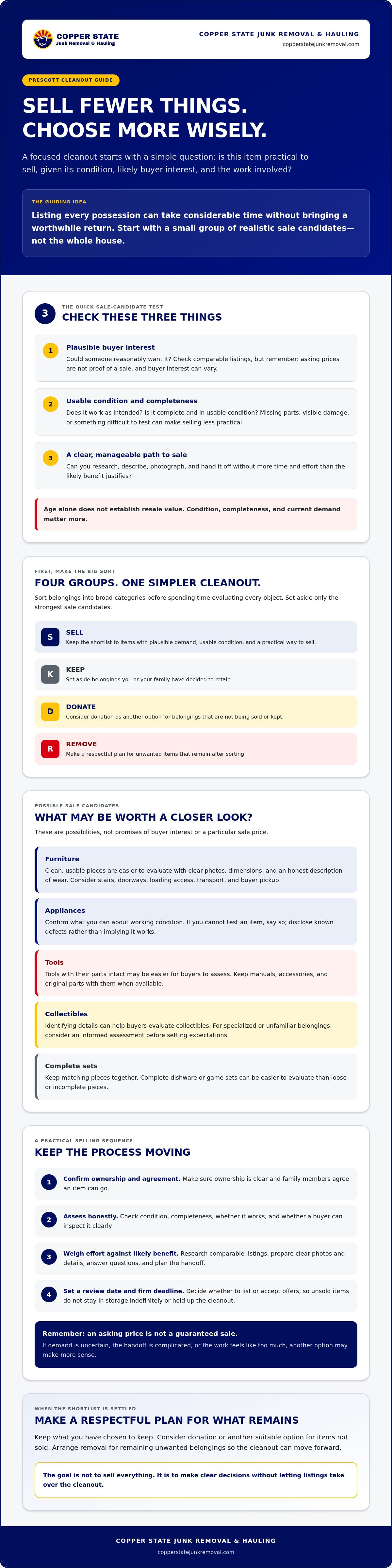
A sale candidate has three things going for it: plausible buyer interest, usable condition, and a clear path to sale. The goal is selective selling, not turning every remaining possession into a listing. A used goods transfer can happen through informal sales or more formal routes such as consignment, but either way, it takes time and effort.
Which questions help you decide whether an item is worth selling?
Before you list anything, confirm that ownership is clear and family members agree it can go. Then assess the item honestly. Does it work as intended? Is it complete and in usable condition? Age can be relevant, but it doesn’t prove an item has resale value. Missing parts, visible damage, or an appliance that’s difficult to test can make a sale less practical.
Next, consider whether likely buyer interest justifies the work. You may need to research comparable listings, take clear photos, answer questions, and arrange a handoff. If demand is uncertain and the process feels like too much, another option may make more sense.
How can you sort belongings without slowing the cleanout?
Make four simple groups: sell, keep, donate, and remove. Sort the home into these categories before spending time evaluating every object. Set aside only the strongest sale candidates, then choose a review date to decide whether to list them. A firm deadline helps prevent unsold items from staying in storage indefinitely or holding up the cleanout.
If the belongings are part of a transition to assisted living, a broader plan can help everyone make decisions at a manageable pace. See this assisted living cleanout guide for additional guidance. Once you’ve decided what to keep or try to sell, make a respectful plan for everything else.
Which Household Items May Be Worth Selling Before a Cleanout?
Once you’ve chosen what to review, focus on items a buyer can inspect and assess clearly. Furniture, working appliances, tools, collectibles, and complete sets may be worth researching. These are possibilities, not promises of buyer interest or a particular sale price. Age alone doesn’t establish value. Condition, completeness, and current demand matter more.
Are furniture and appliances worth listing?
Clean, usable furniture is easier to evaluate when you provide clear photos, dimensions, and an honest description of wear. For example, show every piece of a table-and-chair set and note any damage. Bulky items need extra consideration: think about stairs, doorways, access for loading, transport, and whether a buyer can pick the item up. If the handoff seems complicated, selling may not be worth the effort.
For appliances, confirm what you can about working condition before listing. If you can’t test an item, say so. Disclose known defects rather than implying it works when you haven’t verified that. Accurate details help prospective buyers decide whether the item suits their needs and reduce avoidable back-and-forth.
Do tools, collectibles, or complete sets attract buyers?
Tools with their parts intact, collectibles with identifying details, and complete dishware or game sets can be easier for buyers to evaluate than loose or incomplete pieces. Keep matching items together, including manuals, accessories, or original parts when available. For specialized or unfamiliar belongings, consider an informed assessment before setting expectations.
Check comparable listings to see how similar items are presented and what sellers are asking. Treat those figures as asking prices, not proof of what an item will sell for. Buyer interest varies, and a promising listing doesn’t guarantee a sale. Use your research to decide whether the likely return justifies the time needed to prepare and manage the listing.
As you weigh candidates, ask: Is it in usable condition? Can I describe it accurately? Is pickup realistic? If the answer to several of those questions is no, move on without guilt. For example, if an old mattress isn’t a practical sale candidate, you can review mattress removal options instead.
Sell, Donate, or Remove It? Compare Value With the Work Involved
A sale can look worthwhile online and still take more time than it returns. A listing price is what someone hopes to receive, not proof that an item will sell for that amount. Selling can involve taking photos, answering messages, coordinating pickup, and keeping belongings in place while you wait for a buyer. Compare that effort with your cleanout timeline before deciding.
| Option | Condition and timing | Effort to consider |
|---|---|---|
| Sell | Usable items with plausible buyer interest and a clear owner. | Prepare a listing, respond to inquiries, and arrange a handoff. |
| Donate | Items in suitable condition when selling is uncertain or time is short. | Check whether the recipient can accept the item and how it must be delivered. |
| Keep | Belongings you or your family want to retain. | Decide where they’ll go so they don’t get mixed into the cleanout pile. |
| Arrange removal | Items you don’t plan to keep, sell, or donate. | Plan how they’ll be cleared without letting them delay the rest of the transition. |
When does selling make more sense than donating?
Selling may suit an appealing, usable item when ownership is settled and you have enough time to manage the process. Donation may be more practical if buyer interest is uncertain, the cleanout date is approaching, or listing and pickup coordination feel like too much. Decide based on the item and your capacity, not pressure to recover value from every possession.
When should you stop trying to sell an item?
Set your cutoff date by working backward from the cleanout schedule. Don’t wait for an assumed market response. If an item gets little interest, requires complicated pickup, or has condition concerns that make a sale harder, reassess it and choose another route. A deadline keeps an unsold possession from occupying space and attention indefinitely.
For a broader look at organizing the work and deciding what happens to belongings, read this guide to house cleanout services in Central Arizona. The practical answer to “What Should You Sell” is an item whose likely benefit justifies the time, coordination, and space it will require. Keep the rest of your plan moving.
How to Sell Cleanout Items Safely and Efficiently in the Prescott Area
A simple process keeps selling manageable and helps prevent a listing from taking over your move or cleanout. Work through these steps for each item you decide to offer:
- Confirm ownership. Make sure you have the right to sell the item and that family members agree.
- Assess its condition. Check what works, note visible wear, and identify missing parts or known defects.
- Research comparable listings. Compare similar items, but treat listed prices as asking prices, not confirmed sale values.
- Take clear photographs. Show the item from useful angles, including wear or damage.
- Write and post an accurate listing. Include dimensions, condition, what’s included, and pickup expectations.
- Set a deadline. Choose a final date based on your move or cleanout schedule, not a guess about how quickly a buyer will respond.
Facebook Marketplace, Craigslist, and OfferUp are examples of online marketplaces people may consider. Before posting, check the platform’s current rules, fees, and safety guidance. Don’t share unnecessary personal information, and keep messages and arrangements within the platform when its guidance recommends doing so.
What information should a listing include?
Help potential buyers make an informed decision. Use clear photos, accurate dimensions, a straightforward condition description, and details about what comes with the item. State whether the buyer must arrange pickup. Don’t make claims about age, brand, authenticity, or working condition unless you can support them. Clear details can reduce repeated questions and mismatched expectations.
How can you keep a sale from delaying a move?
Set a final listing date that leaves enough time before the cleanout or move. Keep sale candidates together in one accessible, clearly marked area, and avoid blocking walkways or access to items that still need to be moved. For bulky belongings, plan how a buyer could reach and carry the item, and agree on a pickup window before confirming the sale.
If a sale hasn’t come together by your deadline, move on rather than letting the item hold up the transition. This moving transition checklist can help you organize the wider process. For belongings you won’t keep or sell, review junk removal and hauling options as you plan the cleanout.
Finish the Prescott Cleanout With a Clear Plan for Unsold Items
Selling can be useful when an item is in suitable condition, buyer interest seems realistic, and you have enough time to manage the process. But a sale is never certain. When your deadline arrives, it’s reasonable to stop waiting and choose what happens next. Keep belongings that matter to you, consider donation where appropriate, and arrange removal for items you don’t plan to retain.
What should happen after the selling deadline?
Review the remaining sale candidates with your family or the person authorized to make decisions. Separate items someone will keep from those needing another plan. If ownership or family agreement is unclear, pause and confirm before making a decision. Once the move or cleanout date arrives, don’t leave uncertain belongings in a sale pile. Decide how each remaining item will be handled so the next steps can proceed.
Not every item needs the same outcome. Some may be worth keeping for sentimental or practical reasons. Others may be suitable for donation, depending on their condition and the receiving organization’s current policies. Items that aren’t being kept or donated may need another removal plan.
When can professional cleanout help simplify the next step?
Sorting is only part of the work. If you’re managing an assisted-living transition or clearing unwanted belongings from a property, Copper State Junk Removal & Hauling offers assisted living cleanouts and residential and commercial junk removal and hauling. For moving-related situations, ask which available services fit your needs rather than assuming every item or task is covered.
Before arranging help, describe what remains and confirm the service scope and which materials can be accepted. This is especially useful if belongings include items with special handling needs or anything you’re unsure about. Clear expectations help you choose the right next step without making assumptions.
The question “What Should You Sell” has a practical answer: sell suitable belongings when realistic demand and your available time make the effort worthwhile. Then let the rest of your plan move forward. If you’re in Prescott or a surrounding Central Arizona community and would like to discuss the remaining cleanout work, contact Copper State about cleanout and junk removal options.
Make a Practical Plan and Keep the Cleanout Moving
What Should You Sell before a Prescott cleanout? Choose items with realistic buyer interest and a condition you can describe honestly, then weigh the likely benefit against the time and coordination involved. A listing price doesn’t guarantee a sale, so set a deadline that fits your cleanout schedule.
For everything else, make a clear choice: keep it, consider donation if it’s suitable, or arrange removal. Sorting through a loved one’s belongings can take care and patience. You don’t have to sell every item to make thoughtful decisions or move forward.
Copper State Junk Removal & Hauling is a family-run local business serving Prescott and surrounding Central Arizona communities, including assisted-living cleanout support. Its service area includes Chino Valley, Prescott Valley, Paulden, Dewey, Mayer, Jerome, Clarkdale, Cottonwood, Camp Verde, Verde Valley, and Sedona. If you’ve made your sorting plan and still need help with unwanted belongings, talk with Copper State about your cleanout. One manageable step at a time can bring order and breathing room.
Frequently Asked Questions
What should you sell before a house cleanout?
Sell items that are usable, complete, clearly yours to sell, and likely to interest a buyer. Furniture, working appliances, tools, and collectibles may be candidates, but condition and local demand affect whether they’re worth listing. “What Should You Sell” depends on the time you have as well as the item. Choose a final listing date before the cleanout, and don’t assume an asking price means a sale is guaranteed.
How do I know if an item is worth selling or donating?
Compare likely buyer interest with the work involved. Selling means photographing and listing the item, answering messages, and arranging pickup. It may make sense if the item is usable and you have time to manage those steps. Donation may be simpler if a sale seems uncertain or time is short. Check the current acceptance policies of any organization you contact, since suitability can vary.
Can I sell belongings before an assisted living cleanout?
Yes, if the belongings are yours to sell or the responsible decision-makers have agreed. Set aside personal keepsakes first, then review possible sale items together with care. Keep decisions connected to the move timeline so listings don’t add pressure or delay. For broader planning, read this assisted living cleanout guide. If ownership or authority is unclear, pause and get appropriate guidance rather than guessing.
How long should I try to sell items before a cleanout?
There’s no single timeline that works for every cleanout. It depends on the move date, the type of item, and how much time you and your family can give to selling. Set a firm listing deadline early, leaving time for questions and pickup arrangements. If reliable interest hasn’t emerged by then, move to your next plan. That way, waiting for a buyer doesn’t hold up the cleanout.
Should I sell furniture before moving or clearing a home?
Consider selling furniture that’s in usable condition, has clear ownership, and can be picked up without disrupting the move. Measure each piece and provide accurate photos and condition details so interested buyers can judge fit and access. Large furniture can take extra coordination to move, so compare that effort with realistic buyer interest. Keep essential pieces available until you’ve settled the move plan and know what you’ll need.
What should I do with items that do not sell before the cleanout?
After your deadline, review remaining belongings with your family or decision-maker and choose what to keep, consider donating, or arrange for removal. Check an organization’s current acceptance policies before planning a drop-off or pickup. For unwanted items, ask a local provider what materials and project scope it can handle. Copper State serves Prescott and surrounding areas, including Chino Valley, Prescott Valley, Paulden, Dewey, Mayer, Jerome, Clarkdale, Cottonwood, Camp Verde, Verde Valley, and Sedona.
How can I sell belongings safely during a Prescott cleanout?
Follow the marketplace’s current safety guidance, describe items accurately, and avoid sharing unnecessary personal information. Agree on a clear pickup time and consider having another person present during the handoff. Confirm payment before releasing an item, following the platform’s recommendations. Keep the transaction separate from your move or cleanout schedule. If a buyer delays or stops responding, stick to your deadline and use your backup plan.


